There is one date in the year when the numbers carry more weight. 8 March is not just a symbolic anniversary. It is a moment of measurement. And the data tells us one thing clearly: European female founders are growing in number. But the system does not yet fully support them.
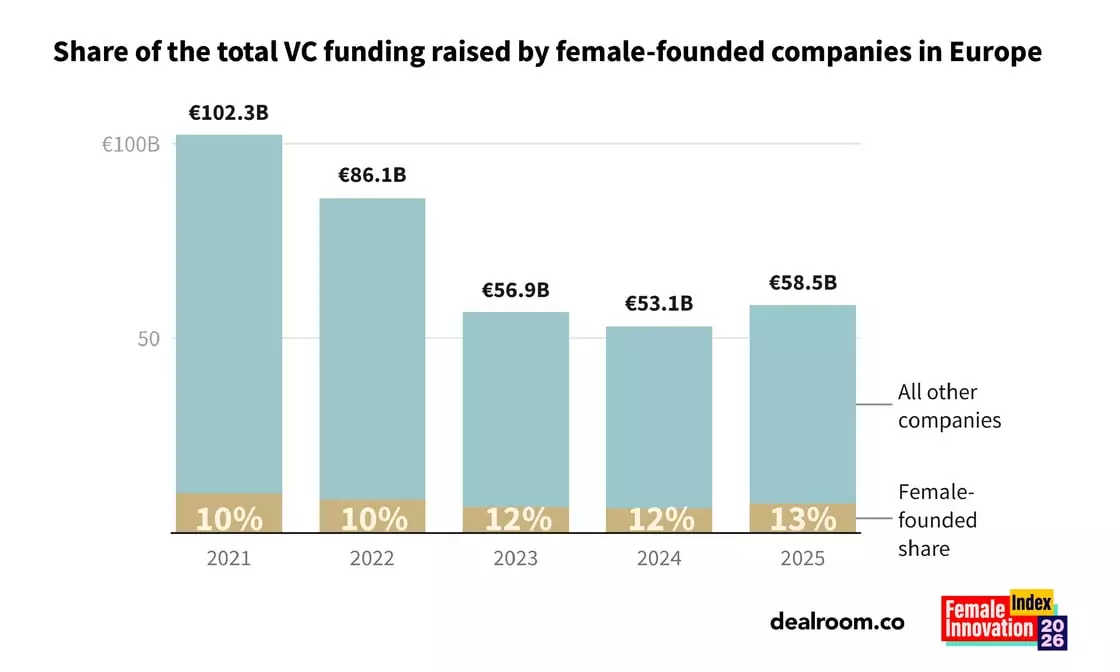
Thirteen per cent. The highest figure. And still insufficient.
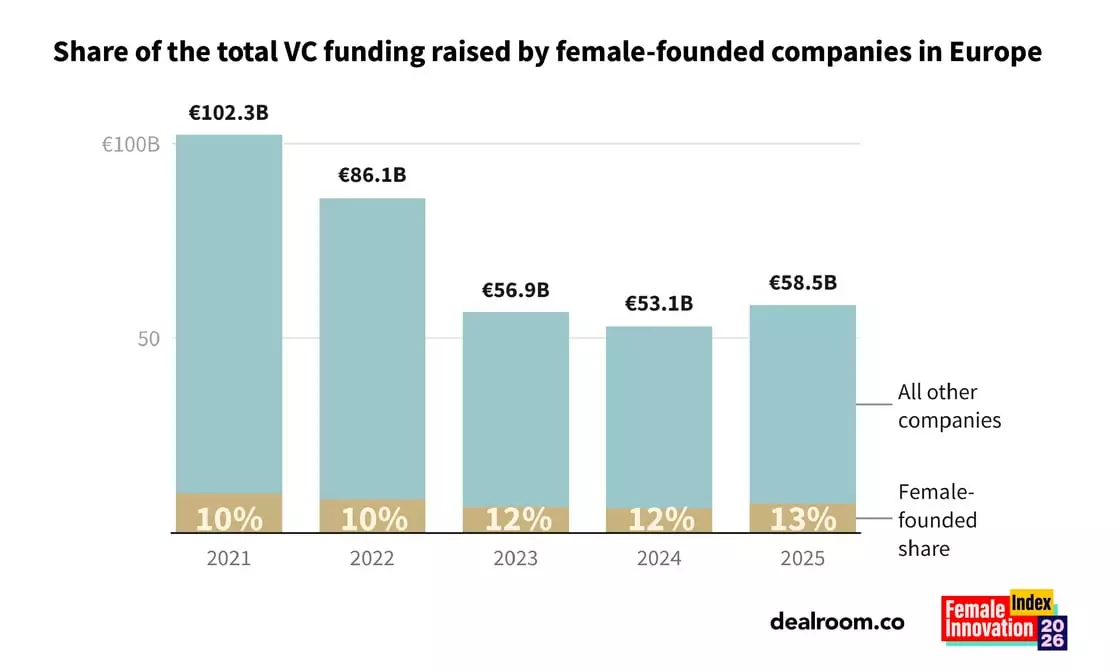
In 2025 – all data is taken from Dealroom research and relates to 2025 – start-ups founded by women accounted for 13% of European venture capital funding. A historic record. This is one percentage point more than the previous year. A step forward which, if you stop to think about it, is also a condemnation. Because one percentage point per year is not an acceleration. It is a slow walk in an ecosystem that continues to run asymmetrically.
7.5 billion euros. The number that matters, and the one that is missing.
European start-ups with at least one female co-founder have raised €7.5 billion. This is the highest figure in the last three years. That’s good. But if you look at how that curve moves, you can see that it follows exactly the trajectory of the entire VC market. No structural correction. No reversal. The market is growing, and female founders are growing with it. But not faster. Not fast enough to close the gap.
Where women are building the future
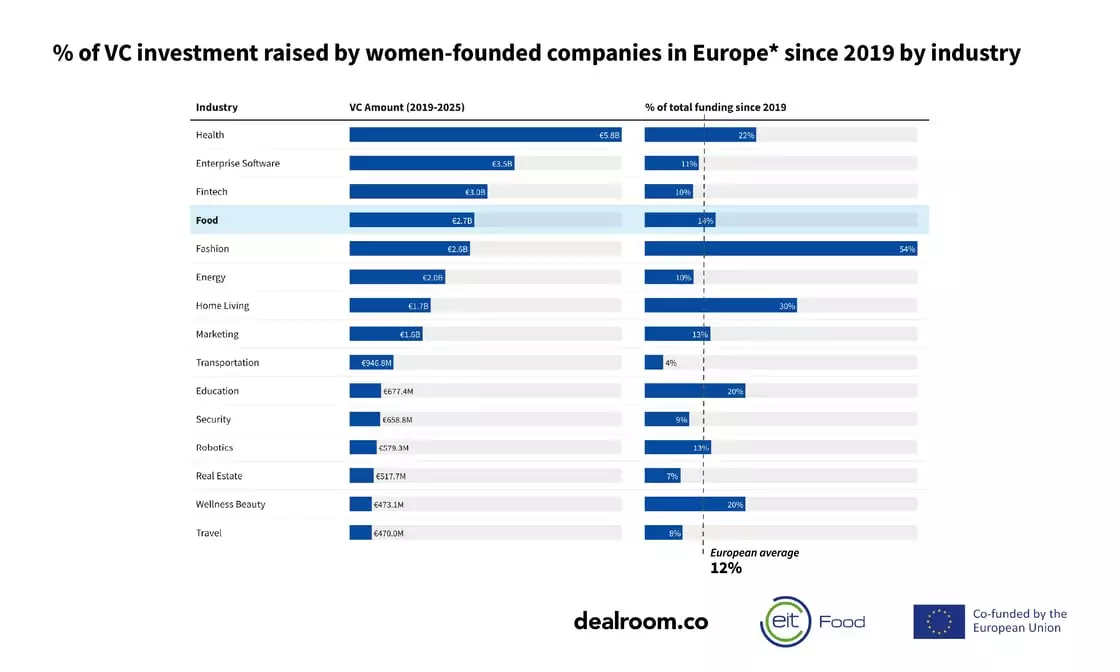
Looking at the sectors tells us something interesting. Healthtech: 37% of investments. Fintech: 12%. Energy: 7%. This is no coincidence. The founders are focusing on the most strategic sectors for Europe over the next twenty years: healthcare, finance and energy transition. This is not niche entrepreneurship. It is systemic entrepreneurship.
From seed to Serie A: here, the female founders win
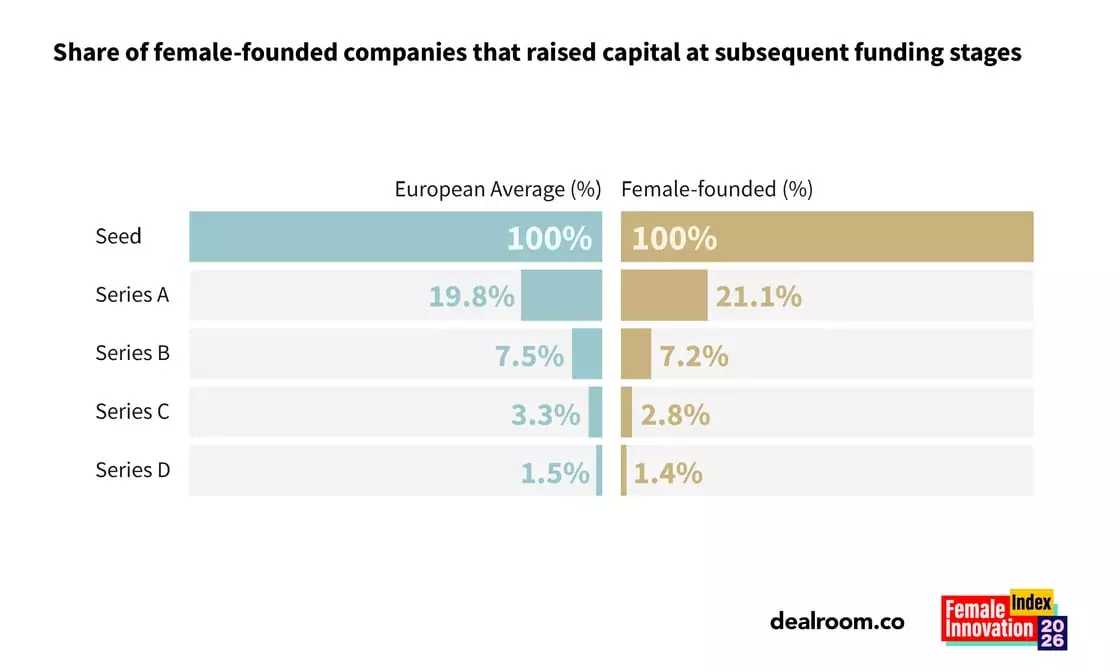
There is one fact that often does not appear in the headlines. Start-ups founded by women show a better conversion rate from seed to series A than the European average. In other words, when they manage to enter the market, they prove that they know how to validate, grow and convince. The problem is not the quality of the project. The problem is access to the table. In the later stages, growth and late stage, the numbers fall back below average. Because that’s where the game changes. That’s where other filters come into play.
Mega-rounds double. Five new unicorns
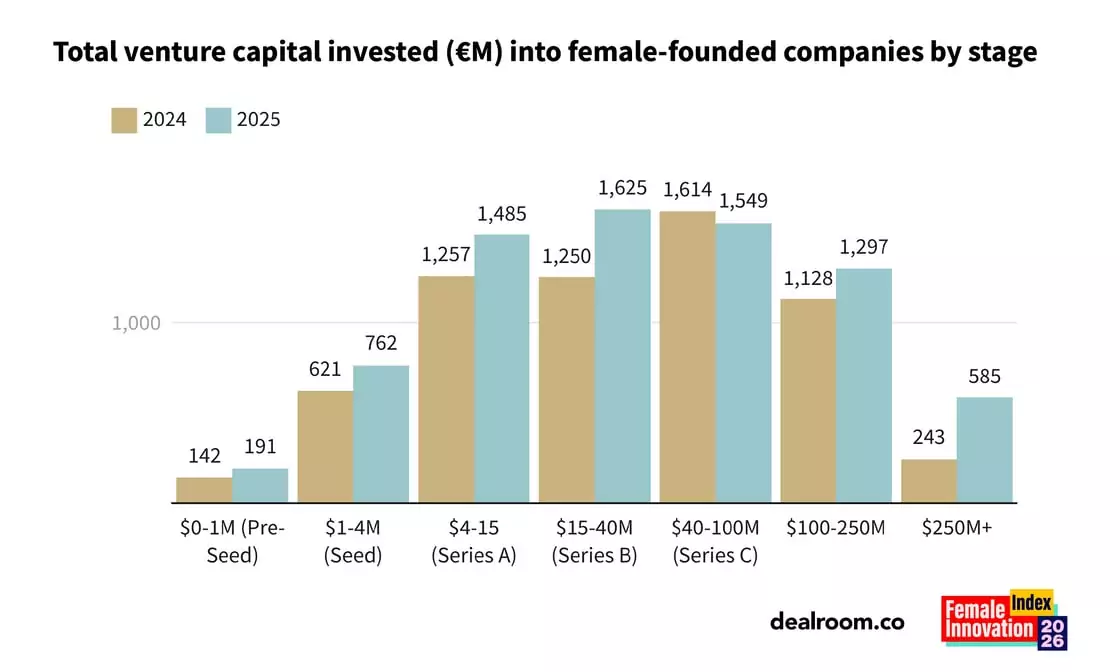
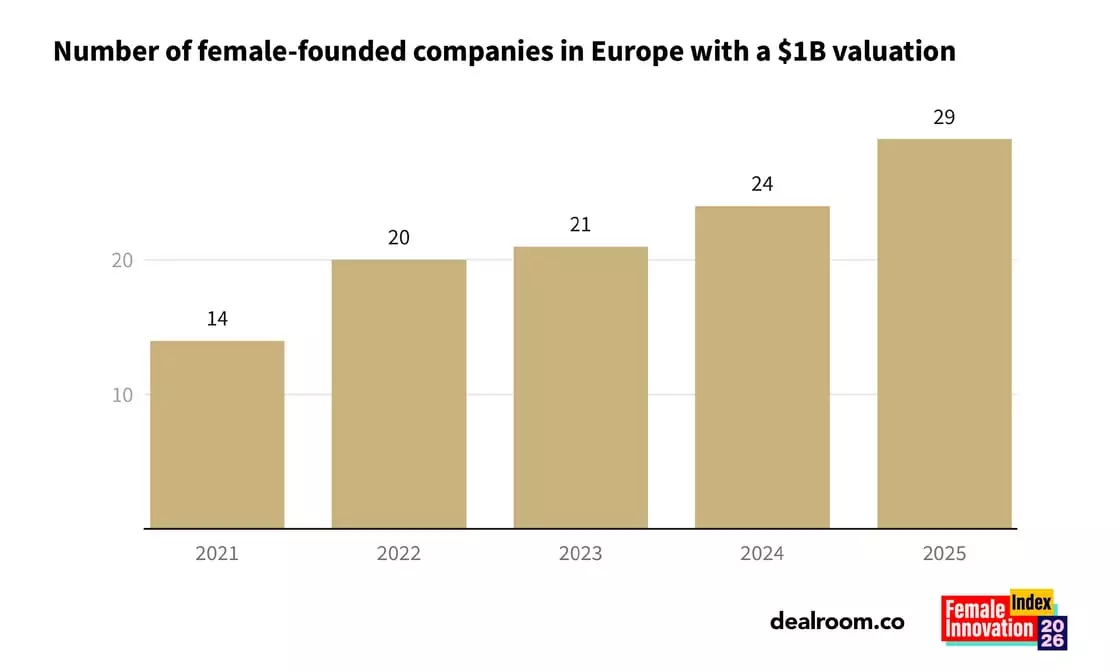
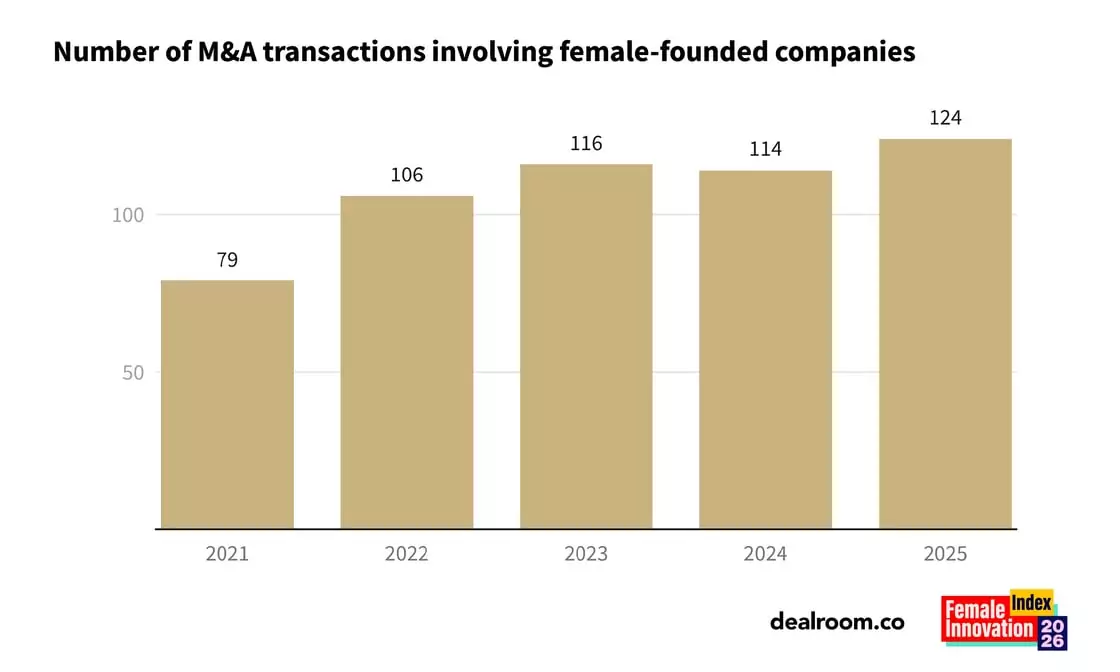
2025 brought news that deserves careful attention. Capital raised in rounds exceeding £200 million more than doubled compared to the previous year. Five new European unicorns founded by women. The second highest figure in the last five years. And a record in M&A transactions involving female-led start-ups. These are not consolation figures. They are signs of maturity in an ecosystem that is slowly learning to recognise value.
The IPO? Still almost inaccessible.
In 2025, only three companies founded by women were listed on the stock exchange. Three. The same number as in 2023 and 2024. A far cry from the sixteen IPOs in 2021. The listing window remained closed for the entire European tech sector, of course. But for female founders, it was already almost closed even before that.
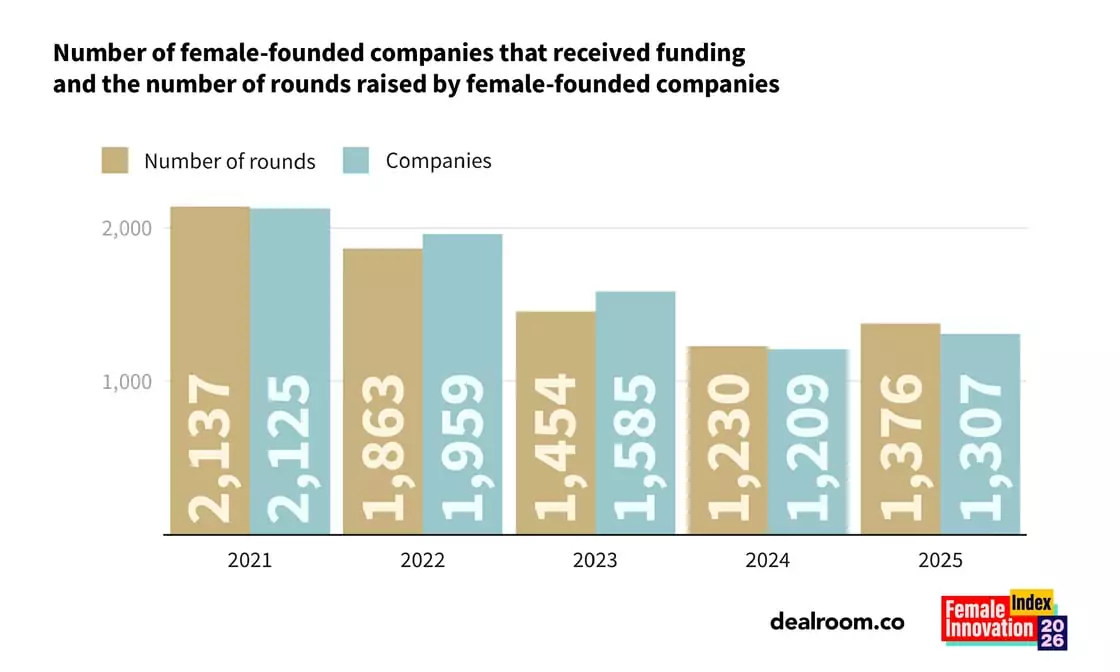
1.307 startups. 1.376 rounds.
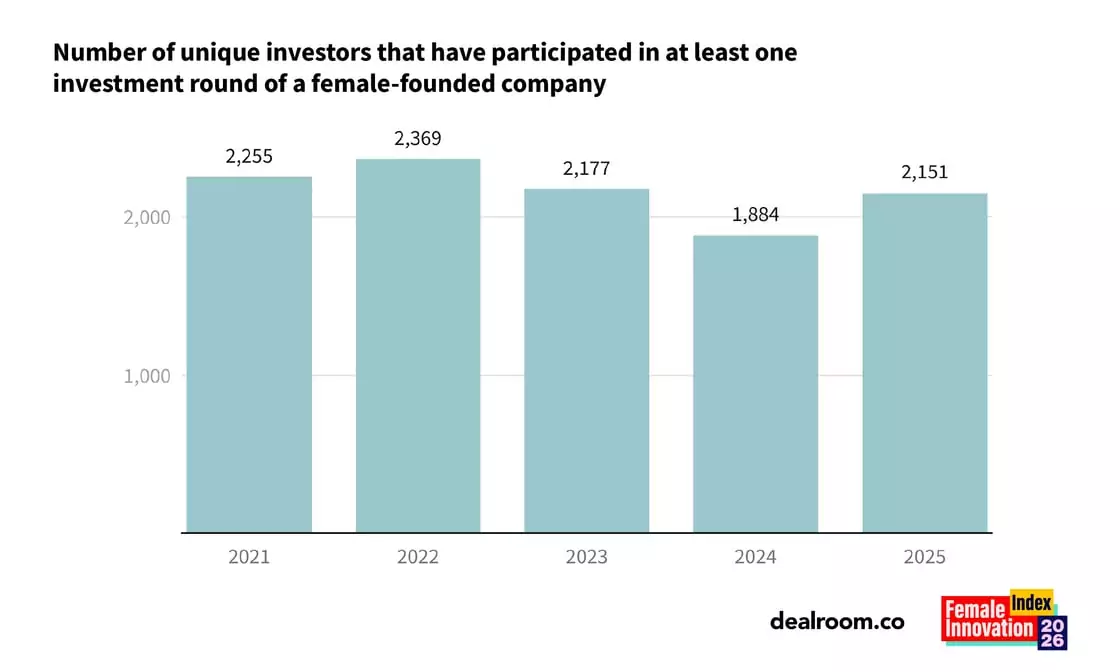
In 2025, 1,307 start-ups founded by women raised capital. This amounted to a total of 1,376 investment rounds. This was an increase on the previous year, but still far from the peaks of 2021, when global VC reached its all-time high. The talent is there. The ideas are there. The projects are there. The distribution of capital, however, is not yet there.
Two stories. One question.
The 2025 data tells two stories at once. The first: the gap exists, persists, and is not closing fast enough. The second: despite this, European female founders continue to build businesses, attract capital, create unicorns and generate value. Both stories are true. Both need to be told. But the question that remains on the table, the really uncomfortable one, is this: how much capital, how many ideas, how much innovation are we losing every year because the system is not yet open enough? Innovation, when it really works, has no gender. It needs an ecosystem capable of recognising the value of ideas. Regardless of who brings them forward, this is a path we must all continue to follow in order to achieve ever better results.
ALL RIGHTS RESERVED ©