Italy is one of the most advanced countries in terms of digital transformation in the public sector, even at European level (source: World Bank GTMI), yet 52% of Italians consider it to be less mature. Italians perceive technological and digital innovation in the public sector as a modest improvement in the efficiency and accessibility of services (6.6/10 – a figure down 0.4% compared to the previous 2025-); rather than a source of control and surveillance (6.0/10 – a perception that remains stable). The change, which takes the form of centralised apps for identity, payment, document storage, digital signatures, SPID, local services (e.g. citizen’s file, tourism and mobility apps), regional services (e.g. health records), smart cities, website revamps… has been rapid and sweeping; the assessment is highly ambivalent: positive and negative effects balance each other out: for 30% it has made Italy more complicated and difficult, for 27% more accessible, for 24% more expensive, for 23% more innovative. Only for 9% more secure.
Despite the considerable media attention surrounding the issue of digital sovereignty, the topic is poorly understood. 19% associate it with Italian policy, 20% with European policy; for the rest, it is a global policy or they are unfamiliar with the subject. Virtually everyone claims to know what generative artificial intelligence is: concerns centre on job losses (35%), loss of citizens’ privacy (30%), and the exclusion of less skilled individuals (27%); the benefits relate to the operational efficiency of the public administration (31%) and improved services (27%). There is considerable confusion regarding the ‘nationality’ of LLM/AI operators; many (20–40%) believe that the most prominent companies in the sector are European, rather than American or Chinese, whilst only 4% can identify the sole current European operator (MistralAI).
“There is no doubt that recent years have seen the rise of widespread digitalisation in everyday life, and also in the public sphere. The shift in attitudes is still only halfway there: a significant proportion of the population is at a loss. To tackle the further challenges posed by strategic issues such as artificial intelligence and digital sovereignty – which go beyond the mere use of tools – greater awareness, including technical awareness, is needed. The public debate, the very foundation of democracy, is at stake. Mental sovereignty is necessary for digital sovereignty,” says Simone De Battisti, Head of Insights and founder of Feel, who is preparing to launch the third edition of the GovTech Forum, whose theme this year is ‘New Alliances’.
The forum, taking place on 19 and 20 March 2026 in Milan, aims to address issues such as the new forms of collaboration required to tackle the major challenges of the present and the near future: technological acceleration, the reconfiguration of global power, social issues, and environmental impacts. The GovTech Forum is sponsored by the Municipality of Milan, the Lombardy Region, the Ministry of Foreign Affairs and International Cooperation, the Ministry of Enterprise and Made in Italy, the Ministry of Public Administration, the Conference of Regions and Autonomous Provinces, and the Parliamentary Assembly of the Mediterranean; as well as Confindustria Assafrica & Mediterraneo and Confcommercio, with support from Mastercard and Latitudo 40.
The 2026 edition will feature Talla Kebe, a member of the United Nations Task Force on Digitalisation and Innovation in Africa; Dyfed Aubrey of UN-Habitat for Europe; Marco Corradi of Housing Europe; government officials from Albania, Denmark and Ukraine; and representatives from the Italian government (MIMIT and MAECI); international organisations: the World Bank, the OECD, the European Commission, the Italian Chamber of Commerce in Canada; MEPs: Irene Tinagli and Brando Benifei; and Italian MPs: Giulio Centemero, Giulia Pastorella and Andrea Mascaretti.
GovTech Forum 26 aims to move beyond the current phase of collaboration on policy, change and projects within the Italian and European GovTech sectors, towards coordinated and widespread adoption through policy workshops, panels featuring global experts, and direct dialogue between institutions, businesses and innovators at all levels: cities, regions, nations and international bodies.
This edition of the Forum aims to help set out a shared agenda for the digital transformation of public administration that is open, interoperable and scalable, and geared towards the economic, social and environmental development of our regions, extending as far as Europe, the Mediterranean and the African continent.
In particular, we focus on the intersections between technology, the environment, institutions and humanity in relation to cutting-edge developments such as agentic AI.
On the cusp of a new era, in which humans and artificial intelligence are intertwining to redefine the boundaries of governance. As we tackle complex and systemic issues, we believe that the synergy between the public and private sectors is emerging as a necessary catalyst for innovation and reform. The possible approaches will be explored during the two-day event in Milan.
A pan-European GovTech model is a key element of the European strategic agenda for 2024–2029, accelerating the creation of a digital single market for public administration and businesses. It promotes interoperability, innovative procurement and the integration of GovTech solutions in strategic sectors such as energy, infrastructure and digital public services.
An important discussion will take place on the afternoon of Thursday 19th, chaired by Bruno Monteiro (OECD), focusing on the SIGMA programme – a joint OECD/EU initiative carried out in collaboration with the World Bank – where reforms and innovation in the public sector are targeted at countries in the process of joining the EU (Albania) or neighbouring countries (Ukraine).
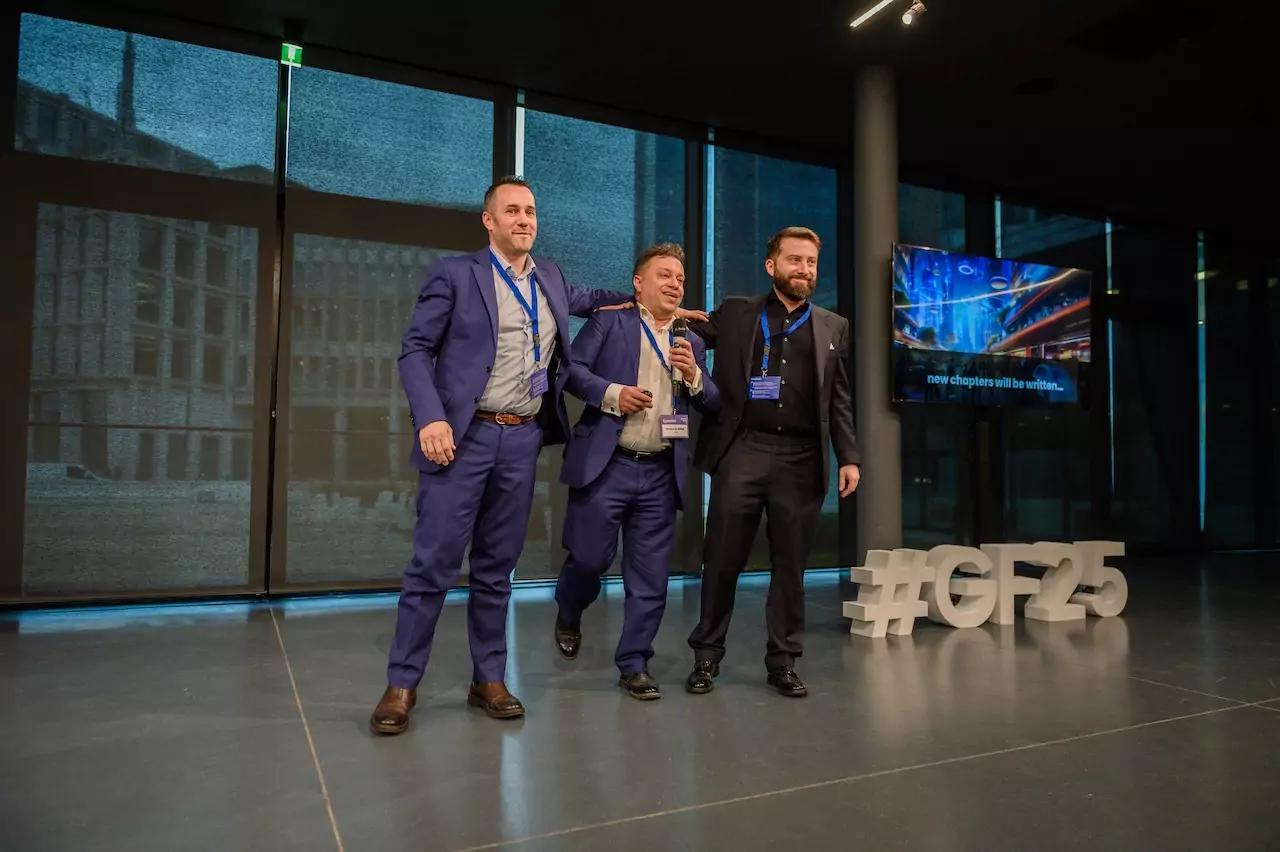
“In a geopolitical, economic and technological landscape undergoing profound and rapid transformation, where traditional points of reference are being redefined, we need to forge new alliances between institutions, between the public and private sectors, and across generations to shape the future of the relationship between humans, technology and nature. The momentous challenges we face require a systemic vision and a forward-looking approach,” says Marcello Coppa, CEO and founder of Feel (pictured here with De Battisti and the third co-founder, Andrea Landini).
The issues surrounding the impact of digital transformation on Italian and European public policy, and the strategic choices concerning digital sovereignty and artificial intelligence, will be addressed by the institutional panel on Friday 20th in the afternoon, moderated by Daniele Venanzi of Public Policy, with the participation of members of the Italian Parliament and MEPs from the main political groups.
ALL RIGHTS RESERVED ©