Marie Anne Bizouard, a researcher at the French National Centre for Scientific Research (CNRS) in Nice, has been appointed spokesperson for the Virgo International Collaboration. She will take up her post on 3 May and is the first woman to hold this role since the Collaboration was founded in the late 1980s. This international scientific collaboration, comprising over a thousand researchers from 20 different countries, collects and analyses data from Virgo, the only European gravitational-wave detector and one of only four in the world, located in Cascina in the province of Pisa. The new spokesperson, who will be responsible for the scientific coordination of the collaboration and its external representation, was appointed last week by the international representatives of Virgo’s scientific groups, and her term of office will begin on 3 May. She will succeed Gianluca Gemme, a researcher at the National Institute of Nuclear Physics (INFN), who has led the collaboration for the past three years.
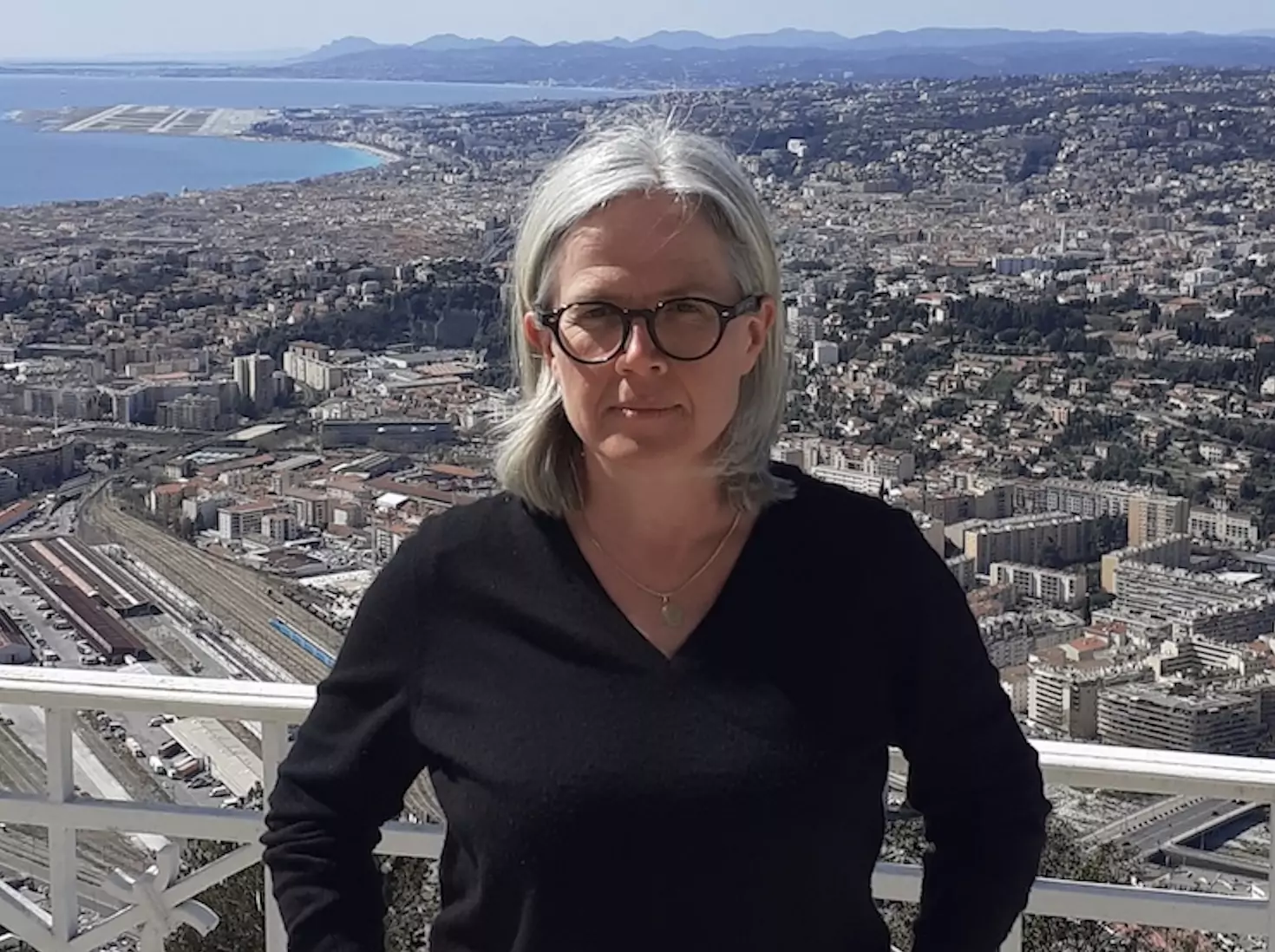
“It is an extraordinary honour and privilege for me to represent such a large and dedicated scientific collaboration working on one of the most cutting-edge and fascinating topics in physics today,” says Bizouard (pictured) in a statement. “I feel the responsibility that comes with Virgo’s history and the scientific achievements it has made to date, and I will do my utmost, using all the tools at our disposal, to ensure that Virgo and our community continue to conduct science to the highest standard in the future. I would like to thank my colleagues and all the scientific groups within the Collaboration for the trust they have placed in me.”
“I am delighted to be handing over the reins to Marie Anne,” says Gemme. “Her in-depth knowledge of the Virgo experiment, her extensive experience in data analysis and her leadership within the collaboration make her the ideal person to lead Virgo through this exciting phase. I wish her every success.”
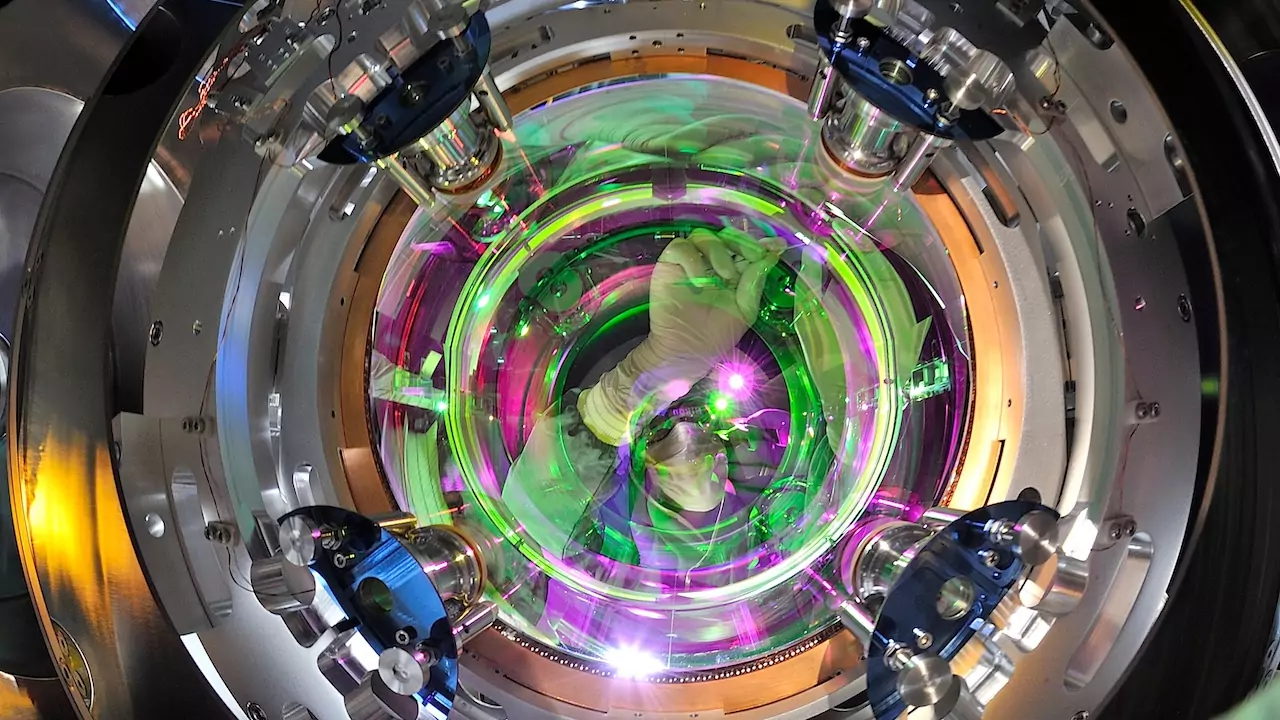
Virgo is a gravitational wave interferometer with two three-kilometre-long arms stretching across the Pisan countryside, capable of detecting gravitational waves. These are very faint cosmic signals that enable us to observe extraordinary phenomena in the deep Universe, such as the merger of black holes or stars. The Virgo interferometer operates in conjunction with the two US detectors, LIGO, and the Japanese detector, KAGRA, forming an international network that has detected more than 300 gravitational signals to date, giving rise to a new field of gravitational astronomy.
Marie Anne Bizouard joined the Virgo collaboration in 1998 and has been involved in many different aspects of gravitational wave research: from the early stages of Virgo’s construction to data analysis. For several years, she worked on the commissioning of the Virgo detector, focusing in particular on the detector’s control systems. She then joined one of the working groups searching for poorly modelled transient sources of gravitational waves, such as core-collapse supernovae, and developed the first analysis pipelines for searching for transient signals in the data produced by Virgo and LIGO. For many years, Bizouard examined Virgo data, laying the foundations for the Virgo group responsible for understanding detector noise. She coordinated the data analysis committee within the LIGO-Virgo Collaboration and co-coordinated several other working groups within the LIGO-Virgo-KAGRA Collaboration. She has conducted numerous investigations into transient sources, both in conjunction with and independently of electromagnetic emissions, together with her students. Finally, since 2020, he has been in charge of the Virgo group at the Artemis laboratory of the Observatoire de la Côte d’Azur – CNRS – Université Côte d’Azur, tasked with providing an ultra-stable laser source.
ALL RIGHTS RESERVED ©