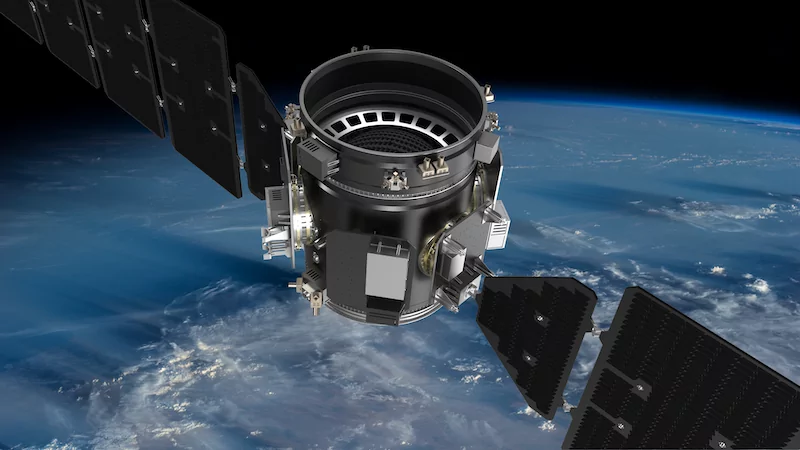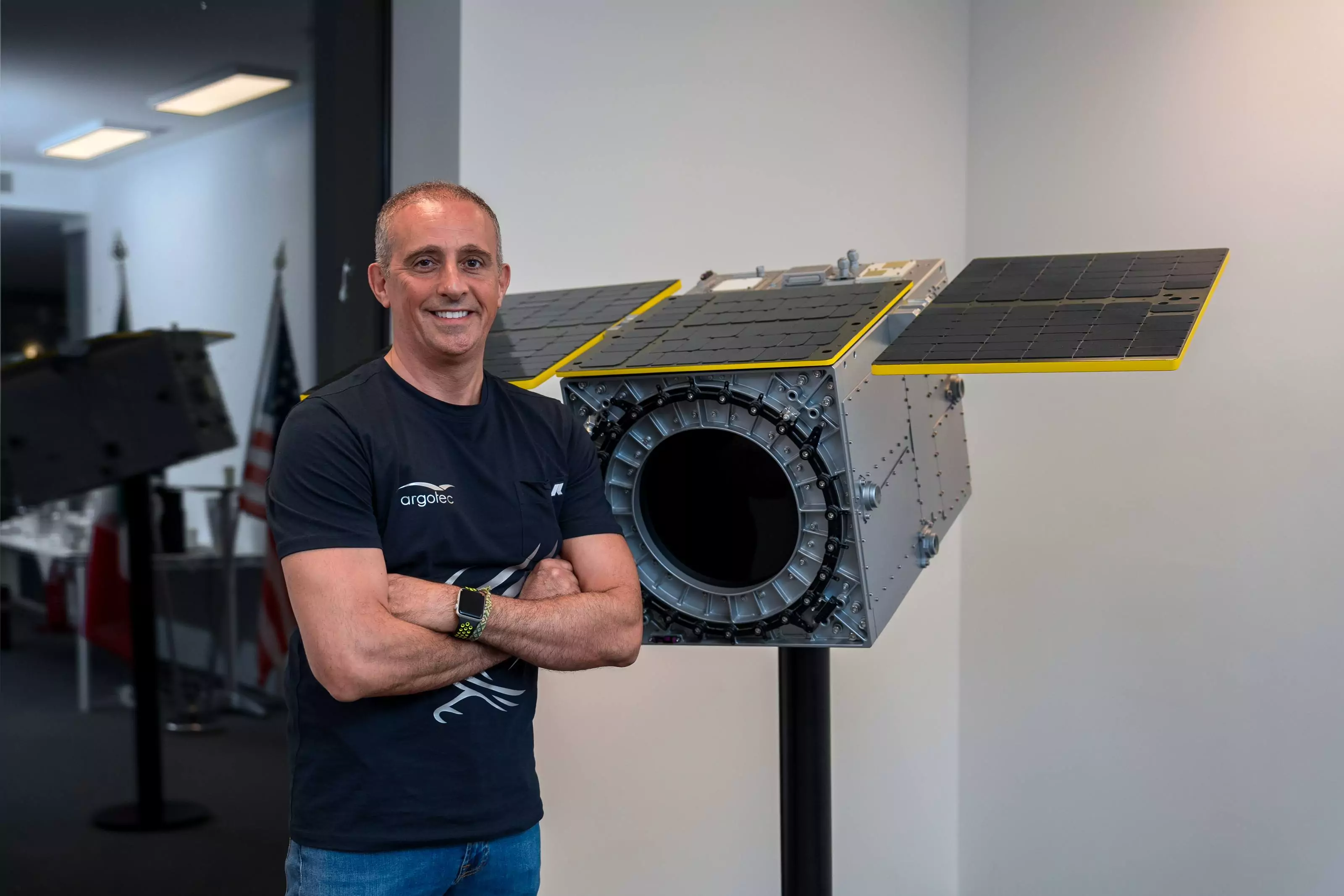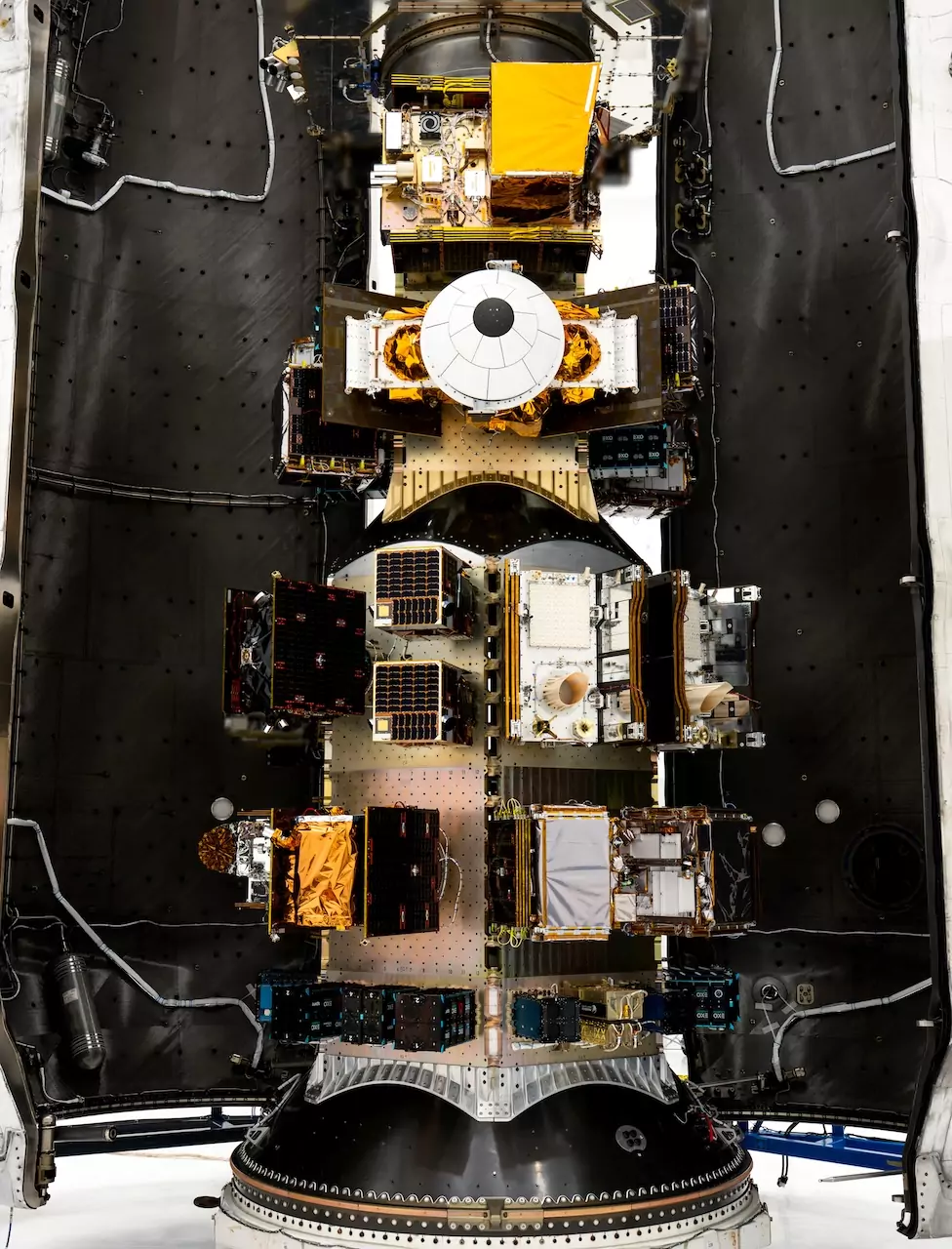
On 30 March 2026, D-Orbit launched Wayfinder, the 22nd commercial mission of its ION Satellite Carrier (ION) orbital transfer vehicle (OTV), aboard SpaceX’s Transporter-16 mission.
The OTV was launched from Space Launch Complex 4E (SLC-4E) at Vandenberg Space Force Base in California at 04:02:00 PT (13:02 CEST). Following liftoff, the ION SCV Astounding Alexandra was deployed into a sun-synchronous orbit at an altitude of approximately 510 km.
Wayfinder brings with it a diverse mission payload, combining satellites destined for deployment into their operational orbits with hosted payloads to be tested and demonstrated in orbit. Once in orbit, the ION SCV Astounding Alexandra will join the growing fleet of ION vehicles already operating in space, further expanding the network supporting D-Orbit’s Space Cloud services and in-orbit computing capabilities.
“Wayfinder embodies everything ION was designed for: deploying satellites to their operational positions whilst simultaneously hosting payloads that require time and specific conditions in orbit to demonstrate their technology, all whilst enriching our orbital infrastructure with new nodes for our Space Cloud Services,” says Matteo Andreas Lorenzoni, director of the D-Orbit orbital access business unit, in a statement “This is what sets ION apart: a single mission capable of generating real value for multiple customers and use cases, making access to orbit faster, smarter and more cost-effective for all passengers on board.”
The ION Satellite Carrier is a versatile spacecraft capable of carrying and releasing satellites in separate orbital slots. It can also accommodate third-party payloads, including innovative technologies, research experiments and instruments requiring in-orbit testing. ION is also capable of supporting edge computing and space cloud services, providing satellite operators with advanced in-orbit storage and computing capabilities.
D-Orbit’s mission control team is currently overseeing the launch and initial orbit phase (LEOP), paving the way for the next operational phase.
ION carries:
- Camões, Agustina, Saramago and Pessoa (Lusospace) – four 8U satellites – will join PoSAT-2, already in orbit, marking the launch of Lusíada, Lusospace’s 12-satellite constellation designed to advance maritime communications through VDES technology, offering greater bandwidth, improved data integrity and enhanced security compared to current AIS-based systems.
- The SpaceMast camera (DLR Space Mast) is an ultra-thin carbon-fibre composite deployable mast system designed to validate deployment and retraction mechanisms in orbit, whilst demonstrating in-orbit imaging capabilities. Extending up to 3.5 metres from the host OTV, the system will position two cameras to capture wide-angle footage of the spacecraft’s operations, including satellite releases and wide-angle views of operations with the Earth in the background.
- QubitCore (Qubitrium) is a compact, CubeSat-compatible payload designed for quantum communication missions from space. The system enables experiments and demonstrations of secure quantum key distribution (QKD) in orbit, contributing to the development of a new generation of encrypted communication infrastructure from space.
Expanding on the mission statement, D-Orbit is also launching the following on three additional ports of the Transporter-16 mission:
- OPTISAT, a 6U CubeSat mission designed, developed and operated under the leadership of Planetek Hellas to demonstrate secure optical connectivity technologies. The mission is being carried out under a contract with the European Space Agency and is supported by the Greek Ministry of Digital Governance as part of Greece’s national satellite capability development programme.
- Weather Stream’s GEMS2-Amethyst, a second-generation dual-band passive microwave radiometer with an extended spectral coverage, designed to monitor global weather by measuring atmospheric profiles of temperature, humidity and precipitation. Building on the experience of previous missions, the system expands the global meteorological observation system to support improved numerical weather forecasting, environmental monitoring and operational decision-making for government and commercial users.
- ISISPACE and D-Orbit have collaborated to provide release mechanisms and integration services in support of the launch of two satellites, including the PARUS-6U1 mission on behalf of the Taiwan Space Agency (TASA). As the latest mission in the PARUS satellite series, following PARUS-T1 and PARUS-T2, PARUS-6U1 continues the programme’s demonstration and educational objectives, with a particular focus on ionospheric research.
With this launch, D-Orbit has now deployed more than 220 payloads into orbit since ION’s inaugural mission in 2020, establishing itself as a trusted partner for satellite deployment, in-orbit testing and space logistics services.
ALL RIGHTS RESERVED ©