Table of contents
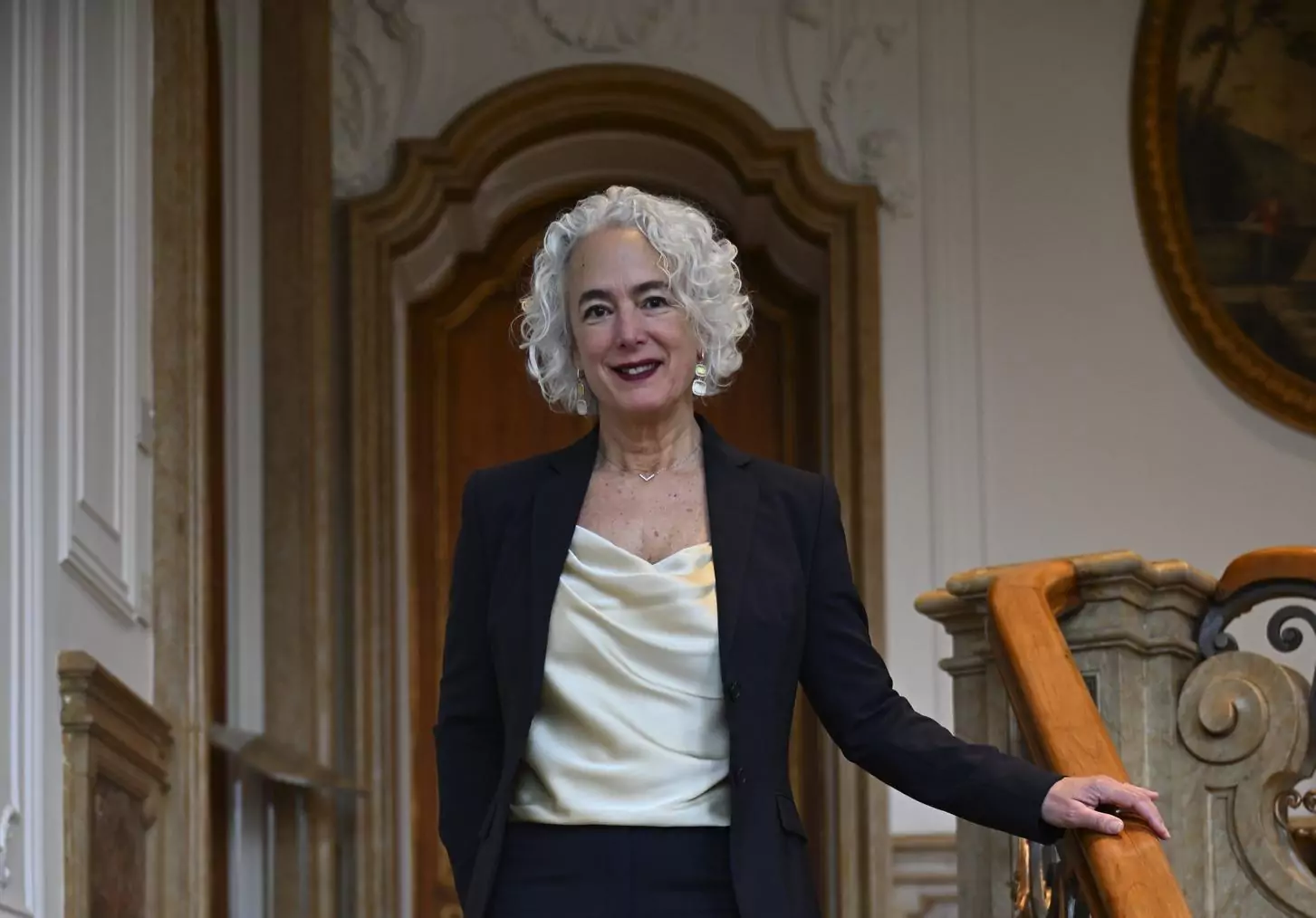
Gauss Fusion was founded in 2022 and has quickly become a European leader in the field of nuclear fusion development. In this article, we have profiled the company and its CEO, Milena Roveda, who announced a few days ago that she has decided to step down from her role on 15 April 2026.
“I joined Gauss Fusion with a very specific goal,” she tells Startupbusiness, “to take one of the world’s most complex and promising technologies – still confined to scientific research – and turn it into a credible industrial reality. That is exactly what we have done. In three years, we have built a company from scratch, but above all, we have created the conditions for fusion to move out of the laboratory and onto a genuine industrial trajectory. We have assembled a team of excellence, combining scientific expertise with industrial capabilities, structured a European supply chain and built partnerships with the sector’s key players.”
The result that Roveda considers the most significant of all those achieved is the Conceptual Design Report: not a theoretical exercise, but the first complete conceptual design in Europe for a commercial fusion power plant. A document that defines the architecture, systems, industrial logic and development path. Above all, it is a document that has undergone independent review and been validated by international experts. “We have turned a scientific promise into a credible industrial platform. The CDR is the culmination of this cycle and the starting point for the next. For Gauss Fusion, and for me.”
Gauss Fusion is now entering the engineering phase. “My role has always been that of a pioneer and an enabler: stepping in when something doesn’t yet exist, building it, giving it structure, bringing the right people on board, making it possible, and seeing it through to the point where it can stand on its own two feet. This work has a very specific nature: it is made up of vision, but also of concrete construction, of difficult choices, of the ability to bring together different worlds – research, industry, capital, institutions – and transform them into a coherent project. And it is a job which, by definition, has a moment when it is completed.”
Gauss Fusion has thus evolved into a structured industrial programme, with a validated engineering foundation and a clear path to implementation. The transition has been made. “What this experience has reinforced in me is a very clear conviction: there is a huge gap between what we can achieve scientifically and what we can actually deliver on an industrial scale. And that is precisely where the game is played. I don’t yet know in what form, but I know I want to remain part of this challenge: in high-potential sectors where today’s choices will determine who will be competitive tomorrow. Working in contexts where the gap between scientific excellence and industrial reality is still significant and where someone must have the courage to bridge it. To build, to enable, to make it possible.”
The results of Gauss Fusion
“When we founded Gauss Fusion in 2022, our fundamental decision was already clear: we didn’t want to conduct research into fusion; we wanted to build Europe’s first commercial fusion power plant. This distinction may seem subtle, but it is in fact substantial and has guided every decision we’ve made over the past three years.”
In three years, Gauss Fusione has built something that did not previously exist: a concrete industrial project, developed with a team of 100 engineers from the sector’s leading European companies – ASG Superconductors via Hofima and SIMIC for Italy, IDOM for Spain, Alsymex-Alcen for France, RI Research Instruments and Bruker EAS for Germany – and with world-class research institutes such as CERN, the Max Planck Institute, ENEA and KIT.
The Conceptual Design Report was submitted to the German Government in October 2025: over a thousand pages setting out, for the first time in a comprehensive manner, how fusion could evolve from scientific research into industrial reality. Plant architecture, safety, materials management, costs, and timelines. The estimated investment for the first reactor is between €15 and €18 billion, with the aim of completing it by the mid-2040s.
In January 2026, an independent panel of senior European experts, chaired by Hartmut Zohm, a professor at the Max Planck Institute, completed its review of that CDR, acknowledging the soundness of the approach and the consistency of the system engineering with future industrial implementation. It is the first and only fully structured European conceptual design for a commercial fusion power plant. In collaboration with the Technical University of Munich, the first European site mapping study has also been completed: 900 potentially suitable sites across nine countries, 196 of which are in Italy.
Today, Gauss Fusion is entering the engineering phase. The journey from research to industry is a reality; it is well-documented and has been independently verified.
The role of Europe
Europe has already lost out on solar power, wind power, semiconductors, batteries and electric vehicles. “Not for lack of talent, because the talent is there, the research is there, and the engineering excellence is there.” “We developed the expertise, and then we let others build the industries. The problem has never been a lack of talent. It has always been a matter of decision-making.”
Today we find ourselves caught between two powers that have made clear and consistent choices. The United States has an explicit strategy of energy dominance, which is well-funded and enjoys broad support. China is investing heavily, in a state-coordinated manner, in every technology it deems strategic, with time horizons that we would struggle even to imagine. In the middle lies a continent that continues to produce extraordinary science and patents, but which struggles to transform all this into sovereign industrial chains. And the same dynamic is repeating itself in artificial intelligence, quantum computing, quantum technologies, and every sector that will matter in the coming decades.
“The question I ask myself – and which I believe Europe must urgently ask itself – is not whether we have the capabilities. We do. It is whether we have the will to stop operating in national silos and finally build genuine European industrial programmes. Programmes with adequate resources, clear governance, patient capital, and integrated supply chains. Technological sovereignty is not proclaimed in press releases: it is built through consistent choices over time, encompassing public policies, industrial investment and manufacturing capacity. In this scenario, Italy has a responsibility and an opportunity that I believe are still underestimated. I am not talking about rhetoric; I am talking about concrete, existing expertise. I see this with Gauss Fusion: ASG Superconductors is among the leaders in superconductivity. ENEA brings decades of research on fusion. SIMIC has the manufacturing capacity for large-scale mechanical infrastructure. The ICAS Consortium works on advanced materials. These are precisely the skills on which the fusion industry – and, more generally, the energy industry of the future – will be built.”
The Italian-German partnership, reaffirmed during the meeting between Meloni and Merz, is not merely a diplomatic formality. It is a tangible industrial lever, combining Germany’s manufacturing strength and technological vision with Italy’s supply-chain excellence. “It is the kind of structured cooperation between key countries, with clear responsibilities and shared investments, that Europe needs to stop losing the battles that matter. I remain convinced that the greatest risk for Europe is that of taking no risks at all, and that would be a real shame because it currently holds the capacity to lead the world towards the development of nuclear fusion—which means not only the ability to produce clean energy capable of providing a concrete solution, alongside renewables, to the major issue that affects us all and which we see becoming increasingly complex every day – that of energy supply – but also to create a genuine industrial supply chain with expertise in various fields, involving companies from many different sectors, with the possibility of channelling investment into concrete projects”.
ALL RIGHTS RESERVED ©