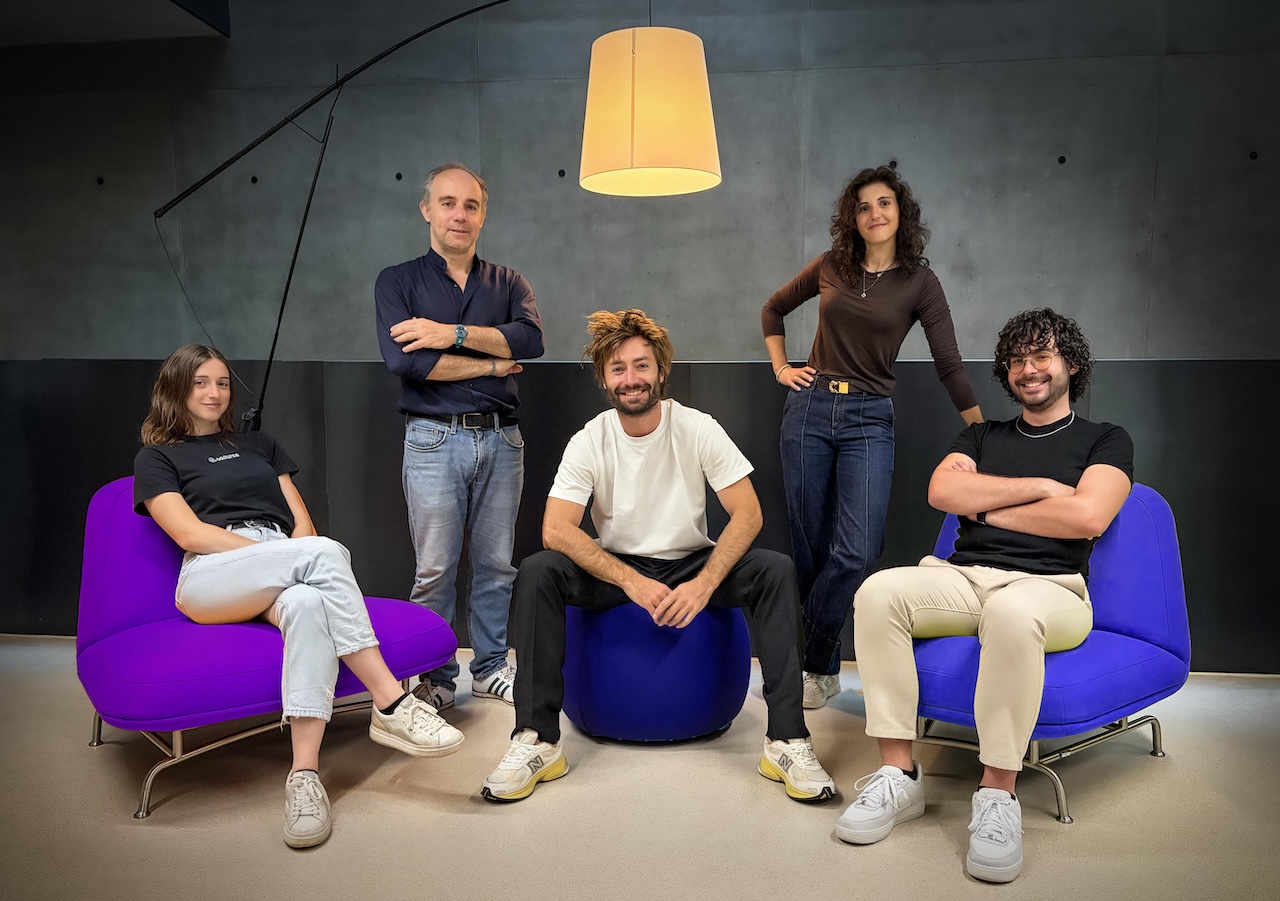
Seltz, a San Francisco-based company led by Italian Antonio Mallia, which develops web retrieval technologies to help large language models and AI agents search for, extract and classify up-to-date information from the internet, has announced that it has closed a seed round of $12.5 million. The round was led by Speedinvest and B Capital, with participation from the Italian funds United Ventures, Italian Founders Fund, 2100 Ventures and Vento Ventures, as well as Future Present, Arc Investors, Mango Capital and Future Back Ventures (the venture capital arm of Bain & Company).
Seltz’s angel investors and advisory board members include figures from companies such as Amazon, Google, Ramp, Cohere, Synthesia and Databricks, as well as lecturers from leading information retrieval laboratories at institutions such as New York University and the University of Glasgow.
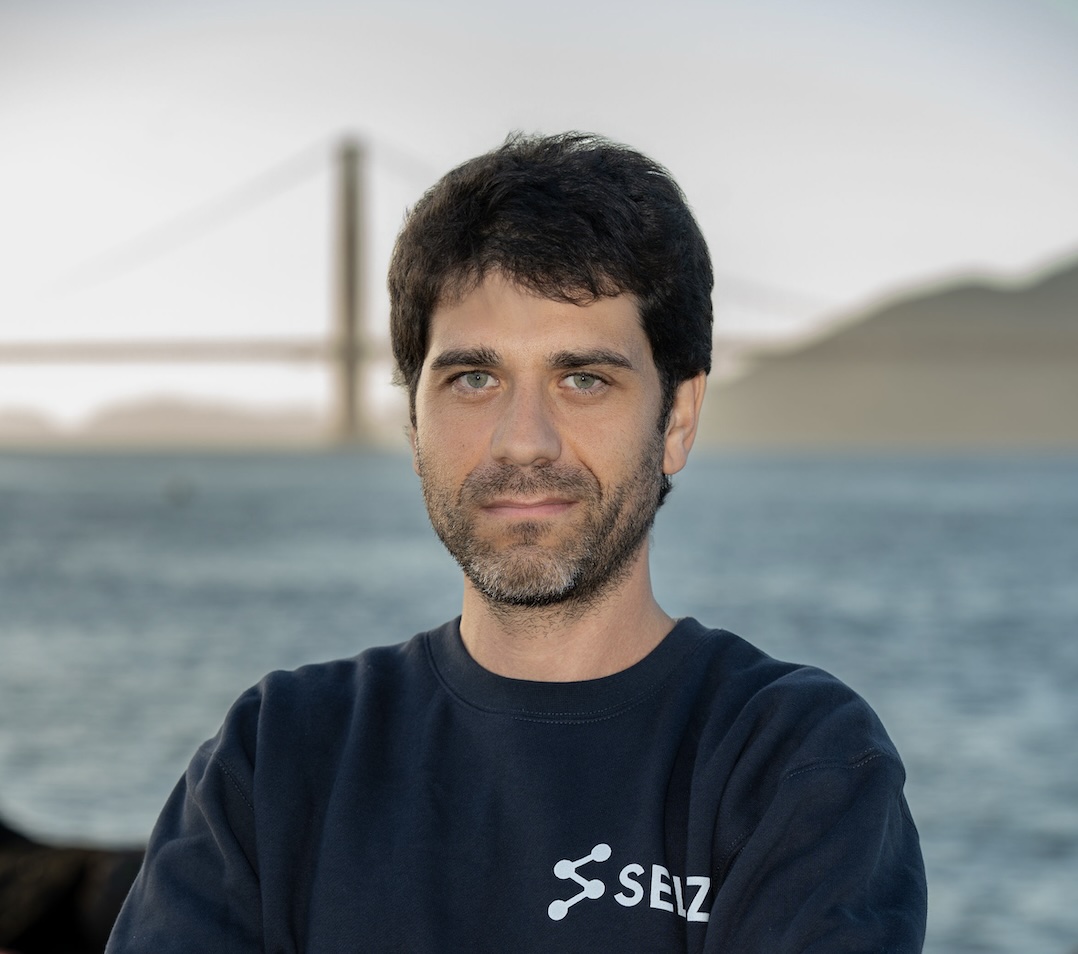
The founder and CEO of Seltz is Antonio Mallia (pictured), an Italian researcher specialising in information retrieval, who holds a PhD from New York University. His career began in Italy at the CNR, the National Research Council, and continued in the United States, where he held research roles at Amazon, Pinecone and Bloomberg. Mallia has designed a web retrieval infrastructure tailored for AI agents, which require access to external, up-to-date information from the web in order to complete complex tasks. Through APIs, Seltz’s technology enables AI systems to retrieve up-to-date, citable content with fast response times, without relying on search engines designed for people navigating links and web pages.
“AI agents do not perform at their best when they are given an ordered list of links. They need up-to-date, citable information that is available as close as possible to the time of publication, with response times measured in milliseconds, not seconds,” says Mallia in a statement. “This is why we need a search infrastructure designed from the outset for machines. We created Seltz to meet this need.”
Many AI search products currently available are wrappers built on top of engines such as Google, Bing or Brave, designed to cater to people’s search behaviour. With the arrival of AI agents in production environments, the limitations of this consumer-grade infrastructure have become increasingly apparent. The problem arises particularly when an agent has to perform multiple searches in sequence: latency builds up and the system consumes computing power to interpret results designed for human users, not machines.
Unlike providers that rely on wrappers built on top of existing search engines, Seltz directly owns and manages the entire web retrieval stack: crawling, information extraction, indexing, retrieval and ranking. This control over the infrastructure enables the company to make architectural choices that would not be possible with third-party solutions.
Over the past six months, Seltz has built its infrastructure, operating across San Francisco, New York, Los Angeles, Paris, Berlin, Pisa and Leipzig. The company combines Silicon Valley’s expertise in AI infrastructure with strong European expertise in information retrieval and search engine research. Pisa, in particular, is recognised as one of the international hubs for information retrieval and embodies the Italian research tradition from which Antonio Mallia hails. This expertise originated in Italy, was brought to Silicon Valley and is now being harnessed within a global company. The Seltz team works remotely on an international basis, with a presence spread across the United States and Europe: around half the team is based in San Francisco and the other half in Europe.
Since the public launch of its API, Seltz has seen a six-fold increase in developer sign-ups and has entered into its first infrastructure and data partnerships with cutting-edge AI companies. The new funding will enable the company to expand its crawling and indexing capabilities, strengthen its engineering and research team, and accelerate its go-to-market activities targeting cutting-edge AI labs, AI-native start-ups and enterprise organisations.
Seltz focuses on web retrieval use cases where accuracy, up-to-date information and source verification have a tangible impact, particularly in critical areas where incorrect or out-of-date information can result in measurable costs. The company’s initial focus is on enterprise and AI-native clients who are developing AI agents that rely on this type of information retrieval.
“Much of the AI stack still relies on infrastructure designed for humans. Seltz is one of the few companies that is rebuilding this layer in a way that is right for AI agents,” says Will Wells, deeptech partner at Speedinvest. “When we met Antonio, it was immediately clear that this wasn’t just another wrapper-based company. Seltz is a team that wants to build the foundational infrastructure for the next generation of AI systems.”
“Latency, reliability and control over web retrieval are critical infrastructure issues for the development of AI systems,” says Gabe Greenbaum, general partner at B Capital. “Seltz understood this right from the start. We believe the team has the expertise and capability to build the right product to tackle this challenge in an AI-first world.”
Seltz has recently launched the Dynamic News Search Benchmark (DNSB), a public benchmark designed to compare the quality and latency of web retrieval across different AI search providers. According to the company, Seltz achieves industry-leading results in both end-to-end latency and the effectiveness of information retrieval. In the long term, Seltz’s ambition is to become the default standard for web retrieval and knowledge for AI agents, enabling them to access the web in a programmable way, just as applications access databases today.
ALL RIGHTS RESERVED ©