Table of contents
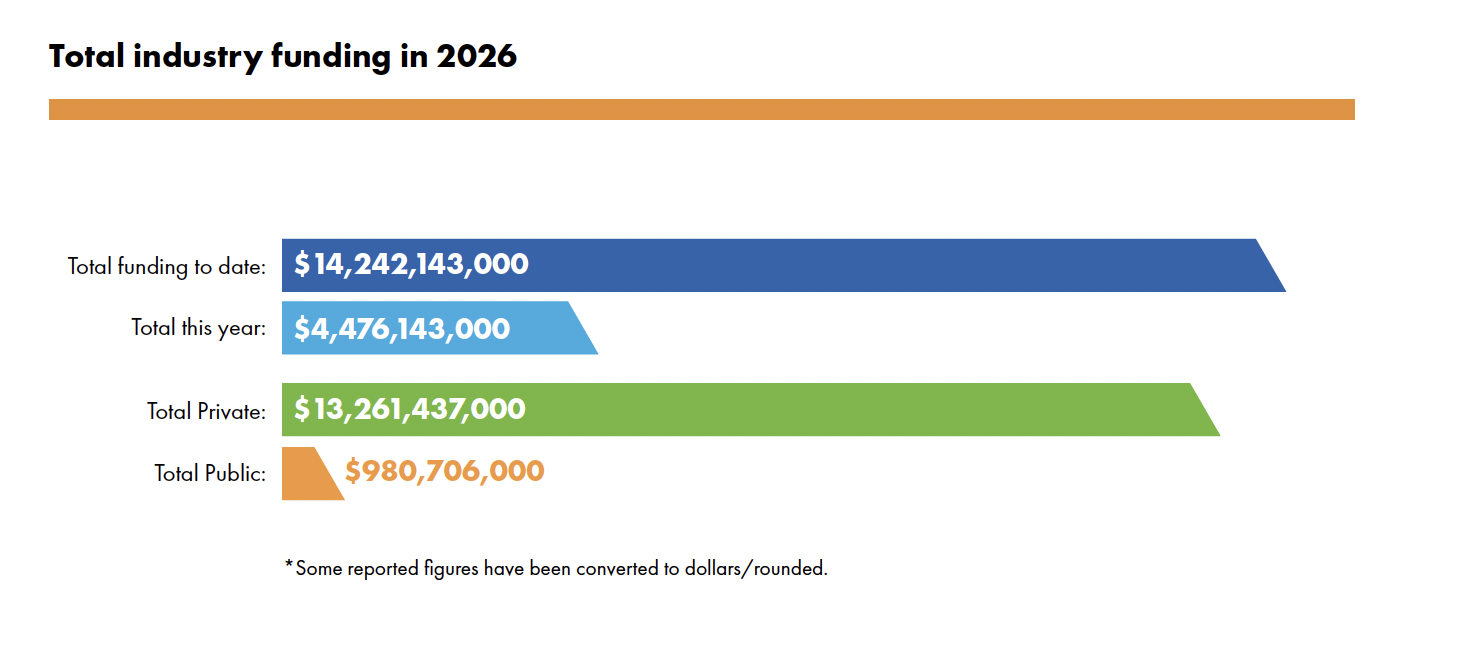
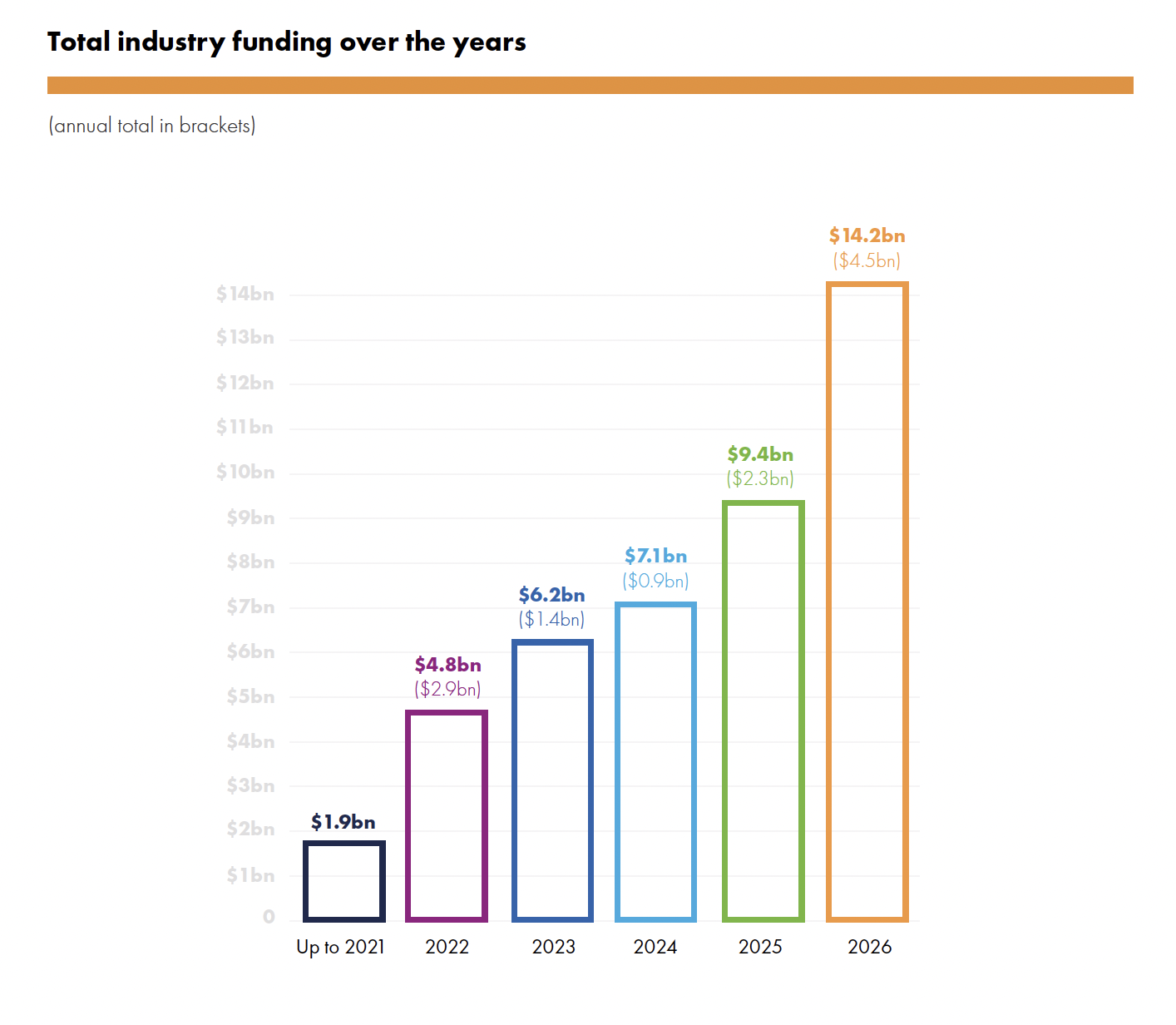
According to the Fusion Industry Association (FIA)’s report, “The Global Fusion Industry in 2026”, annual funding for the nuclear fusion industry reached a record high of $4.48 billion in the 12-month period ending in July 2026. The fusion sector has recorded a total of $14.24 billion since the annual survey began in 2021 and now employs over 16,000 people.
Now in its sixth edition, the report aims to provide a comprehensive overview of growth in the fusion sector and progress towards commercial nuclear fusion. This year, the FIA surveyed 56 companies operating in the fusion sector, compared with 23 in 2021, with six new companies joining the sample since last year, whilst three have withdrawn.
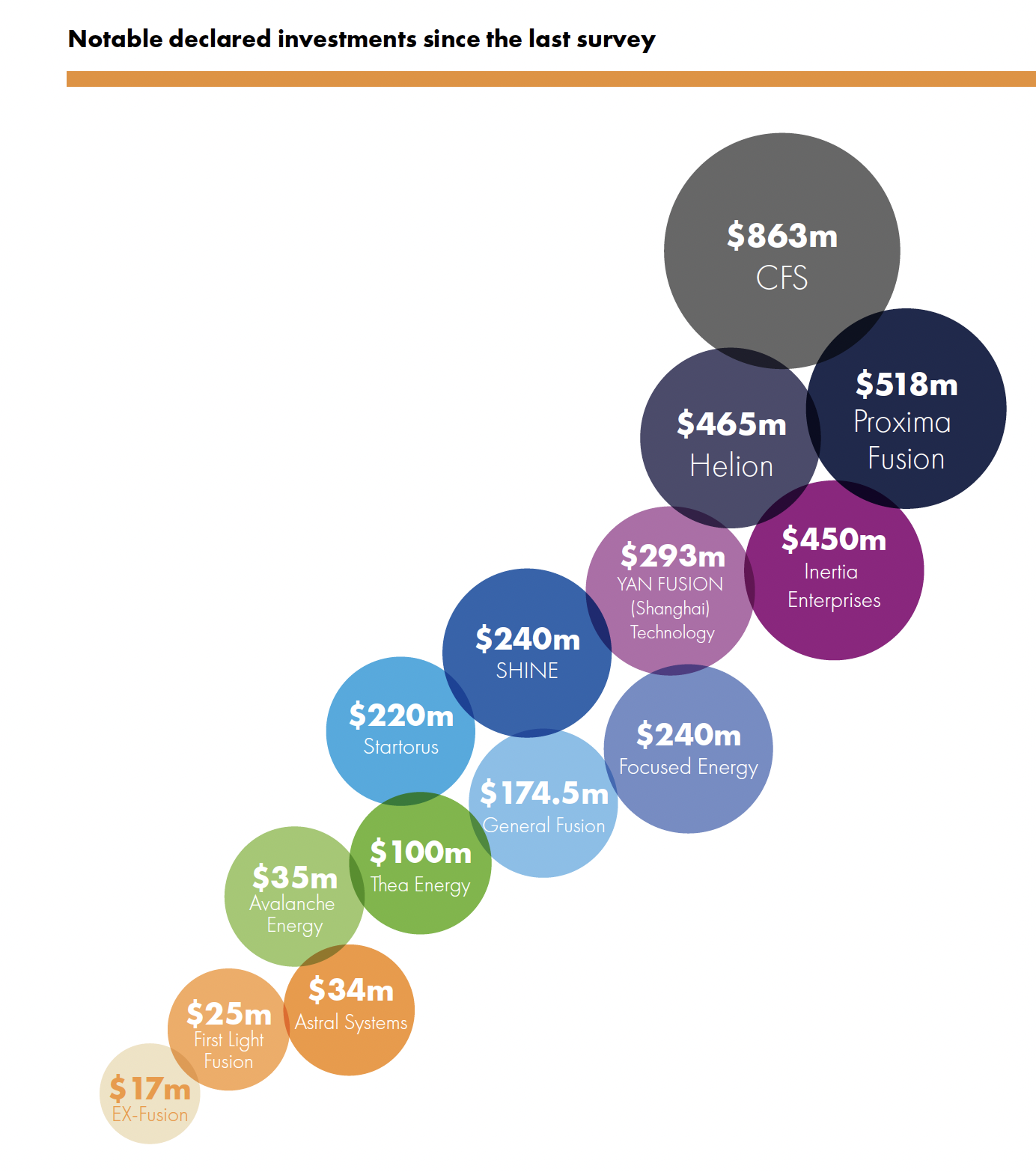
This year’s figures include major funding rounds such as that of Commonwealth Fusion Systems (CFS), which raised $863 million in a Series B2 round in August 2025; Inertia Enterprises, which raised $450 million in a Series A round in February 2026; Helion Energy, which raised $465 million in June 2026; and Proxima Fusion, which raised $518 million in July 2026.
This year, for the first time, investments from companies that have announced their intention to list on the stock exchange have also been included. Two companies, TAE Technologies and General Fusion, are preparing to list on the Nasdaq in 2026, and both have received hundreds of millions of dollars in new investment as part of the listing process. Their entry into the stock market demonstrates growing confidence in commercial fusion, bringing new investment alongside a different kind of oversight of the sector.
Energy purchase agreements
Market demand for fusion energy is growing, and this year’s report includes, for the first time, questions on siting and power purchase agreements (PPAs). Six companies already have a siting agreement, whilst four others are actively evaluating various options. Five companies have a PPA, a purchase agreement or a similar commercial commitment, whilst two others are currently in negotiations.
These agreements are being driven by the demand for energy generated by artificial intelligence – spearheaded by Microsoft’s PPA with Helion Energy in 2023 and Google’s agreement with CFS in June 2025 – thereby reducing market risk and ensuring that both buyers and sellers are ready as soon as fusion becomes commercially viable.
Different approaches and technologies
Companies operating in the fusion sector continue to focus on various technological approaches, including magnetic confinement (48 per cent), inertial confinement (21 per cent), magneto-inertial confinement (14 per cent) and many others. Geographical diversification within the private fusion sector is also on the rise. Although US companies dominate (28), including all five that have raised over a billion dollars, they are joined by companies from 12 other countries, including four each in the UK, Germany and China, and three each in India, France and Japan.
Commercial availability by 2030
What has not changed is the timeline: the majority of companies in the sector (71 per cent) still expect the first fusion plant to generate electricity on a commercial scale by 2030. However, challenges remain. Despite the increase in annual investment, funding remains the main short-term challenge, cited by two-thirds of respondents (67%), although to a lesser extent than last year (84%). When asked how much funding would be needed to make a fusion plant commercially viable, responses ranged from $100 million to $10.9 billion, with an average of $2.7 billion, slightly higher than last year’s figure ($2.6 billion).
Other major short-term challenges mentioned were energy efficiency (64 per cent) and neutron-resistant materials (64 per cent). In the long term, the availability of neutron-resistant materials (57 per cent) was identified as the main concern, followed by energy efficiency (52 per cent) and self-sufficiency in tritium (52 per cent).
“This year’s report demonstrates the progress made in nuclear fusion: from a sector defined by national laboratories and government research and development programmes, it is now dominated by private investment, which has exceeded four billion dollars in a single year,” said Andrew Holland, CEO of the Fusion Industry Association, in a statement – This year’s record funding comes at a time when the need for fusion energy is more pressing than ever, as energy security concerns and environmental threats are compounded by the need for vast quantities of clean energy to power the artificial intelligence revolution. I am confident that the sector has the capacity to achieve commercial fusion by 2030. The existence of site selection agreements and power purchase agreements demonstrates that commercial fusion energy is on the horizon. However, in addition to private investment, companies in the fusion sector still need government support to tackle common challenges, including the availability of durable materials and the fusion fuel cycle. Governments that update their programmes and funding priorities today to meet the sector’s needs will be the ones that capitalise on this vital emerging industry.”
ALL RIGHTS RESERVED ©