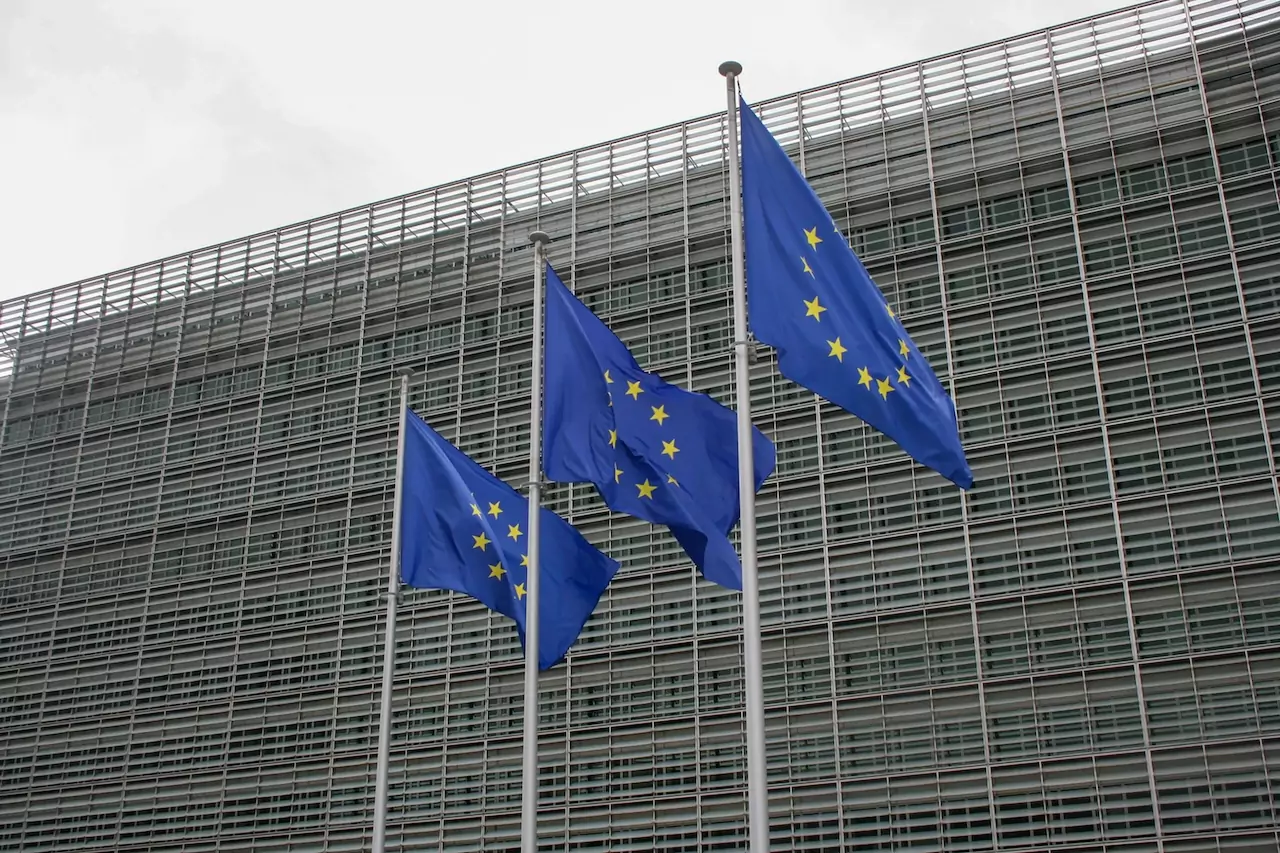
Ursula von der Leyen, President of the European Commission, says: ‘Europe has the talent, the ideas and the ambition to become the ideal place for innovators.’ Yet today, European entrepreneurs looking to expand their businesses are faced with 27 different legal systems and over 60 national company forms. With EU Inc., we are making it much easier to start and grow a business across Europe. Any entrepreneur will be able to set up a company within 48 hours, from anywhere in the European Union, entirely online. This crucial step is just the beginning. “Our goal is clear: a single Europe, a single market, by 2028,” he said during the meeting to approve the so-called 28th regime, also known as EU Inc, about which we have written extensively here, here and here in recent months, and which took place today in Brussels, as reported in the press release issued by the Commission itself (the full 134-page document can also be downloaded from the page).
Is this long-awaited legislation – which activists, associations and ecosystems across Europe have worked so hard to support – what we were hoping for? Is it what is really needed? For some, it is an important step forward; for others, it is still too weak a signal to give Europe – or rather European businesses, including start-ups – the competitiveness needed to sustain growth, support investment and make the European Union a place where start-ups can not only be born but also grow and become scale-ups first and then unicorns, competing with those rooted in the US or China.
The EU Inc, or more precisely the European limited liability company, is designed specifically for start-ups and scale-ups operating internationally, but the new corporate structure will be available to all founders and businesses.
We asked the Italian Tech Alliance and InnovUp – represented respectively by General Manager Francesco Cerruti and Director Giorgio Ciron – the two Italian associations most actively involved in supporting the national and European start-up ecosystem – whether what was approved today actually marks a real turning point.
“Following two years marked by numerous announcements, some of which were accompanied by an excessively messianic tone from the European institutions themselves, a much-anticipated proposal for a regulation has now been presented. We are moderately satisfied because the main issue at this stage was whether to opt for a regulation or a directive, and the chosen legislative form is more binding, leaving less room for Member States’ discretion,” says Cerruti. “The legal basis identified is Article 114 of the Treaty on the Functioning of the European Union, which requires the approval of a qualified majority of Member States, thereby eliminating the risk of vetoes by individual countries. A lengthy legislative process now begins, which we will monitor very closely to ensure the measure is as effective as possible.
“The proposal presented today by the European Commission on EU Inc. is, for us, an important political signal and a step that has been awaited for years: it stems from a push by the innovation sector and finally puts in writing a point that the ecosystem has long been highlighting, namely that the fragmentation of the Single Market – with 27 different company law regimes – is a structural barrier for those wishing to start up and, above all, scale a business in Europe,” says Ciron. We welcome some very concrete elements, as they are a step in the right direction: the ‘digital-only’ approach and the aim of setting up a company quickly – within 48 hours – and at a low cost – up to €100. Also positive is the attempt to make the framework more compatible with venture capital principles, with greater flexibility regarding capital and financing instruments, and the focus on stock options and employee share ownership: in this regard, the move towards more favourable taxation that is better aligned with liquidity events is also significant, as this is one of the key issues currently hindering the ability of European start-ups to attract and retain talent.”
At the same time, the start-up ecosystem is calling on the European Commission to turn its ambitions into concrete results, adds Cerruti: “A truly 28th regime should include a single European register with a company database updated in real time, a central court for dispute resolution, and a genuinely new system, built from scratch, without adding another layer to the 27 existing national regimes. If designed effectively, the legislation could represent a game-changer for Europe. A truly pan-European framework would, in fact, send a strong signal to international founders and investors. We have also recently submitted our responses to the European Commission’s consultation on removing the barriers holding back the venture capital and growth capital markets. “The aim remains to establish a more efficient European system for the formation, circulation and raising of capital, by setting out on a regulatory path towards a single definition of funds.”
“That said, EU Inc, as it stands today, is not yet the quantum leap it ought to be. It is not, in fact, a truly fully autonomous 28th regime: it continues to rely largely on national registers, procedures and interpretations. The risk is that practical differences will remain between countries precisely on the aspects we wish to overcome – timelines, documentation, legal certainty – and that in some contexts, such as Italy, where notary fees can be a significant factor, the stated objectives will be partly undermined,” continues Ciron. “If the ambition is truly ‘choose Europe to start and scale’, the negotiation phase must decisively strengthen what is currently lacking: a truly European infrastructure and register, not just a common interface; more consistent EU-wide mechanisms for interpretation and dispute resolution; and rapid, predictable insolvency and restructuring procedures throughout the entire growth cycle, not just for micro-enterprises. Without these pillars, the risk is that we will end up with a European label that offers a still inconsistent experience and is therefore less reliable for founders and investors. InnovUp continuerà a lavorare, insieme ai partner europei dell’ecosistema, perché EU Inc diventi uno strumento semplice, prevedibile e davvero competitivo. Ultimately, the key question is a very practical one: will founders actually choose it over domestic alternatives? And will investors regard it as a reliable vehicle, with clear rules and consistent enforcement? It is against this test of adoption that Europe’s true ambition will be measured, and it is here that, whilst acknowledging the progress made, we are calling for the bar to be raised even higher.
Giovanni Toffoletto, CEO and founder of LexDo.it – a company that supports businesses in the process of setting up online – and a member of the InnovUp Board responsible for matters relating to business incorporation, explains: “The Commission’s proposal is an important step for the European Union. At last, a concrete attempt is being made to tackle the complexity of European bureaucracy, with credible proposals that move towards greater harmonisation. The road to effective implementation is still long, and the details of implementation will be decisive. But the signal is clear: Europe is finally moving in the right direction. It is also positive that the Commission has worked alongside the main European start-up associations, listening to many of the requests made by entrepreneurs. In this process, Italian associations too, such as InnovUp, of which we are a part, are playing an important role in supporting this change as much as possible. It would now be desirable for Italy too to take the initiative, applying some of the EU Inc principles to Italian companies already, in order to remain competitive with the rest of Europe. In our country too, we need the establishment and management of fully digital businesses, alongside the elimination of costs and taxes that end up penalising those who wish to start a business. It is unthinkable that setting up an Italian limited liability company (Srl) is still burdened by over €600 in taxes alone, even before adding further operational and professional costs. In France or the UK, by contrast, setting up a company costs less than €100. (photo by Carl Gruner on Unsplash)
ALL RIGHTS RESERVED ©