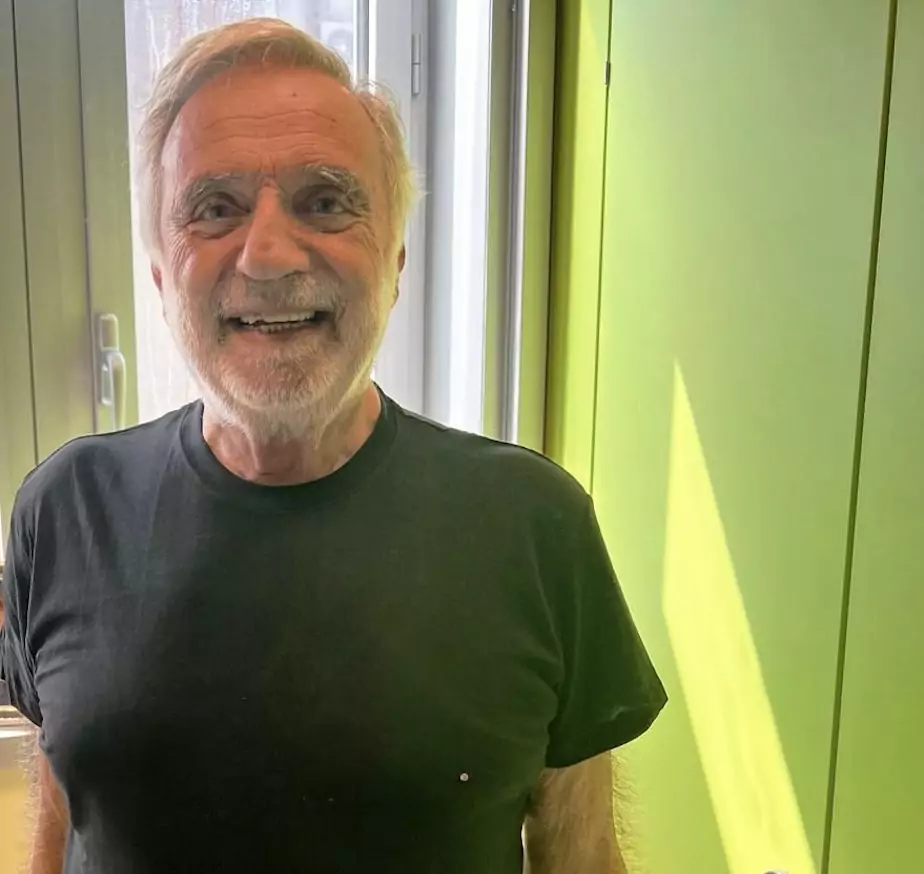
For those who really knew him, Gino was simply ‘the Professor’. That’s what his students called him, and in fact he never stopped being known by that nickname, even outside the classroom. He was a natural leader, one of those people who didn’t need to raise their voice to be heard. For institutions, however, Luigi Nicolais was a name that coincided with a function, almost with an idea of practised, undeclared public interest.
He was exactly what one imagines a university professor to be in the fullest sense of the term: a person who taught, of course, but who also brought with him a deep knowledge of industry, applied research, and the responsibilities that come with decisions that truly impact reality.
Nicolais was one of those rare individuals capable of bringing together research, vision and institutions without ever reducing them to separate compartments. An internationally renowned scientist, among the most cited in the world in the field of advanced materials, he built solid links between universities, businesses and public administration at a time when doing so was not yet a ‘mission’, but a counter-current choice.
Over 350 scientific publications. Minister for Reform and Innovation in Public Administration from 2006 to 2008, the year Startupbusiness was founded, immediately after Lucio Stanca, who had pioneered that role, Councillor for Research for the Campania Region, President of the CNR, lecturer at the Federico II University of Naples, professor in the United States, professor emeritus of Materials Science and Technology at the Federico II University. A career spanning research, academia and institutions, leaving a concrete mark, not just a string of appointments.
Born in Naples, he would have turned 84 on 9 February. He brought the talent of the South to the world without ever severing his ties with his roots. A native of Sant’Anastasia, he lived between Naples, Rome and Vico Equense, always remaining deeply anchored to his homeland. Not out of nostalgia, but out of responsibility.
What does Gino Nicolais leave us today? The answer goes beyond the roles he held and his CV. In addition to his research on polymers, which made him a global reference in materials science, Nicolais leaves behind a way of understanding innovation as a collective, concrete and measurable process. An approach that generated spin-offs, start-ups and new trajectories of technology transfer long before these terms entered common parlance.
The most important title, the one that remains, is not written anywhere. He was the man who, before many others, truly believed in the Italian start-up ecosystem and, in particular, in that of the South. When talking about innovation was not a fashionable thing to do, but a responsibility to be taken on.
That’s why he was more than a professor: he was a teacher. Not for rhetorical reasons, but for his method. For his clear advice, sincere compliments and practical tips given without filters. He pushed many of us to do, to connect, to overcome unnecessary fragmentation, to think big while keeping our feet firmly planted in reality. When he talked about innovation, he always started with facts. Clichés were never his thing.
For me, and for many others, he was also a friend. It was easy for different worlds to try to involve him: politics, institutions, universities, industry. And in every context, he tried to leave a mark, not a signature. He was one of those people who open up new paths, bring people together and include talent through actions, even before words.
As minister, he launched measures that paved the way for venture capital in southern Italy, including pioneering instruments such as the HT Sud Fund. These were concrete attempts, imperfect but necessary, to connect research and capital and give rise to new businesses. Today, those choices seem natural. At the time, they required vision and courage.
He has demonstrated that talent born in Naples can compete and shine on a global level without denying its roots. With rigour, with humanity, without ever separating competence and responsibility.
One of his latest projects is Materias, an early-stage accelerator dedicated to technological innovation and technology transfer. It is a quiet but strategic infrastructure designed to transform scientific research and advanced materials into new businesses, with operations based between Naples and Bari and a base on the Federico II campus in San Giovanni a Teduccio. A place that today is not only ‘where the Apple Academy is’, but also one of the places where Nicolais has continued to work for the university and the local area, even after completing his academic commitment.
Today, Naples, southern Italy and Italy as a whole have lost an extraordinary mind. The world of research and academia has lost a pillar. Those who believe in innovation as a collective responsibility have lost a true point of reference.
Thank you, Gino. For what you have built. For what you have suggested, created and inspired. Thank you also for the compliments and advice that have helped us to think and act better. For making innovation ‘made in Naples’ something serious, credible, concrete and international.
The funeral chapel for Luigi Nicolais, professor emeritus of Materials Science and Technology at the Federico II University of Naples, will be set up today, 12 January, from 3.30 pm to 8.30 pm in the Pessina Hall of the Federico II University (headquarters of the Rectorate). It will reopen tomorrow, 13 January, from 8 a.m. until the transfer of the coffin to the Basilica of Santa Chiara, where the funeral will take place at 4 p.m.
ALL RIGHTS RESERVED ©