The market is legal, the technology is artificial intelligence, the co-founders come from different and complementary backgrounds, the latest round in September 2025 was €16 million from national and international investors led by the US fund Base10, and it is one of thirteen scale-up startups that entered Endeavor’s 2026 batch.
Just twelve months ago, Lexroon reported recurring revenues of just under €800,000, but in February 2026, it announced that it had exceeded €10 million. This is a quantum leap that marks the transition from a promising young AI player in the legal sector to a structured reality, joining the club of only 10% of global start-ups that exceed €10 million in ARR (annual recurring revenue), which takes an average of about five and a half years (source: Saastr).
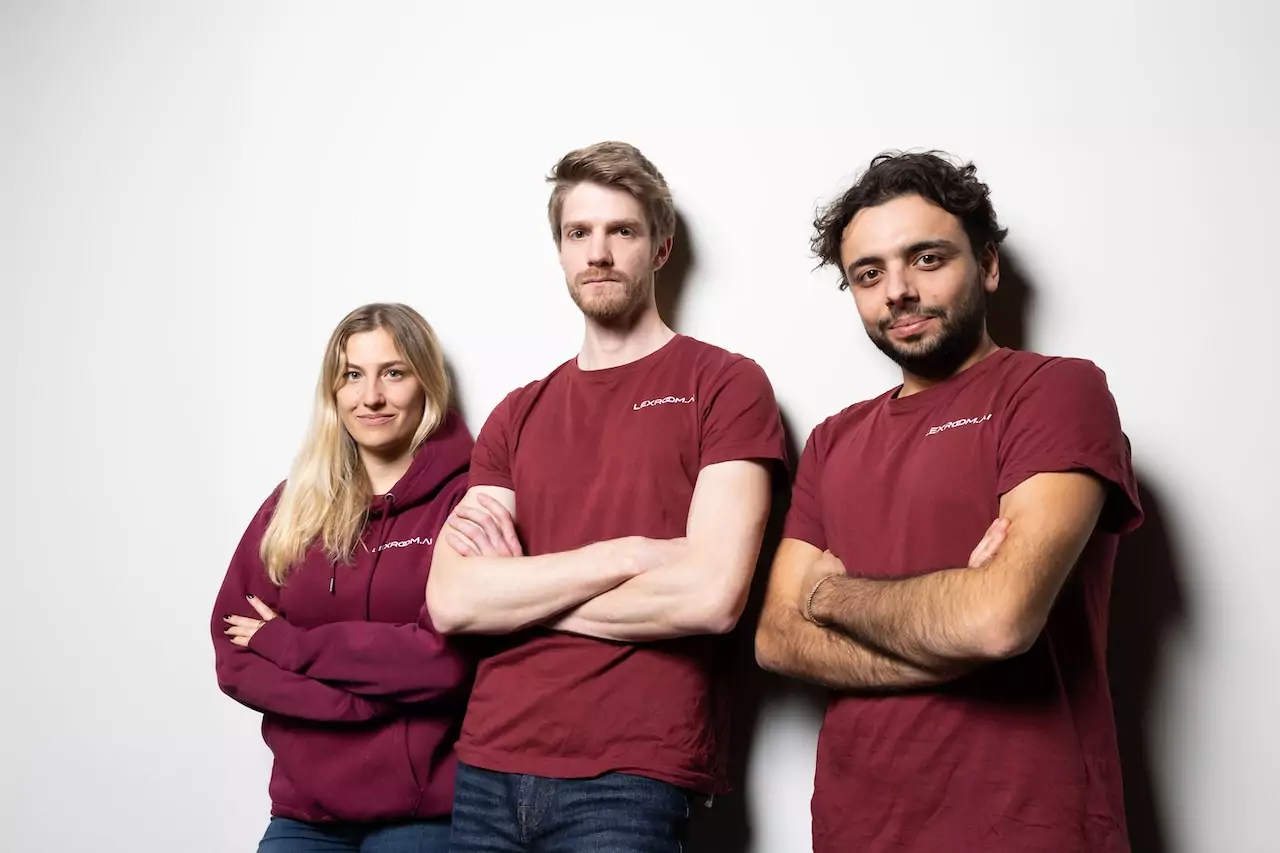
Lexroom was founded by Paolo Fois, Martina Domenicali and Andrea Lonza (pictured), three individuals with backgrounds in product development, law and AI engineering, respectively, who met at Vento, the venture builder of the Exor group. The company built its expansion starting from the bottom of the market: small and medium-sized law firms. Today, out of 7,000 active customers, approximately 6,500 are firms with between one and ten professionals, which is the ideal market for Lexroom.
“We chose to start with the largest and most widespread segment of the market, small law firms, to build a vertical AI infrastructure for law, with a data-first approach,” explains Fois, CEO of Lexroom, in a statement. “If you can create real value for a three-person firm with limited resources and tight deadlines, then you can do it for any business. That is where solid and truly sustainable growth comes from. We aim to close 2026 at €40 million, a significant portion of which will be generated abroad.”
The startup’s rapid growth is accompanied by a precise and scalable model: Lexroom uses pure SaaS with an annual subscription, modular pricing, and no structural consulting component. Retention is at 93%, while net revenue retention exceeds 120%, a sign that a significant portion of customers are expanding their use over time. But perhaps the most significant figure concerns frequency of use: 65% of monthly active users use the product daily. This means that almost two out of three users use the platform every day, with a frequency of use higher than that of many commonly used artificial intelligence applications such as generalist LLMs, for example. In the software industry, this level of continuity is the clearest sign that a tool has become an integral part of the work process.
While many start-ups have adopted an LLM-first approach, Lexroom has chosen a different path: building a data-first infrastructure based on over six million certified regulatory and case law sources. Artificial intelligence, therefore, does not generate responses based purely on statistics, but operates on a proprietary retrieval system that integrates verified datasets, drastically reducing the risk of hallucinations. “Our goal is to build a vertical AI infrastructure for law, not a chatbot for lawyers, to become the operating system for legal work in Europe,” explains Lonza, who is the CTO.
In less than 18 months, the company has multiplied its revenues and expanded its team from 30 to 90 people, with the goal of reaching 200 by 2026. New hires will focus on AI engineering, product development and internationalisation-related functions. Lexroom is growing rapidly and already behaves like an established company, taking care of its employees and organising retreats abroad. It also takes care of its positioning, having hired professionals who deal with design, events, and the image and well-being of the company and its employees.
Lexroom operates in one of Europe’s least digitised sectors. “We moved quickly abroad, starting our expansion in Spain and Germany by following a progressive strategy: local team, integration of national datasets, replication of the acquisition model in the legal segment and, only later, entry into the enterprise segment. Our goal is to open a new country every quarter in the main European civil law countries,” says Domenicali, chief revenue officer.
ALL RIGHTS RESERVED ©