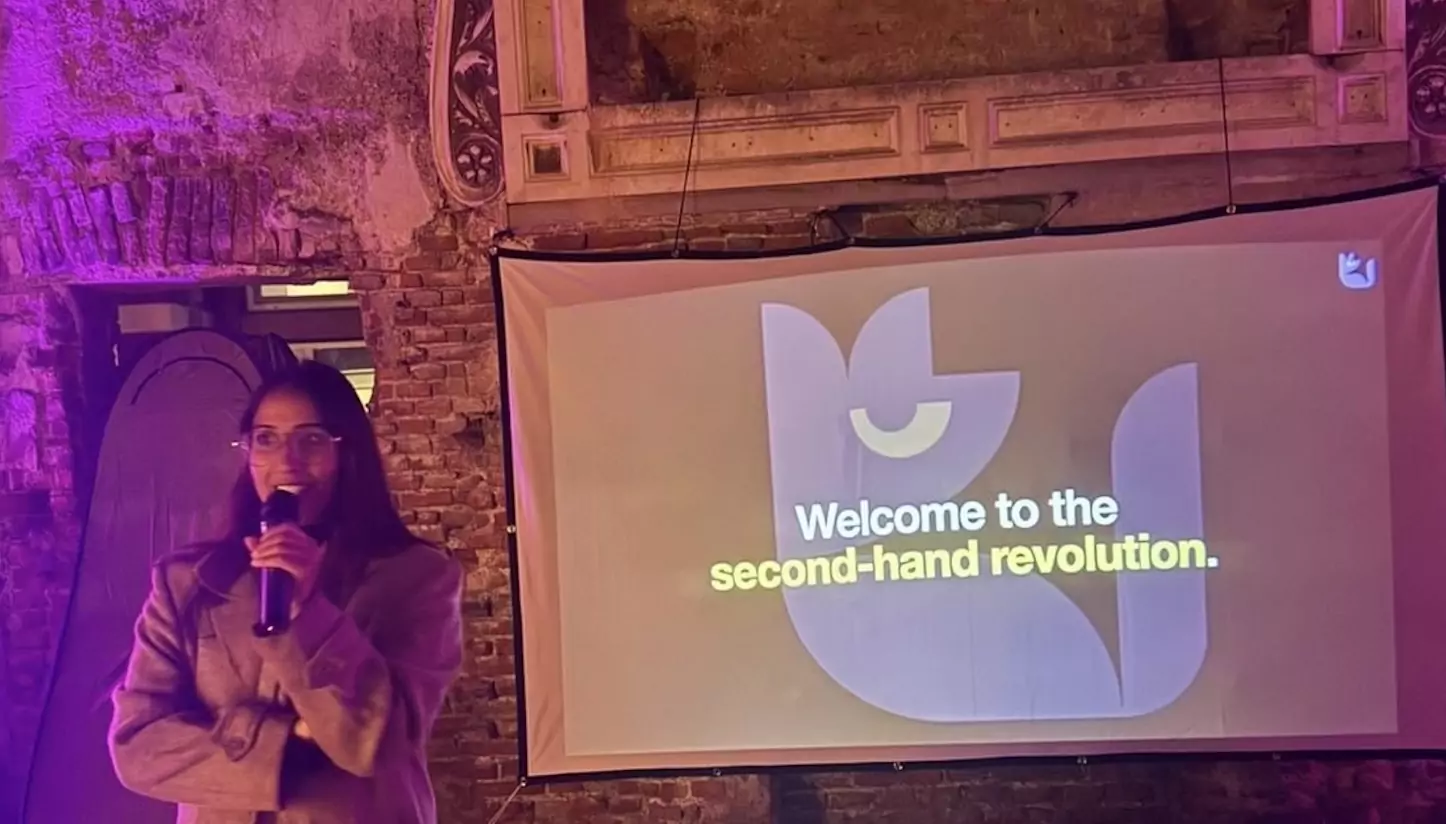
The second-hand market is growing rapidly. In Europe, phenomena such as Vinted are proving hugely popular, and especially at times like the present, with the Christmas holidays approaching, the issue is very much on people’s minds. However, according to Sarojdeep Kaur, co-founder and CEO of Mira, the market is currently fragmented.
Nowadays, those looking for a used product online are often forced to navigate between different platforms, or to always use the same ones without being able to find what they are looking for. Comparing results means moving between marketplaces with different user experiences and knowing in advance where to look for what you want.
The debate on fast fashion often overlooks this practical aspect: “Everyone talks about fast fashion, but almost no one talks about the fact that buying second-hand online is still too difficult today,” says the CEO. “If we really want to change behaviour, we must first simplify the experience.”
It is from this specific problem that the Mira project was born, a start-up that has launched an artificial intelligence-based search engine dedicated exclusively to second-hand and vintage items. Mira offers a single point of access to the second-hand market, aggregating listings from marketplaces, brands and independent shops in real time. To date, the platform has already indexed over a billion products. Unlike traditional search engines or generalist tools based on artificial intelligence, Mira is natively designed for second-hand goods, understood as the set of goods that are put back into circulation and enhanced. The platform covers various categories, from clothing to bicycles and other everyday items.
Users no longer have to guess the right keywords or jump from one site to another: with a single search, they can view up-to-date, comparable results from multiple platforms. The aim is to make buying second-hand as easy and immediate as buying new, reducing the barriers that currently limit its widespread adoption and promoting more circular consumption models.
Uno degli elementi distintivi di Mira è l’attenzione all’ecosistema B2B. La piattaforma non è un marketplace e non sostituisce i canali esistenti: al contrario, porta traffico qualificato direttamente ai siti dei partner, senza richiedere modifiche ai loro processi interni.
For small vintage and second-hand shops, often penalised by limited visibility on traditional marketing channels, Mira represents a new opportunity for discovery, putting them on the same level as the big players in terms of search results. In this way, the quality of the offering can shine through regardless of the size of the seller, including local businesses.
For more structured marketplaces and platforms, Mira offers an additional channel for user acquisition and insights into search behaviour. The business model is B2B-first and is based on traffic partnerships, affiliate commissions, lead generation, and data and analytics services for marketplaces and brands. Access to the platform is free for end users.
Mira’s competitive advantage also lies in the limitations of existing solutions: generalist artificial intelligence engines function as black boxes, with little control over results and no real specialisation in second-hand goods, often returning irrelevant responses or those predominantly oriented towards new goods; Google Shopping, on the other hand, is less effective at indexing updated data in real time and promoting the so-called long tail of small sellers. Mira was created to fill this gap, building a vertical, scalable and data-driven infrastructure designed for a rapidly growing market that does not yet have a true single point of access.
Mira has been online for a few weeks and is aiming for a European vision. The goal is to become the benchmark for second-hand research, accelerating the transition to more circular consumption models through technology. “If you make second-hand simple and immediate, it becomes the natural choice over new,” concludes Kaur (pictured).
ALL RIGHTS RESERVED ©