Mirai Robotics is a start-up with the ambitious goal of giving Europe independence and leadership in cutting-edge physical AI technologies for managing all types of maritime activities: civil, industrial, institutional and military. It is developing a complete architectural system: from proprietary autonomous vehicles to intelligent systems that can be integrated into existing fleets, to software and data analysis for managing the most complex maritime missions.
The founders’ strategic vision, combined with market demand, is also reflected in terms of investment, with Mirai Robotics closing a first round of €3.5 million led by Primo Capital, Techshop and 40 Jemz Ventures, with the participation of Italian and international angel investors.
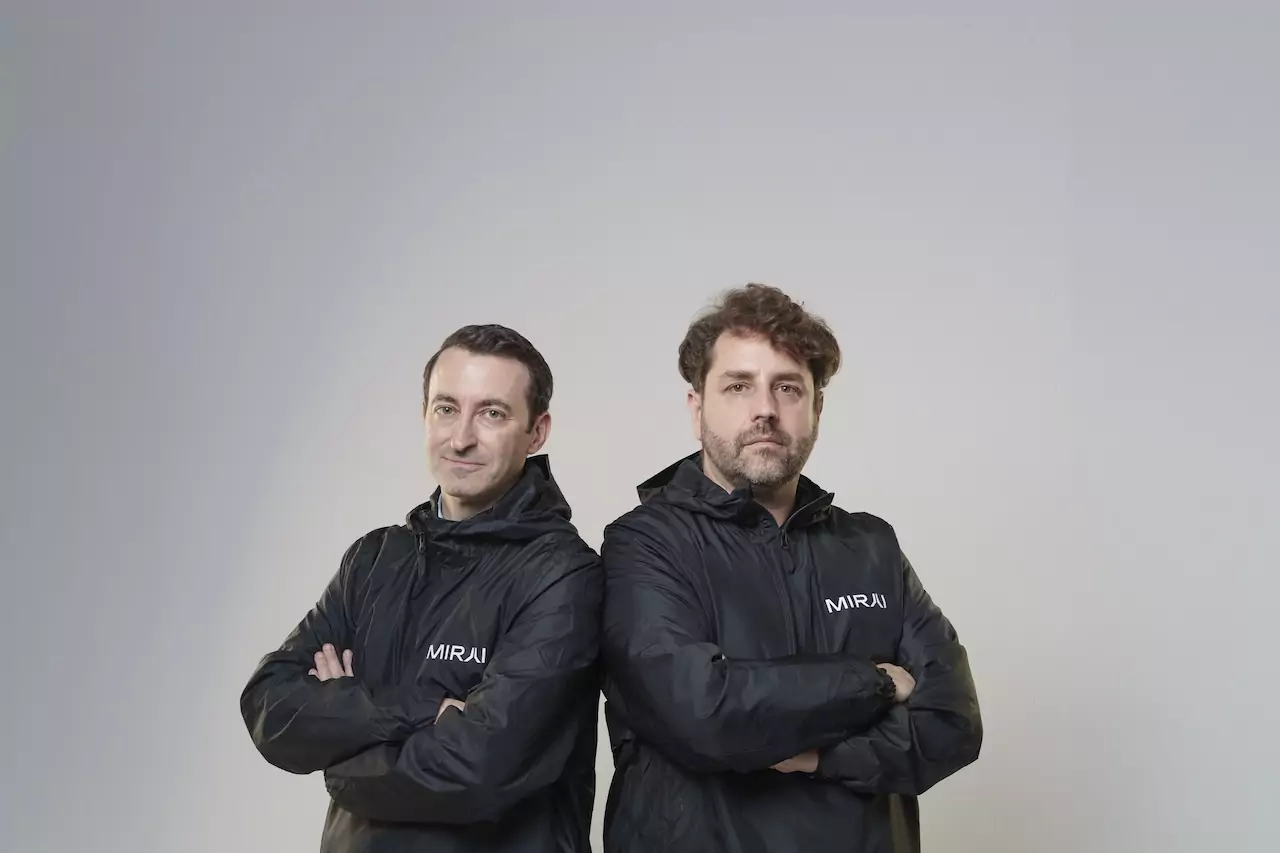
The project stems from the vision of entrepreneurs with international experience: Luciano Belviso, founder of companies including Blackshape, which operates in aeronautical design and production, and Luca Mascaro, entrepreneur in the field of technology and AI, founder of Sketchin and former chief innovation officer of BIP (pictured).
Belviso says in a statement: “The sea is one of the last great natural physical infrastructures not yet governed by software. It is a largely unexplored frontier: over 85% of the seabed has not even been accurately mapped. Yet it is here, on our planet, relatively accessible but critical for security, energy, infrastructure and supplies. For centuries, man has built ships; now we must build systems. The convergence of advanced robotics and information intelligence allows us to begin to dominate this strategic space. Autonomy is the key to operating continuously, resiliently and safely in extreme environments, transforming the sea from an opaque space into a monitored and managed infrastructure. It is a technological and industrial challenge that requires a true robotics lab approach, capable of integrating software, sensors, platforms and missions into a single operating architecture. With Mirai, we want to build new European leadership in the Ocean Economy, starting from Italy, where the strength of the naval supply chain – from defence to shipbuilding, from offshore to marine infrastructure – represents the ideal industrial base to integrate with our team’s expertise in robotics and autonomy.
Mascaro adds: “From protecting our continent’s coastlines to growing the value of the maritime economy, which the World Bank estimates will rise from the current $2.5 trillion to $4 trillion in 2035, the governance of maritime activities requires urgency and reliable systems capable of performing complex and high-risk tasks in complete autonomy, while providing a simple interpretation of the results and developments to be implemented over time. This is the challenge we have taken up and are already responding to, thanks in part to a top-level European team.
“The maritime domain is at a turning point. We are faced with a huge economy that is still based on operating models designed decades ago. The human capital gap alone, thousands of unfilled roles, an ageing workforce and increasing operational risks make the status quo unsustainable. What Mirai Robotics is building is not simply automation; it is the fundamental infrastructure that will enable the blue economy to grow safely and efficiently. Italy’s shipbuilding tradition, combined with this level of expertise in robotics and artificial intelligence, creates a truly unique opportunity,” concludes Gianluca Dettori, partner at Primo Capital.
Mirai Robotics responds to the complexity of the marine environment, high costs, poor digitisation, and high levels of operational risk associated with a growing shortage of qualified personnel with an integrated robotics and AI technology architecture that combines: proprietary autonomous vessels developed with AI technologies applied to the physical world (physical AI); platform-agnostic, intelligent autonomous guidance systems that can be integrated and adapted to industrial, maritime security, public order or military fleets, as well as to civil shipyard products, with the ability to read the maritime context, decide on manoeuvres and operate safely without a crew to govern complex missions; mission coordination software involving dozens or hundreds of vessels, for example for the control of illegal fishing, the inspection of underwater infrastructure, and a data collection and information intelligence platform for the continuous analysis of operational information, ensuring constant evolution and adaptation to changing conditions.
ALL RIGHTS RESERVED ©