The fourth day of January 2026. The new year began just over 72 hours ago, and already it seems like an eternity. Events unfold with sudden intensity: Switzerland finds itself vulnerable to what should have been predictable, the US bombs Venezuela and removes the incumbent president, it also bombs Nigeria and heavily threatens Iran, where in the meantime a deep economic crisis has triggered fierce protests, undermining the country’s social foundations from within, Russia continues to bomb Ukraine with daily civilian casualties, Israel kicks out NGOs from around the world and throws them out of Palestine, which is on the brink of a humanitarian catastrophe, without any justification and amid almost total international silence. China has sent its military fleet to circle the island of Formosa, forcing the president of the Taipei government to stress that under no circumstances will her country fuel any escalation. and even Saudi Arabia and the United Arab Emirates have started fighting each other, exchanging cannon fire over Yemen, bringing to the surface tribal issues that have re-emerged directly from the folds of history in those areas, from a time before wealth and the conquest of the international limelight.
To be stridently ironic, one could say that we started with a bang, or recall in an equally strident tone an old proverb that says that a good start is half the battle, but here we must instead call for calm and attention. It is unlikely that the world will be able to sustain such a pace. It is already at its limit, and it is almost a miracle how it manages to tolerate despots and more or less democratic leaders who do everything they can to ignite conflicts instead of extinguishing them. The hope for an America committed to peace, which seemed to have been ignited by the mediation for the achievement of agreements between Rwanda and the Democratic Republic of Congo in June 2025, between Armenia and Azerbaijan in August 2025, and between Thailand and Cambodia, with the mediation of Malaysia, in October 2025, even though they were shooting at each other until December 2025, now seems distant. The world’s major powers are unable to exert the influence they should, and when they do, it is in a destructive and selfish way. The United Nations now seems to have fallen into a spiral of stale anachronism, and the return to the arms race has taken the place of policies supporting action to combat climate change, with the result that we risk losing both the social and environmental battles in one fell swoop. In short, it’s a real mess.
The issue is structural: if the Pope tries to call the world to order by declaring that peace is not achieved by sharpening swords, humanity seems to be deaf, and this deafness must be treated in a radical and profound way; a new awareness is needed. We can also leave aside for the moment the rhetoric that we all live on the same planet, that we are all increasingly connected, interconnected and linked, but we cannot ignore that we are facing changes that require answers, that we must think about the new generations, which no one seems to care about, not even in civilised and super-democratic Europe, which, as a bastion of freedom, collaboration, unity and tolerance, must itself take a leap forward in maturity and become a fully-fledged global power, emerging from the limbo in which it currently finds itself, even if there is no shortage of cause for alarm, as the President of the Italian Republic, Sergio Mattarella, stated in his end-of-year speech.
Where is the answer? Perhaps in the bold words of New York’s new mayor, Zohran Mamdani, who in his inaugural speech on New Year’s Day, sworn in on the Koran as a Muslim in front of Vermont’s independent senator Bernie Sanders, who is of Jewish origin, emphasised his intention to ‘replace the frigidity of rugged individualism with the warmth of collectivism (We will replace the frigidity of rugged individualism with the warmth of collectivism)”, a phrase that has provoked very mixed reactions and even a flurry of memes recalling the disasters of real socialism, even though collectivism can also be free from political choices but a social trait that looks more to the value of the community than to that of the individual, as is already the case in some countries, such as Japan, which are anything but guided by Bolshevik logic. Is a new concept of collectivism therefore a viable path? It could be, but only if the above awareness is clearly manifested.
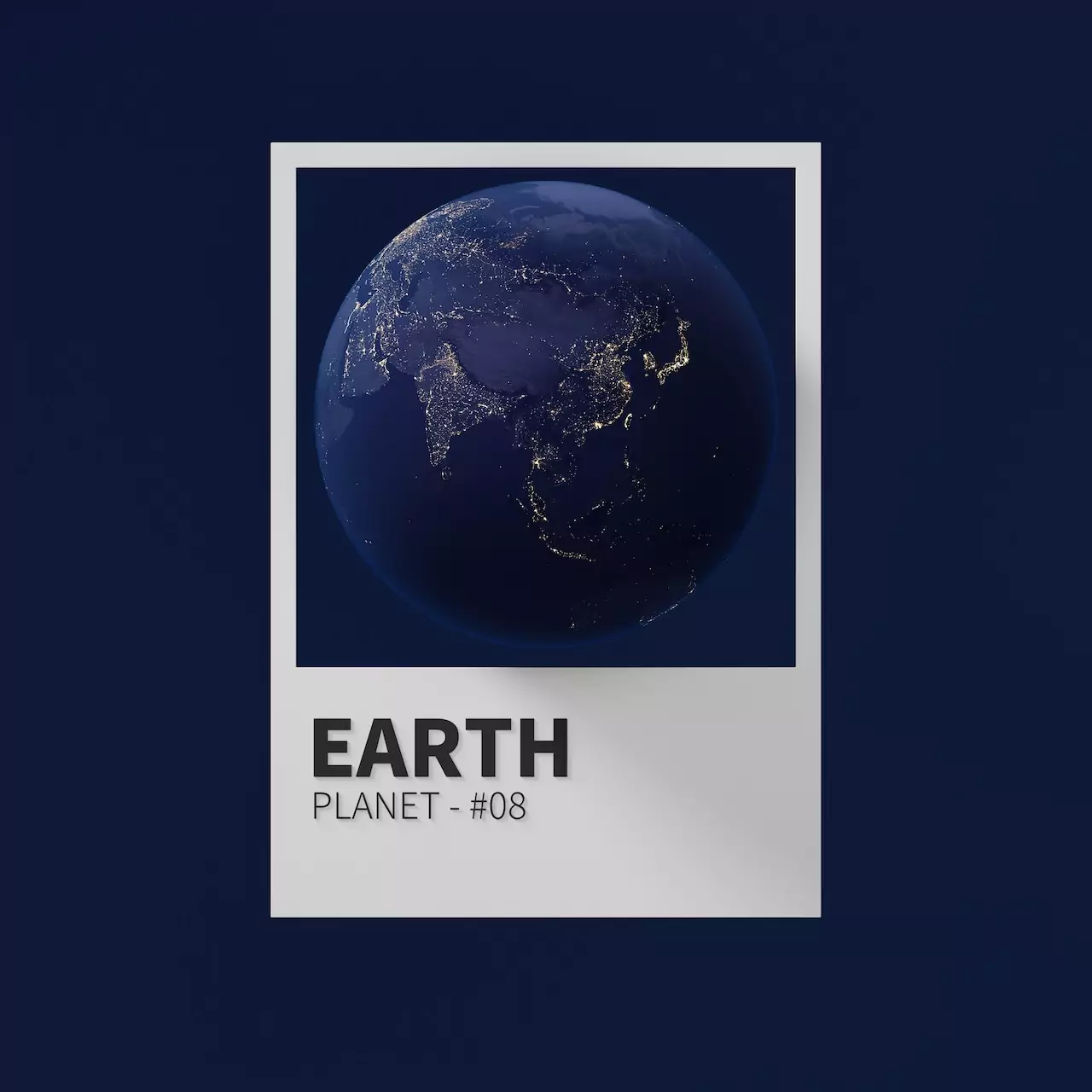
What needs to happen? Humanity must think of itself as such. This does not mean stifling individualism, merit, abilities and commitment, but rather defining the contours of our shared planetary home, which is no longer able to withstand tensions, wars, indifference and the inability to make long- and very long-term plans. We cannot afford to leave ourselves alone and today, more than ever, we must invest, commit ourselves, take risks and look beyond, because it is precisely at times like the present, when the only certainty seems to be uncertainty, when the unknowns of the future are stronger than ever, that we need to raise the level of risk, raise the level of confidence in the future, invest, and we need to do so in innovation, research, environmental protection and the identification of new social forms that can respond to changes in the world that are not only sudden or make the headlines, but also slow changes, such as shifts in demographic balances that will change the entire equilibrium of humanity in one or two generations, and the negative unknowns of the possibility of events such as the 2020 pandemic repeating themselves, but also the positive ones that lie in the possibility of new scientific and technological discoveries capable of changing the fate of humanity forever. think, for example, of nuclear fusion energy, or the ability to understand how the human mind works, or even the discovery of dark matter, whose existence is currently only hypothesised but which could profoundly change our knowledge of deep space.
Dark matter in the universe is Fabiola Gianotti’s passion, as she herself stated when she left her role as director of CERN at the end of 2025 after two terms, a role that brought her to the forefront of the major discoveries of the last ten years in physics, such as the famous Higgs boson. The work of people like Gianotti shows how scientific research, technological and human development, collaboration between nations and supranational institutions, and long-term vision are the main directions for responding to the future of humanity, and this is a responsibility that must become everyone’s. We cannot hide away, isolate ourselves, and think only of the small world that directly concerns us. We must be bold and visionary, we must look at humanity as a single, interdependent, connected organism that influences itself and must learn to protect itself.
We must ensure that even a ‘simple’ declaration of war of any kind is considered a crime against humanity. We must remove the concept of violence and conflict from the possible options for resolving disputes. We must build a common purpose and we must risk everything for the good of the world without letting our guard down, without holding back. (photo by SIMON LEE on Unsplash)
ALL RIGHTS RESERVED ©