Table of contents
Artificial intelligence is reaching a turning point. According to Deloitte’s State of AI in the Enterprise 2026 report, conducted on over three thousand executives in 24 countries, 82% of Italian companies plan to increase their investment in AI over the next year, and 92% expect these tools to increase productivity. But one figure stands out above the rest: 77% of companies take the country of origin into account when choosing AI suppliers, and almost three out of five rely mainly on local suppliers. Digital sovereignty is no longer an issue for insiders; it has become a strategic priority.
It is precisely at this moment, with the wind in its sails, that a Sardinian start-up has decided to raise its hand. It is called Xference.ai, is based in Cagliari, and has just closed a €700,000 pre-seed round, simultaneously opening the seed round to institutional investors. The timing, it is hard to deny, is almost perfect.
Where does your hospital data go?
When a doctor consults a medical record via an AI assistant, where does that information end up? And when a solicitor uploads a confidential contract to a cloud platform, who else might read it? These are questions that, until a few years ago, seemed rhetorical. Today, they are at the heart of a profound change in the way companies think about artificial intelligence.
“Private AI inference completely changes the paradigm: it is no longer the data that has to leave the organisation to reach artificial intelligence, but rather the AI that is brought to where the data already is,” the company explains. A hospital that consults medical records without exposing anything to the outside world, a solicitor who analyses contracts while maintaining professional secrecy, an SME that integrates technical manuals, ERP and production data into a single intelligent assistant. In all these cases, they emphasise, the value is not only technological but also concerns control, security and ownership of information assets.
In healthcare, the models are installed on dedicated infrastructure within the facility: reports, diagnostic images and medical records remain where they are, with more efficient energy consumption than cloud processing. For freelancers, the platform becomes an assistant built on their own archive, without dependence on external providers. For SMEs, technical documentation, management systems and production data converge in a single conversational interface, protecting the company’s know-how.
The problem it aims to solve
When a company uses a cloud-based AI service, data travels to third-party servers, often outside Europe. For sectors such as finance, healthcare or manufacturing, this is an unacceptable risk: regulatory, competitive, reputational. Xference.ai responds with a no-code platform for private AI inference: companies run their own models directly on their own servers, with automatic optimisation, scalability and integrated monitoring. The concept of sovereign AI is not new in Europe, but accessible solutions that do not require internal data scientist teams are still rare.
The company is led by Andrea Pili, a serial entrepreneur with seven start-ups to his name and one major exit, Sardegna.com, Italy’s leading online booking site, acquired by Alpitour in 2016, followed by a stint in Silicon Valley, data centres and GPUs. He is joined by Michele Fadda, former IT director at Tiscali for over a decade, and Francesca Audino, who has had an international career in Milan, London and New York in strategy and M&A roles with funds such as Carlyle and Invest Industrial. This is an uncommon mix of technical, infrastructural and financial expertise in an early-stage deep tech start-up.
Angel investors include Bastiano Sanna and Niccolò Perra, former co-founders of Pleo, a European fintech scale-up operating in over 20 countries, names that bring relationships as well as capital.
“Inference will become the primary mode of interaction between people and technology,” says Pili. “We want to build the infrastructure that will make this transition possible, with complete transparency and without compromising privacy, performance, or control.”
A growing market that has to reckon with its environmental impact
54% of respondents globally expect to reach maturity with their AI projects in the next three to six months, and on-premise platforms are becoming a viable alternative to the big American players, offering benefits in terms of latency, regulatory compliance and, increasingly, sustainability.
The energy problem of AI is now difficult to ignore. Large hyperscalers optimise their infrastructures for global scalability, not for the efficiency of individual customers: each query travels through distant data centres, generates continuous data transfers and adds to shared computational loads on a global scale. The result is a widespread energy footprint that is opaque and difficult to measure for those who generate it. A dedicated infrastructure tailored to the real needs of the organisation breaks this logic: it consumes less energy for the same amount of computational work, eliminates unnecessary transfers and, above all, makes consumption visible and controllable.
This visibility is not a technical detail. For companies subject to ESG reporting requirements, knowing how much energy an AI system consumes has become a concrete requirement. And in a context where the AI Act increasingly overlaps with European sustainability directives, the ability to demonstrate energy efficiency in one’s digital systems is also beginning to have value on a regulatory level. Finally, there is a more systemic dimension: building computational capacity in Europe, anchored to local infrastructure, means reducing energy and strategic dependence on American hyperscalers, a form of resilience with environmental, economic and geopolitical repercussions that are difficult to separate.
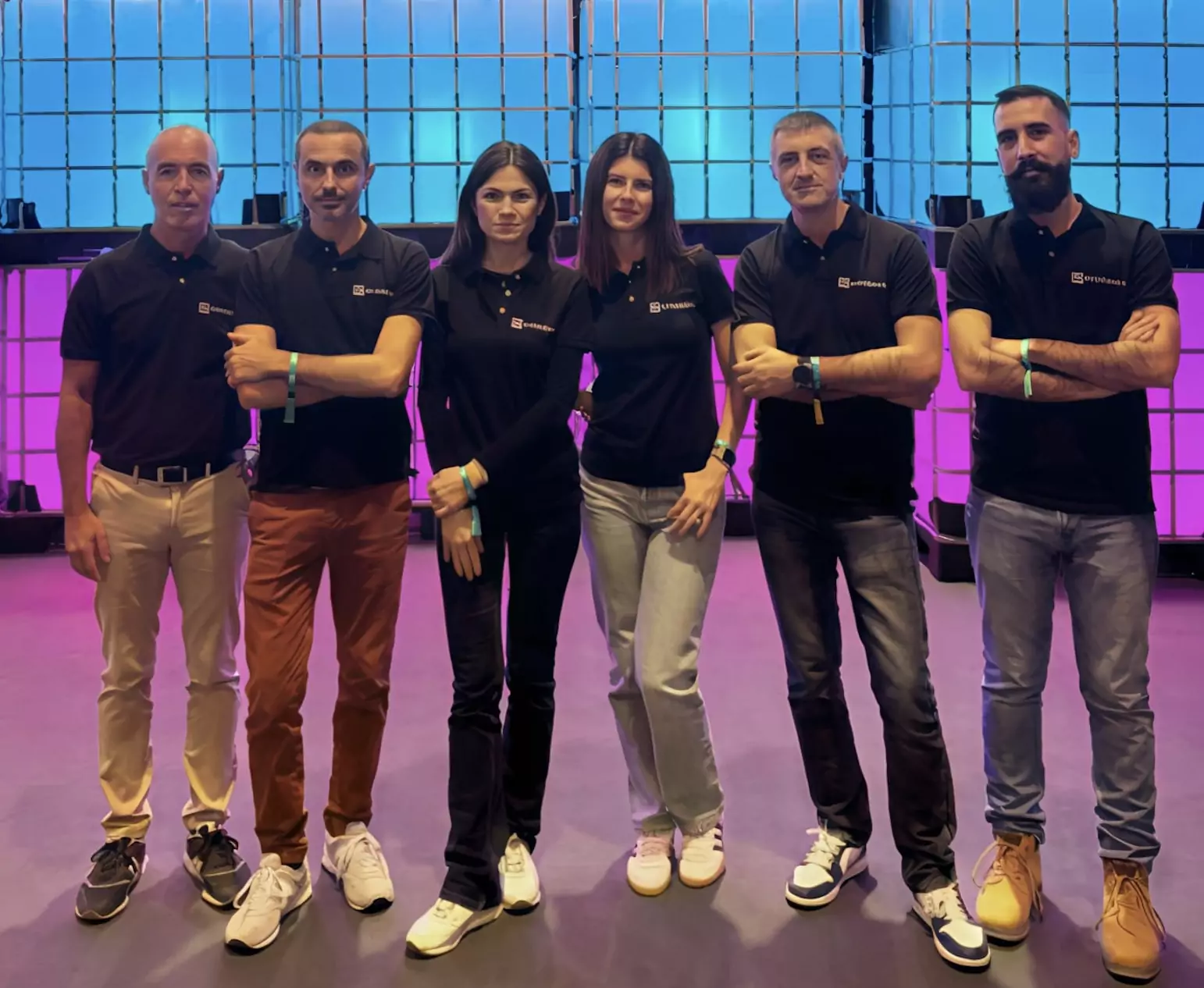
The beta version of the platform, distributed by invitation to the first 100 early adopters, is about to launch. The goal is to close the seed round by the end of 2026 to accelerate development, expand the team and consolidate its position in the European enterprise market, which is projected to triple by 2027. The window is still open: companies across the continent are looking for credible, secure and compliant alternatives. And preferably built with European rules in mind from day one. (pictured: the Xference.ai team)
ALL RIGHTS RESERVED ©