For Europeans, 2025 will be remembered as the year in which they saw substantial changes to green directives (CSRD and CSDD). Just yesterday, the Council Presidency and European Parliament negotiators reached a provisional agreement to simplify sustainability reporting and due diligence requirements in order to strengthen the EU’s competitiveness. Certainly, these changes have so far destabilised not only large companies, which are already prepared for such reporting, but also MSMEs, including start-ups, which in recent years have sought to innovate services and products in Italy by pursuing the objectives of Agenda 2030.
In fact, for start-ups and venture capital, 2025 was truly the year of policy, from the 28th EU-Inc regime to the Competition Decree.
Ed è in questo scenario normativo e burocratico, dove a mutare sono gli obiettivi europei, che si è spostata anche l’ideologia, da green a dual use.
It all began at the start of the year in the US, when what had until then seemed like promising bets on miraculous start-ups investing in anything related to the energy transition, from batteries to wind turbine blades and photovoltaic panels, began to shift to other markets: Bloomberg reported on the ‘abrupt awakening and dramatic realisation’ that took private equity giants such as BlackRock, Riverstone Holding and Caisse de Depot et Placement du Quebec (CDPQ) by surprise, to name those that came out into the open, while there are still many investors who are keeping their losses confidential.
And since the beginning of his term, Trump had prioritised his campaign promises: to cancel the Biden administration’s green funding programmes. We wrote about this here, and we saw how several start-ups launched in the US to free the economy from fossil fuels, in response to this paradigm shift in investment funds, were revisiting their approach to be more in line with the ‘spirit of the times’: on the one hand, some companies developing climate-friendly metals, cement and fuel were emphasising how their products would be beneficial to national security (defence), while on the other hand, some green technology developers were looking for a niche in the hot market of artificial intelligence. Thus, some companies that once extolled the ecological benefits of their work began to shift their focus towards defence and artificial intelligence.
While in the US funds were withdrawing their financing for other sectors, and startups were also changing their claims, at the same time, the concept of dual use also arrived in the old continent, and Europe did not lag behind, launching Rearm Europe, which would allocate part of the 800 billion euros to startups with a core business in civil and military utility.
Today, even in Italy, the dual-use economy, which integrates civil and military applications of critical technologies, from space systems to cybersecurity, is one of the key drivers for industrial competitiveness, supply chain resilience, the protection of national interests and the security of the country’s economy.
In this context, the ability to develop solutions based on artificial intelligence, data interoperability and secure digital infrastructures becomes essential for public administrations, industrial operators and institutional investors.
According to the analysis presented at the beginning of the year by Feel at the Chamber of Deputies – we wrote about it here – Italy is among the most mature countries in terms of its approach to govtech (performance 44% above the global average and 14% above that of the Euro-Asian bloc countries). The PNRR then provided a particular boost to increase its level: consider Turin, which was recognised as a world leader in innovation during the last web summit.
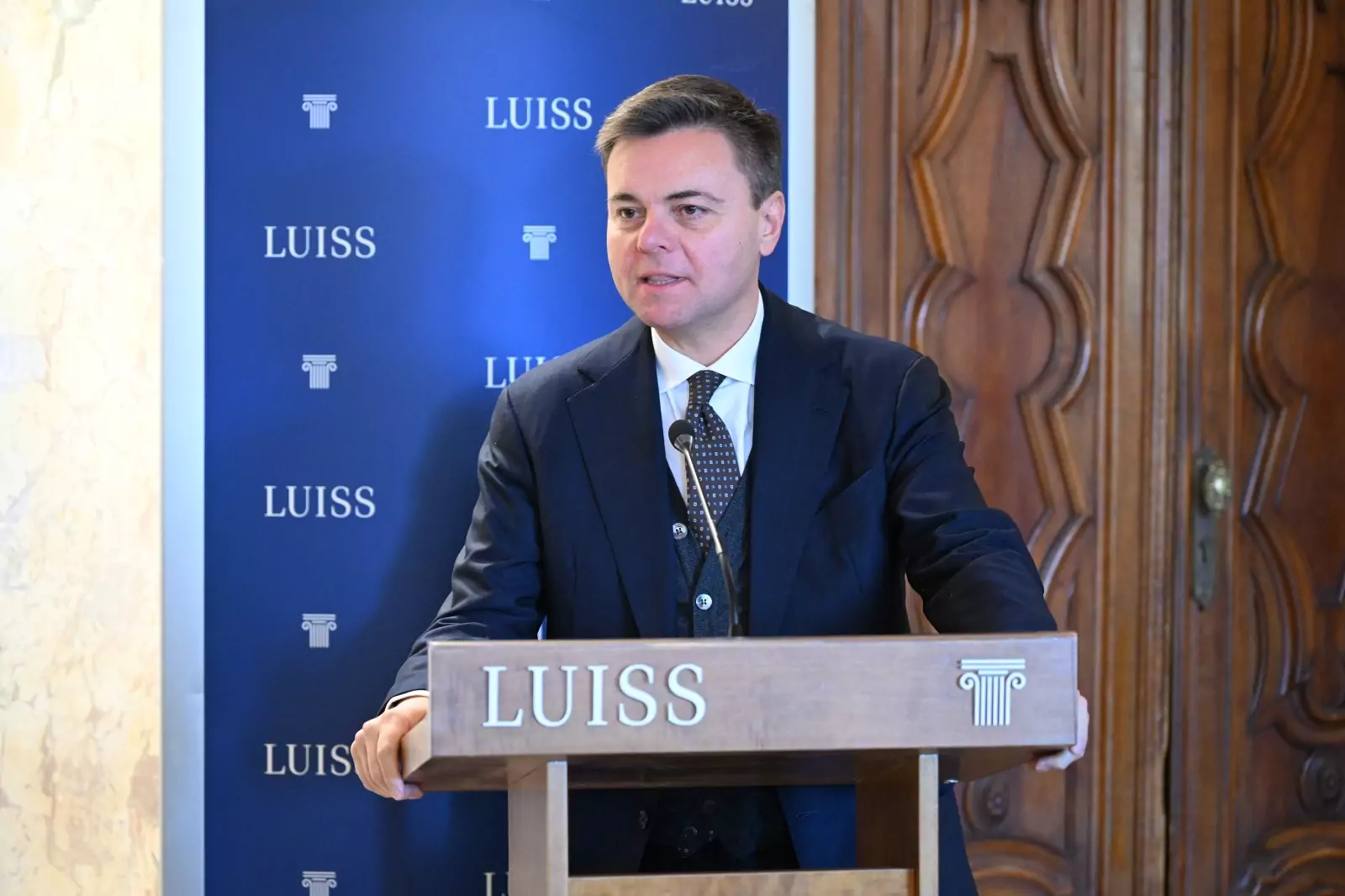
This morning, the Luis Campus hosted the conference Dual Use Economy: From Single Impact to Unified Vision, promoted by Zest and the Franco Fontana Strategic Change Research Centre at Luiss Guido Carli University. The event provided an opportunity to come together and find a concrete Italian response to an increasingly complex scenario. Marco Gay, executive chairman of Zest (pictured), pointed out that “according to recent projections, the govtech market could reach $1.4 trillion by 2034 and, according to the World Economic Forum, the potential public value generated globally could reach $9.8 trillion, thanks to greater efficiency, transparency, sustainability and quality of public services”. Gay then highlighted how ‘the role of start-ups is fundamental to innovation in the public administration, bringing agility and new technologies, often in collaboration with public institutions’.
During the conference, Publica.AI – Dual use economy innovation platform, Zest’s new govtech platform dedicated to the dual use economy, was presented by Antonella Zullo, CEO of Zest Innovation. Publica.AI was created as an innovation infrastructure to support the public interest: it connects central and local administrations, businesses, start-ups, investors, universities and research centres, transforming data and experiments into operational solutions, scalable services and new ventures that can be adopted by the public sector and industrial operators.
In the dual-use field, the platform enables use cases ranging from multi-domain situational awareness through the fusion of satellite data, sensors and drones to cyber defence of critical infrastructure, digital twins for joint training of civil and military agencies, and emergency management by the Civil Protection Agency. All this is done in accordance with the principles of interoperability, data sovereignty and ‘trustworthy by design’ AI.
The response to a historical phase in which regulatory barriers that can hinder innovation are still present, Europe was the first to adopt a law on AI (AI Act), some of which are still being finalised, namely the green ones, was provided by Luigi Capello, CEO and founder of Zest. According to Capello, the formula lies in ‘technological sovereignty, understood as a national strategic requirement’ . And the central role lies in ‘innovation driven by start-ups, artificial intelligence, advanced sensing and next-generation networks. Start-ups working on AI which, if properly supported, could help us quickly bridge the existing gaps. An open innovation approach is needed, accompanied by the willingness and commitment to invest in start-ups operating in the sector’.
ALL RIGHTS RESERVED ©