Table of contents
The second day at Fruit Logistica changes your perspective. On the first day, you look at the pavilions, the countries, the flags. On the second day, you look at the products. And the products tell a different story from the one we expect.
You walk through the pavilions and see little fruit with soil on it. You see fruit glistening under the lights. Washed potatoes, shiny apples, cherry tomatoes arranged like jewels. Here, fruit and vegetables are already showcase merchandise. Buyers are not looking for low prices. They are looking for appearance. Technology that does not make the product more attractive on the shelf is of no interest to buyers. This is the first lesson that Fruit Logistica teaches those coming from the world of innovation and start-ups.
It is no coincidence that Rijk Zwaan, one of the leading Dutch breeders, is presenting Crunshella this year — a snack lettuce that seems designed more for an aperitif than for a salad. Or that Bejo is focusing on intensely coloured red cabbages, perfect for Instagram even more than for the plate.
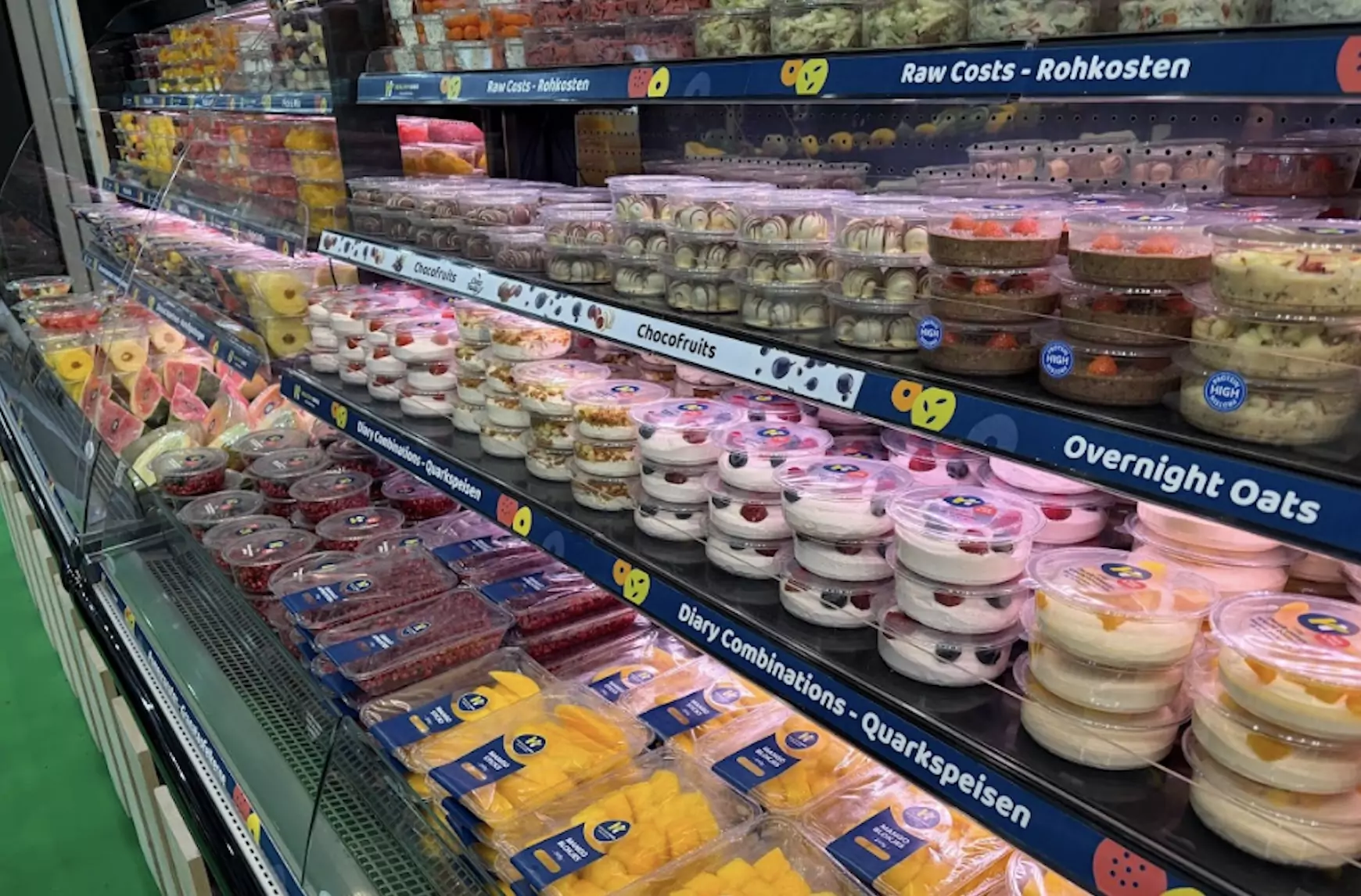
Salad, after all, is now just a snack and a fourth range product. I didn’t see a single whole head. Only bags, trays and ready-to-eat leaves. Convenience is king at this fair, and convenience demands a product that is small, attractive and ready to go.
Sustainability comes where the consumer looks. On the pitch, no
I stop at the SharpTek stand. They are presenting a fully recyclable single-material tray for berries, with a 17% reduction in weight. A few stands further on, Ravipack presents its Snap & Go, an rPET package with detachable mini-trays designed to reduce food waste. IFCO showcases its reusable containers with digital identity and IoT traceability. The cold chain becomes smart, pallets become intelligent.
But then you leave the pavilion. You look outside. The sheets covering the fields are made of plastic. They were made of plastic twenty years ago and they are made of plastic today. The mulch, the greenhouse covers, the tunnels: all plastic film. Sustainability reaches the consumer where they can see it — on the shelf, in the packaging, on the label — but struggles to reach the consumer where they don’t look. In the field.
The real challenge is not sustainable packaging, which the market is already solving on its own due to regulatory and reputational pressure. The real challenge is bringing sustainability upstream, where margins are lower and visibility is zero.
Everything becomes smaller. Or larger
There is an unwritten law governing the global fruit and vegetable market: tomatoes and cucumbers are getting smaller and smaller, while avocados and berries are getting bigger and bigger. It is the snacking market that dictates the rules: everything must be single-serving, edible with one hand, without a knife.
Berries are everywhere. Blueberries, raspberries, strawberries, blackberries: a whole galaxy of fruits that now occupies enormous spaces in the pavilions. Among the innovations presented this year is Beauty Strawberry, a day-neutral variety that does not require a cold period, produces early and has an excellent shelf life. And Tribelli Seedless, mini seedless peppers that are sweet and crunchy. Breeding is moving in a clear direction: less sugar, more crunch, zero waste.
And then there are the notable absentees. No aubergines in sight, but hundreds of African, South American, Italian and Asian companies selling avocados. Avocados have become the symbolic product of fruit and vegetable globalisation: everyone grows them, everyone sells them, everyone buys them. Potatoes, onions and garlic are still the silent protagonists of this fair, but the future of the supermarket shelf speaks another language.
Two thousand six hundred exhibitors. Not even a pea
This is perhaps the most surprising fact about the second day. At a time when plant-based proteins are the most talked-about trend in the food industry, there is no sign of them at Fruit Logistica. Not a single legume. Not a chickpea, not a lentil, not a bean. Dried fruit is almost invisible. Lots of dates, yes, but the world of plant-based proteins is completely absent.
Fruit Logistica is the fresh produce trade fair. And fresh produce today still means fruit and vegetables in the most traditional sense of the term. Plant proteins exist in another ecosystem, that of food tech, processing, and trade fairs such as Anuga or SIAL. Here, the product is what comes out of the field and goes on the shelf. The boundary is clear and, in some ways, anachronistic.
Legumes are fresh produce in every sense of the word. The fact that they are not featured at a trade fair with 2,600 exhibitors says a lot about how the fruit and vegetable industry perceives itself: as a supplier of fruit and vegetables, not nutrition.
If you want something, from anywhere in the world, it will arrive in Rotterdam
This is the message that emerges clearly from the corridors of the fair. The ports have their own stands, but Rotterdam is the gravitational centre of the entire European fruit and vegetable logistics system.
This is not rhetoric. Last year, at Fruit Logistica, the Port of Rotterdam presented the Rotterdam Food Hub: a new 60-hectare agri-food terminal designed specifically for handling refrigerated containers. The port expects to grow by 50% over the next ten years in terms of container capacity. When Anne Saris, the project manager, explained that the terminal was designed because fresh goods cannot wait a week to be cleared through customs, she summed up the essence of this fair: speed, reliability, cold chain.
And while Rotterdam strengthens its position, India does not seem particularly well represented. Asia is present, but not with the diversity of products one would expect. How many products exist in the Asian food tradition that we do not see here? Dozens, hundreds. Fruit Logistica tells the story of the global fruit and vegetable trade, but it still does so from a deeply European and Western perspective.
The queue for the men’s toilet
One final observation, which is perhaps worth more than many statistics. For the first time in my experience of trade fairs, I saw a queue for the men’s toilet rather than the women’s. If I had to estimate a percentage, I would say that 90% of visitors are men. The women present at many stands are hostesses.
This is not new information for agriculture, but it is striking at a trade fair whose programme talks about gender balance, inclusive leadership and networking breakfasts dedicated to diversity. Fruit Logistica has a panel on inclusive leadership, but the floor of the trade fair tells a different story. The fruit and vegetable sector is worth hundreds of billions of euros and feeds billions of people, yet decisions are still made almost exclusively by men.
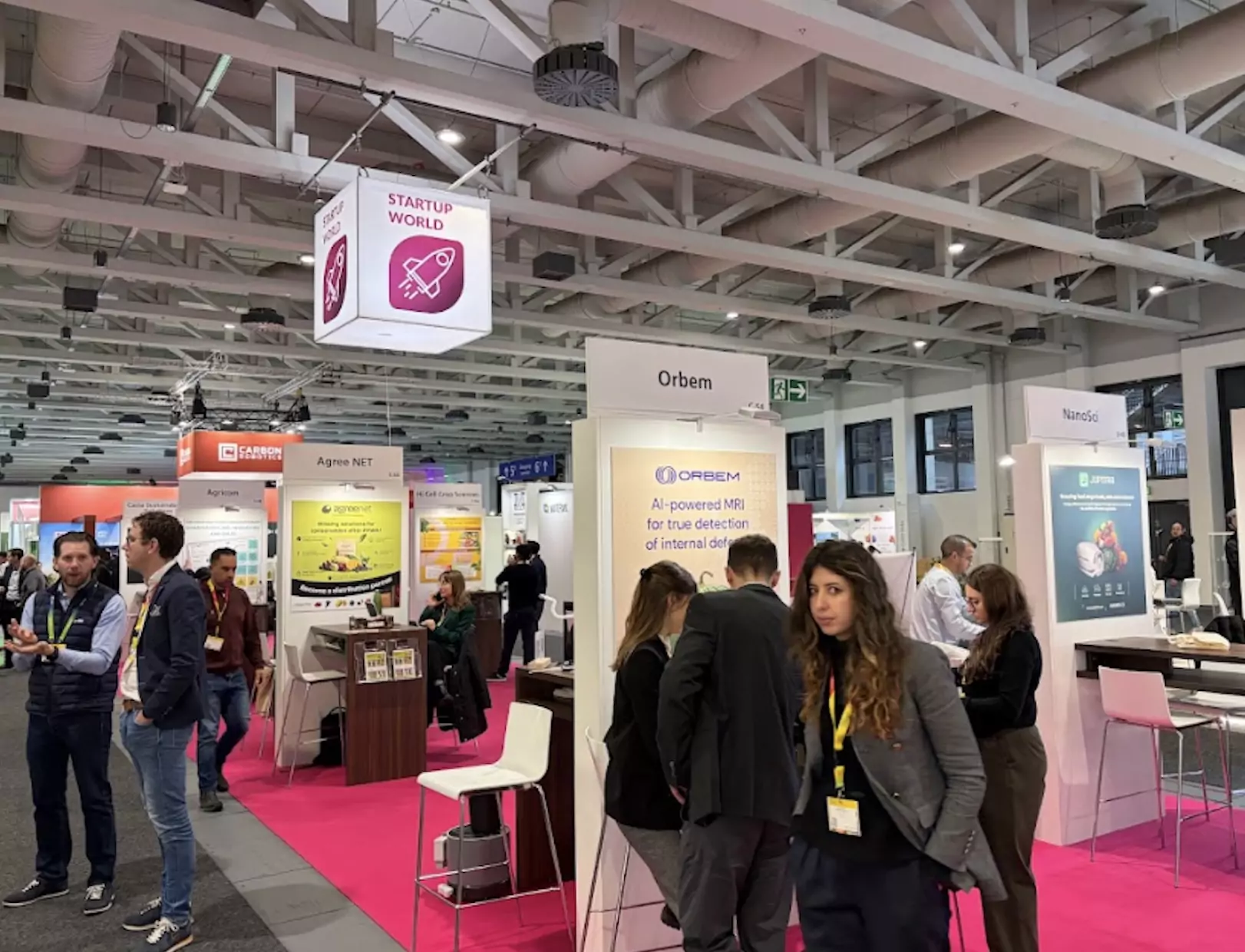
Tomorrow is the last day. Fruitful Friday, with the 20th edition of the Flia Innovation Award ceremony and the Frutic Science Symposium. And then there’s Startup World, which we only caught a glimpse of yesterday. We’re going to look for the three Italian start-ups. To understand what they’re doing here, among 2,600 exhibitors talking about beauty, packaging and Rotterdam. And if anyone, anywhere in this fair, is really talking about the future.
ALL RIGHTS RESERVED ©