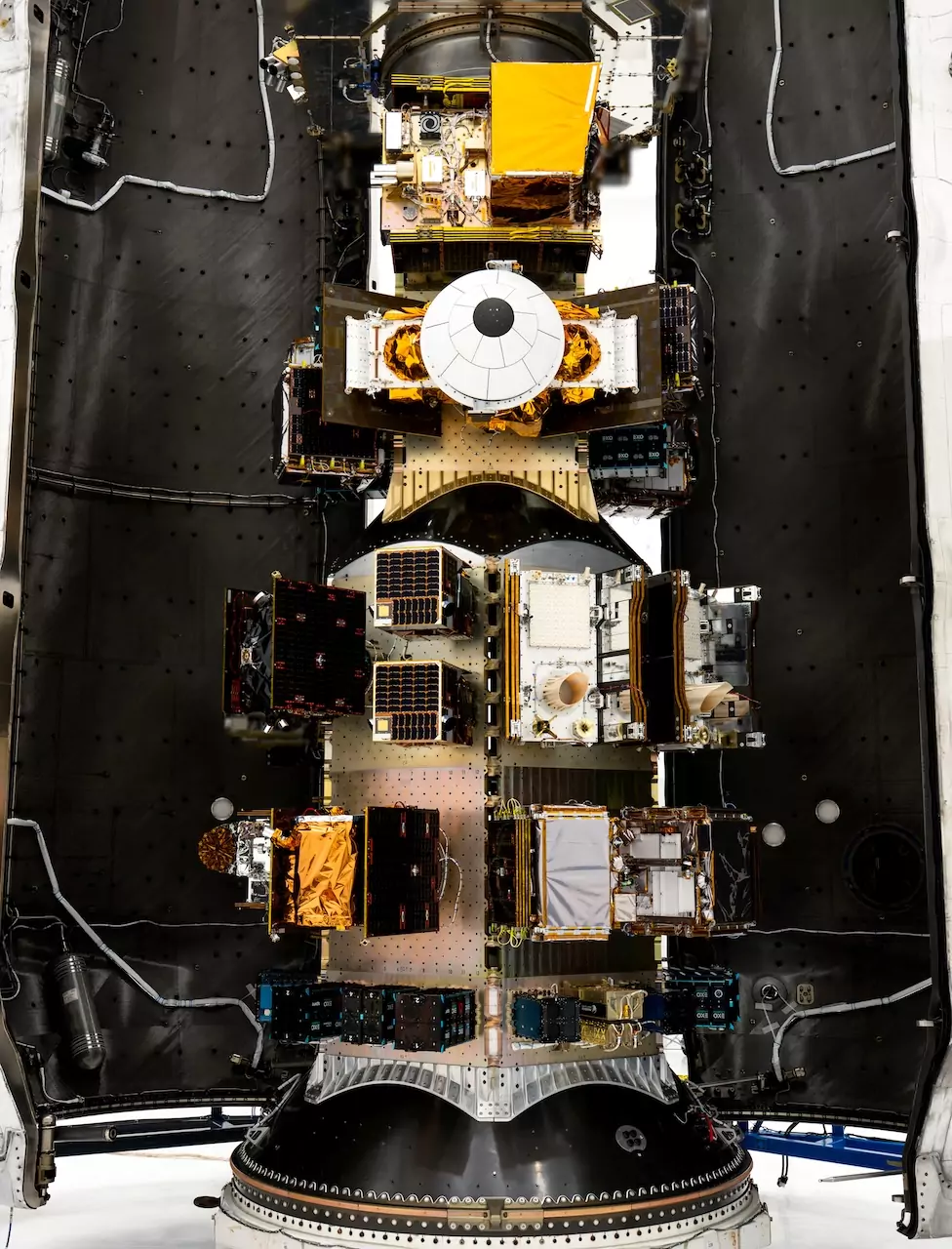
D-Orbit, a space technology scale-up specialising in space logistics and orbital transport, has announced that it has been selected by the European Space Agency as the prime contractor for MORPH (Modular On-Orbit Refurbishment for Permanent Hardware), which could become the first European mission architecture capable of demonstrating the refurbishment of satellites directly in orbit.
The announcement was made at SatShow 2026 in Washington D.C., where D-Orbit is exhibiting in the Italian pavilion, organised by the Italian Trade Agency (ICE) in collaboration with the Italian Space Agency.
The initiative, led by ESA’s Clean Space Office, represents a key step towards enabling a circular economy in space, in which satellites can be repaired, upgraded and reused rather than replaced.
“For decades, satellites have been designed as disposable assets, to be replaced once their fuel or hardware has reached the end of its life,” says Diego Garcés de Marcilla, director of D-Orbit’s in-orbit servicing business, in a statement “With MORPH, we are exploring a different model, in which satellites become long-term infrastructure that can be repaired, upgraded and adapted directly in orbit. This capability is essential for building a sustainable space economy and ensuring that orbital space remains a usable resource for future generations.”
The project builds on a Phase 0 study that has already been completed and is now moving on to Phase A.
MORPH builds on the technological legacy of RISE, D-Orbit’s first in-orbit servicing mission, which is due to launch in 2029, expanding the concept into a next-generation platform designed to support in-orbit refurbishment operations.
Whilst RISE focuses on extending the satellite’s operational life through in-orbit maintenance capabilities, MORPH explores the architecture required to enable a wider range of future services, including potential operations such as in-orbit refuelling and assembly.
The study therefore represents a significant step forward in D-Orbit’s roadmap towards operational in-orbit servicing missions in geostationary orbit (GEO), where many of the world’s most valuable satellites are in operation.
During the eight-month Phase A study, D-Orbit and its consortium partners will develop a validated mission concept for the demonstration of in-orbit refurbishment, including the preliminary system architecture, the operational scenario, and the identification of the key technologies required for refurbishment operations.
The project will also draw up a roadmap for the development of critical technologies, with the aim of achieving TRL6 maturity in preparation for an in-orbit demonstration mission.
In-orbit refurbishment represents a significant step forward in the way space infrastructure is designed and managed.
Enabling the repair, upgrading or reconfiguration of satellites whilst they are in orbit would dramatically reduce the need to manufacture and launch replacement satellites, whilst ensuring continuity of service for satellite operators.
This approach is in line with ESA’s ambition to achieve debris neutrality in the European space sector by 2030, whilst supporting a more sustainable and cost-effective use of orbital resources.
“ESA is committed to improving the sustainability of its missions and of the European space system as a whole. We regard in-orbit refurbishment as the next critical step, capable of enabling ESA’s vision of a circular economy by 2040, whilst promoting the competitiveness of European industry in an emerging market,” says Ross Findlay, contract technical officer and head of sustainable engineering at ESA.
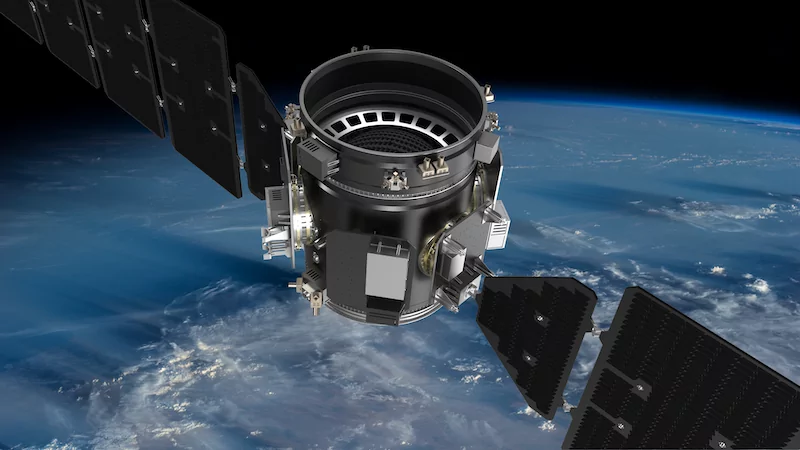
MORPH’s mission concept is based on GEA (shown in the image as a rendering), D-Orbit’s in-orbit servicing vehicle, which was designed from the outset to support maintenance operations in orbit.
As part of the MORPH study, the platform will be upgraded with modular interfaces for payload mounting and robotic interfaces, building on the technologies developed for the RISE mission, to enable the handling and refuelling of satellite components in orbit.
The study will identify the design improvements needed to support refurbishment operations, particularly in geostationary orbit, where satellites that have been in operation for many years provide critical communication services and infrastructure.
By advancing the concept of in-orbit refurbishment, MORPH helps to strengthen European industrial capabilities in autonomous in-orbit servicing technologies, from mission design to future in-orbit demonstrations.
The initiative supports the broader European strategy to maintain technological leadership and competitiveness in a rapidly evolving market for geostationary satellite services and sustainable satellite operations.
ALL RIGHTS RESERVED ©