In the global energy and digital infrastructure sector, a growing gap is emerging between what is announced and what is actually delivered. Governments, utilities, investors and major technology companies regularly present projects measured in gigawatts (GW), a scale that conveys strategic ambition and industrial scale. However, when these projects move from the announcement phase to the operational phase, the capacity actually brought online is often much smaller and is measured in megawatts (MW).
This discrepancy is frequently misinterpreted. Some analysts attribute the gap to insufficient demand, funding constraints or technological barriers. In reality, the main constraint is of a different nature. The real bottleneck does not concern capital or demand, but the capacity for execution within complex infrastructure systems. With the rapid expansion of digital infrastructure linked to artificial intelligence, electricity grids, construction markets, regulatory systems and environmental resources must evolve simultaneously. The ability to synchronise these systems has become the decisive factor in determining whether an infrastructure project moves from announcement to implementation (CB Insights, 2026; SITRA, 2026).
Major infrastructure projects rarely fail because the business model does not work. More often, they run into difficulties because the coordination required to turn plans into operational systems breaks down well before construction begins. In the world of infrastructure, failure rarely lies in the financial models; it lies in the actual systems failing to progress as planned. Foresight research indicates ever more clearly that the technological transformation driven by artificial intelligence is simultaneously reshaping labour markets, energy systems and industrial infrastructure, increasing the complexity of cross-sectoral implementation (Millennium Project, 2025).
At the planning stage, many projects appear to be a sure thing. Development documents generally include access to energy, regulatory permits, land rights, financial commitments and grid connection agreements. When incorporated into project models, these elements make the transition from announcement to construction seem almost inevitable. However, what appears guaranteed at the planning stage often proves to be conditional once the project enters the implementation phase.
One of the most common misconceptions concerns electricity supply. Gaining access to the grid does not necessarily mean that electricity will be available when the infrastructure becomes operational. A connection authorisation guarantees the right to connect to the grid, but does not ensure that generation capacity or transmission infrastructure will be ready on schedule. As demand for electricity accelerates, driven largely by artificial intelligence workloads and digital infrastructure, bottlenecks in electricity grids are becoming increasingly apparent in advanced economies (International Energy Agency, 2026; Morgan Stanley, 2026). Artificial intelligence is no longer limited primarily by algorithms or hardware: it is increasingly constrained by the electricity infrastructure (Agostini, 2025a).
Time-related uncertainty makes the problem even more complex. Even when an increase in energy capacity is anticipated, developers often face long waiting lists for grid connections whilst utilities upgrade their transmission infrastructure. As a result, projects that appear viable in financial models can remain stalled for years whilst waiting for the energy infrastructure to catch up with digital demand (JLL, 2026). This dynamic gives rise to what some analysts call the ‘AI energy paradox’: computing capacity may grow faster than the energy systems needed to support it (Agostini, 2025c).
Permit processes introduce a further layer of uncertainty. Even when permits are granted, projects may face delays due to environmental constraints, water availability, land-use conflicts or opposition from local communities. With the expansion of digital infrastructure, policymakers are increasingly faced with systemic risks linked to energy demand, environmental pressure and infrastructure concentration (World Economic Forum, 2026).
The nature of financing also changes when projects move from the planning stage to construction. Capital commitments secured in the early stages of development do not automatically translate into bankable financing when cost escalations, supply chain disruptions or delays in completion times arise. Various analyses indicate that increasing capital intensity and technological uncertainty are redefining the economics of investment in digital infrastructure (McKinsey & Company, 2026). Gigawatt-scale AI data centres are no longer simply IT projects: they are industrial megaprojects comparable to power stations or major transport infrastructure (Agostini, 2025d).
The consequence is structural. Projects rarely fail because of financial models; they fail when the actual systems fail to move forward in sequence.
The development of large-scale infrastructure requires that various subsystems progress simultaneously. Energy generation and transmission must develop in tandem with regulatory processes, land access, water availability, engineering capacity, supply chains and financing structures. Infrastructure development is therefore essentially a matter of synchronisation: if any one of these subsystems falls out of step, the entire project sequence can collapse.
This challenge is particularly evident in the expansion of data centres dedicated to artificial intelligence. Machine learning workloads require enormous amounts of computing power, and the electricity consumption of digital infrastructure is set to rise rapidly over the next decade (International Energy Agency, 2026). At the same time, investment in data centre infrastructure is growing at an extraordinary rate. Some reports indicate that the global pipeline of new projects now exceeds $100 billion, reflecting the scale of investment fuelling the digital economy (ConstructConnect, 2026). Artificial intelligence infrastructure is progressively becoming a strategic industrial system that will influence global economic and technological competition (Agostini, 2025b).
Despite this investment boom, actual operational capacity often lags behind the announcements. The bottleneck is not funding, but systemic coordination. Energy infrastructure can be delayed. Grid connections can be postponed. Permitting processes can drag on. Construction costs can rise. When these delays occur simultaneously, the sequence of events required to complete the projects breaks down before the infrastructure becomes operational.
The expansion of digital infrastructure has also highlighted deeper physical dependencies. Data centres require not only electricity but also large quantities of water for their cooling systems. Large clusters can consume billions of litres of water per year, raising concerns about water availability in regions already subject to water stress (Li et al., 2023). This interaction between computational systems and natural resources is increasingly described as the energy–AI nexus, that is, a system in which electricity, water and digital infrastructure become closely interdependent (OECD, 2026).
These interdependencies reflect a broader systemic reality: digital infrastructure is deeply integrated into the planet’s physical systems. Energy systems, water resources, regulatory bodies and construction markets must evolve in tandem for infrastructure expansion to succeed. When these systems do not progress in parallel, projects come to a standstill.
This dynamic can be summarised as a simple systemic chain. The announced capacity depends on the enabling conditions falling into place. Electricity supply, permits, funding and construction must therefore progress simultaneously. When delays arise in any of these subsystems, the sequence breaks down. Power arrives too late or connections are delayed, construction schedules collapse and operational capacity fails to materialise.
The outcome is predictable: gigawatts remain gigawatts – on paper.
For this reason, the main bottleneck in the expansion of modern infrastructure is neither demand nor the availability of capital. It is the ability to deliver. Building large-scale infrastructure requires the ability to coordinate electricity grids, regulatory systems, financial markets, supply chains and environmental resources simultaneously.
As governments and businesses seek to expand artificial intelligence infrastructure, renewable energy systems and digital networks simultaneously, this coordination challenge will become increasingly acute. Technological megatrends, geopolitical competition and the growing energy demands of AI are already reshaping the way infrastructure planning is approached globally (CB Insights, 2026; SITRA, 2026).
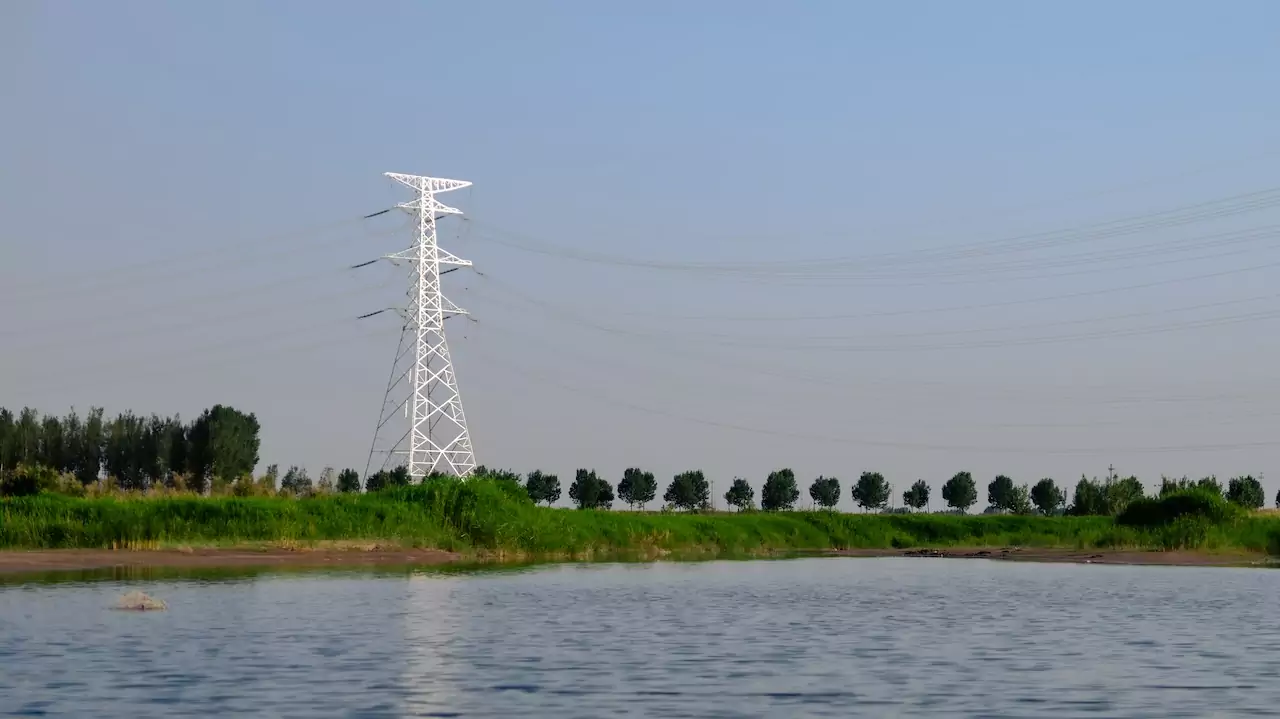
Infrastructure planning can no longer be treated as a mere financial exercise. It must be understood as a challenge of systemic coordination. For policymakers, investors and business leaders, the lesson is clear. Infrastructure ambition is measured in gigawatts. Infrastructure reality is realised in megawatts. The difference between the two lies in execution. (photo by Leon on Unsplash)
References
Agostini, M. (2025a). AI’s energy reckoning: How power became the new frontier of intelligence. Medium. https://medium.com/@tarifabeach/ais-energy-reckoning-how-power-became-the-new-frontier-of-intelligence-98d4868e347b
Agostini, M. (2025b). The AI infrastructure race: How energy, capital, and power are reshaping global markets. Medium. https://medium.com/@tarifabeach/the-ai-infrastructure-race-how-energy-capital-and-power-are-reshaping-global-markets-994c5aad05c2
Agostini, M. (2025c). The AI power paradox: Microsoft has the GPUs—but not enough energy to use them. Medium. https://medium.com/@tarifabeach/the-ai-power-paradox-microsoft-has-the-gpus-but-not-enough-energy-to-use-them-dbe58d28e424
Agostini, M. (2025d). The real cost of a gigawatt data center in the AI era. Medium. https://medium.com/@tarifabeach/the-real-cost-of-a-gigawatt-data-center-in-the-ai-era-a0f9615585a3
CB Insights. (2026). Tech trends 2026: 14 emerging trends to watch closely. https://www.cbinsights.com/research/report/top-tech-trends-2026
ConstructConnect. (2026). March 2026 data center report: Year begins with record construction starts. https://news.constructconnect.com/march-2026-data-center-report
International Energy Agency. (2026). Electricity 2026. https://www.iea.org/reports/electricity-2026
JLL. (2026). Navigating AI demand, power constraints and global opportunities. https://www.jll.com/en-us/insights/market-outlook/data-center-outlook
Li, Y., Chen, Z., Zhang, L., & Liu, J. (2023). Water consumption of data centers in the United States. Nature Sustainability, 6(7), 768–775. https://doi.org/10.1038/s41893-023-01034-6
McKinsey & Company. (2026). Global tech agenda 2026. https://www.mckinsey.com/capabilities/mckinsey-technology/our-insights/mckinsey-global-tech-agenda-2026
Millennium Project. (2025). Work/Technology 2050: Scenarios and actions. https://www.millennium-project.org/publications/worktechnology-2050
Morgan Stanley. (2026). Energy markets race to solve the AI power bottleneck. https://www.morganstanley.com/insights/articles/powering-ai-energy-market-outlook-2026
OECD. (2026). The weight of the cloud: The cost of AI for water. https://oecdcogito.blog/2026/03/22/the-weight-of-the-cloud-the-cost-of-ai-for-water
SITRA. (2026). Megatrends 2026. https://www.sitra.fi/en/publication/megatrends-2026
World Economic Forum. (2026). Global risks report 2026. https://reports.weforum.org/docs/WEF_Global_Risks_Report_2026.pdf
ALL RIGHTS RESERVED ©