Table of contents
- From research to business: the real European challenge
- From researcher to entrepreneur: the journey ‘from student to unicorn’
- Diversity as a competitive advantage
- Collaborate to compete
- When regulation creates new markets
- From the laboratory to the market: the role of the Co-creation Accelerator
- People before technology
- The vision for 2030: a paradigm shift
Europe continues to produce outstanding scientific research, patents and cutting-edge technologies. The real challenge today is not to generate more innovation, but to turn it into businesses capable of competing on global markets.
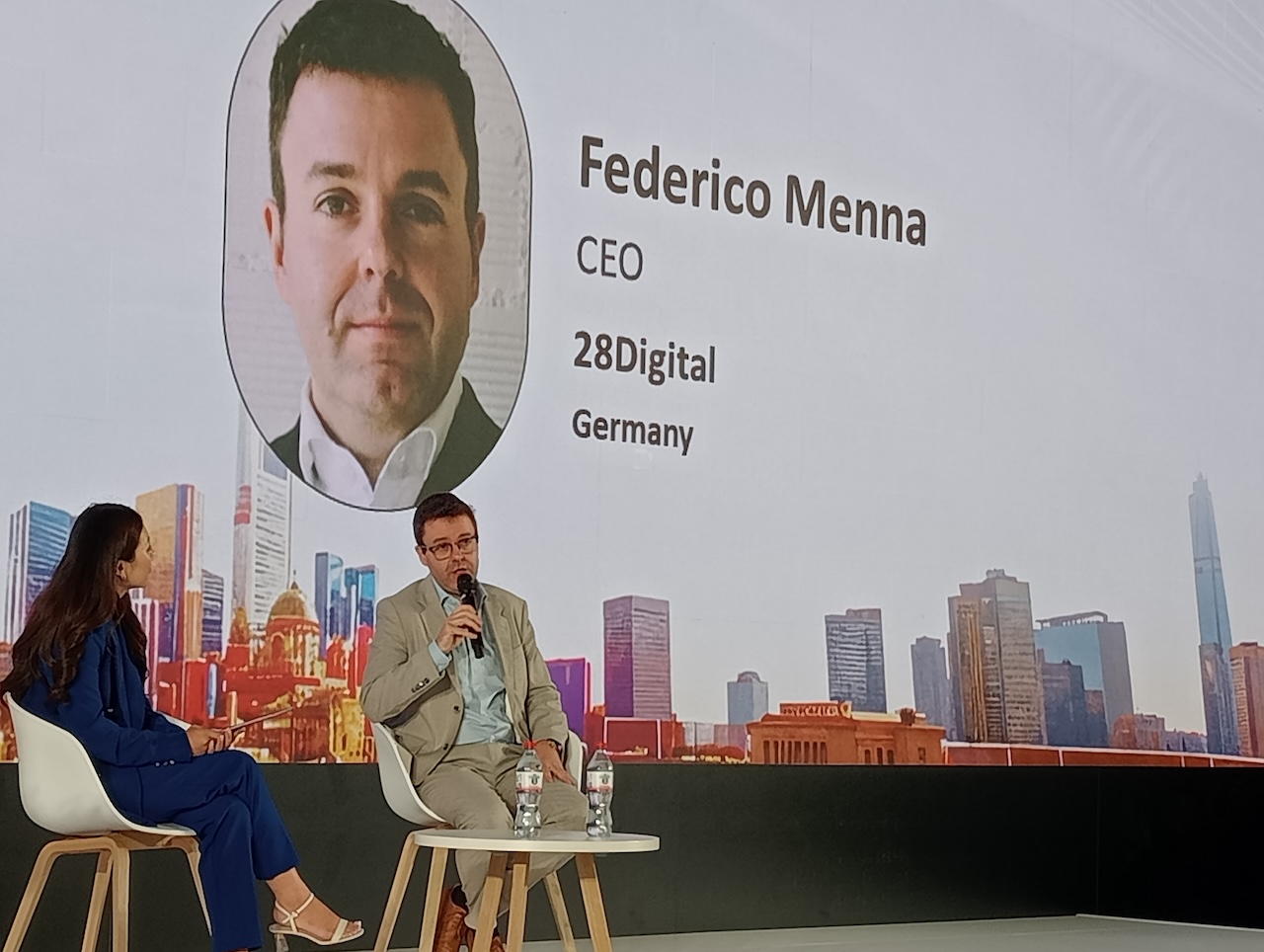
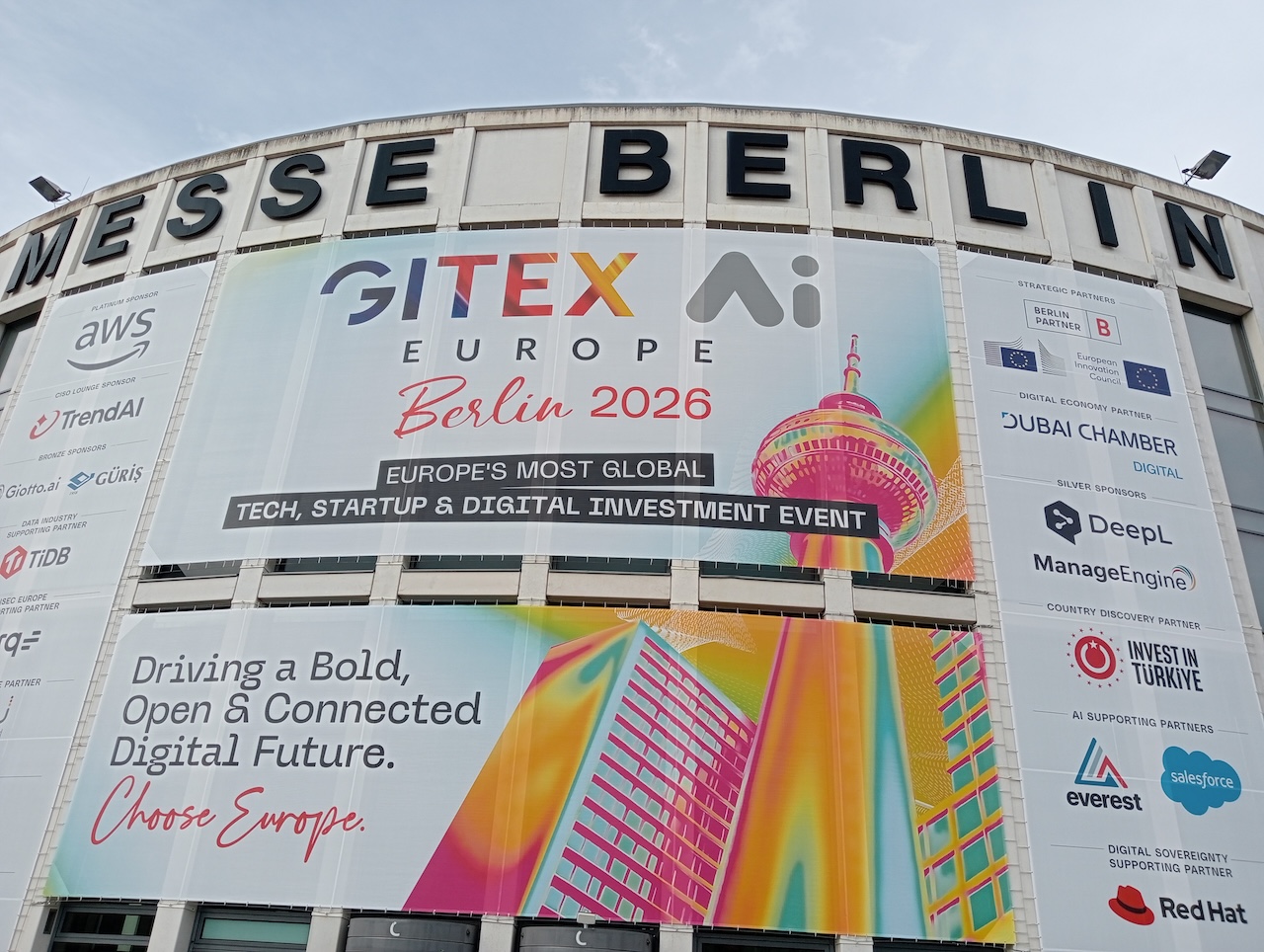
This is the key insight that emerged from our meeting with Federico Menna, CEO of 28Digital (pictured above), during Gitex Europe, the second edition of the Gitex network’s new continental flagship event dedicated to digital innovation, artificial intelligence and emerging technologies.
This is a particularly significant occasion: to coincide with the event, 28Digital has announced the launch of the 2026–2027 Co-creation Accelerator. This programme is aimed at deep-tech start-ups and seeks to address one of the main weaknesses of the European ecosystem: the delicate transition from research to the market.
The initiative connects early-stage start-ups with industrial partners to validate technologies in real-world contexts, providing financial support of up to 250,000 euros per project to support this process. Rather than a traditional accelerator, the programme represents a new development model in which synergistic collaboration between research, industry and investors becomes the main driver of growth.
From research to business: the real European challenge
In the debate on innovation, there is often a tendency to compare Europe with the United States or China, highlighting the lower number of unicorns or the limited availability of venture capital. According to Federico Menna, however, the issue needs to be approached from a different perspective.
“Europe does not have a problem with technology. It produces excellent research, patents and innovation of the very highest standard. The real challenge is scalability.”
The crucial issue, therefore, is not to produce more innovation, but to create the conditions for existing innovation to be transformed into businesses capable of growing rapidly and competing internationally. This is a substantial difference: competitiveness does not depend solely on the quality of research, but on the ability of the entire ecosystem to support a technology through all stages of its development.
From researcher to entrepreneur: the journey ‘from student to unicorn’
During our conversation, Menna summed up this vision with a phrase that was to become one of the cornerstones of 28Digital’s strategy: “from student to unicorn”.
The aim is not simply to support existing start-ups, but to establish a continuous pathway that guides students, researchers and innovators from the inception of an idea through to the creation of global businesses. According to the CEO, three fundamental changes are needed to achieve this goal:
- promoting an entrepreneurial culture in universities: too many researchers develop technologies of immense value without possessing the business skills needed to turn them into successful spin-offs;
- overcoming fragmentation in the pre-incubation phase: Europe has numerous national and European programmes which, however, often operate in isolation, lacking the coordination and critical mass needed to compete with US and Asian ecosystems;
- access to growth capital: whilst the continent manages to support start-ups through to the early rounds of investment, it still faces significant difficulties when it comes to financing international expansion. It is precisely during this scale-up phase that many European companies are forced to seek investors outside the continent.
Diversity as a competitive advantage
Whilst talent is the starting point, the connection between different ecosystems is the real driver of competitiveness. For years, Europe’s geopolitical fragmentation has been described as an insurmountable obstacle; Menna, however, offers a radically different perspective: European diversity is not a problem, it is an asset.
“We have centres of excellence spread across the continent: universities, research centres, businesses and regions with highly specialised expertise. The challenge is to transform this wealth into an interconnected system.”
Europe possesses a unique combination of scientific and industrial expertise spread across dozens of regional hubs. To make the most of this, 28Digital actively supports initiatives such as the Regional Innovation Valleys, which were set up specifically to connect local areas, academia and businesses. The aim is not to replicate Silicon Valley, but to create a distributed ecosystem capable of transforming local centres of excellence into a continent-wide innovation network.
Collaborate to compete
Connecting ecosystems, however, is not enough: closer cooperation is needed between universities, businesses, investors and institutions. According to Menna, none of these players can tackle global competition on their own.
‘Neither the public nor the private sector, on its own, can compete with the level of investment and the speed of implementation we see today in other parts of the world.’
The main obstacle is often the difference in language and incompatible timeframes: institutions think in terms of public policy, businesses respond to market pressures, and investors assess financial returns. To bridge this gap, we need permanent platforms for collaboration, co-investment programmes and models in which all stakeholders share objectives and risks.
When regulation creates new markets
Another area of significant divergence concerns the relationship between regulation and innovation. Whilst many start-ups continue to view the European regulatory framework as a hindrance or a cost, Menna sees it as a strategic opportunity.
‘Regulation is increasingly shaping the markets of the future.’
In the fields of artificial intelligence, cybersecurity, sustainability and digital health, understanding in advance the direction of regulation (such as the Temporary Framework or the various European Acts) means being able to develop products that are already aligned with the future needs of businesses and public administrations. From this perspective, compliance ceases to be a bureaucratic obligation and becomes a factor in competitive differentiation. Europe can thus transform its traditional focus on rules into a market advantage.
From the laboratory to the market: the role of the Co-creation Accelerator
Whilst an entrepreneurial culture, the associated ecosystems and structured collaboration form the foundations, one crucial question remains: how do these ideas translate into tangible results?
28Digital’s operational response is none other than the new Co-creation Accelerator 2026–2027. The programme intervenes at the most delicate stage in the life of a deep-tech start-up: the transition from technological validation (in the laboratory) to industrial validation (on the market), bridging that critical gap known as the ‘valley of death’.
“We’ve chosen to start with industrial validation because that’s where many promising technologies come to a standstill,” explains Menna. “All too often, deep-tech start-ups develop solutions that are technically excellent but struggle to demonstrate their value in a real-world context. Without this validation, it’s difficult to attract customers, investors and strategic partners.”
The Co-creation Accelerator’s approach breaks with traditional acceleration models: in addition to mentoring and training, the programme aims to put the technology to the test as quickly as possible. Start-ups are paired with partner companies ready to trial the solutions in practice within their own processes, drastically reducing the time to industrial adoption. All of this is supported by a financial contribution of up to 250,000 euros, which allows teams to focus on technological development and their business model.
People before technology
In 28Digital’s selection criteria (which is the evolution of EIT Digital, as Menna himself explained in a previous interview with Startupbusiness, ed.), scientific rigour is an absolute prerequisite, but it is not enough. It is the people who make the real difference.
“We are certainly looking for robust and distinctive technologies, but we pay just as much attention to the people involved. The founders who make a difference are those capable of learning quickly, attracting talent, listening to the market and adapting without losing their ambition.”
By putting the team at the centre, the programme offers not only capital, but also the network of relationships needed to overcome the barriers to industrialisation.
The vision for 2030: a paradigm shift
Looking ahead to the next decade, Federico Menna envisages a Europe capable of retaining its talent and generating a significantly greater number of global scale-ups. However, the measure of success will not be purely quantitative.
“Success will not be measured solely by the number of start-ups supported or the investment raised, but by our ability to help build a more connected, more open and more competitive European ecosystem.”
The aim is to establish Europe as the destination of choice where innovators choose not only to set up a start-up, but also to grow it and list it on the stock market. The continent possesses unique assets that are difficult to replicate: scientific excellence, quality of life, cultural diversity, the rule of law, and an ethical and human-centred vision of technological development. In a fragmented geopolitical context, these elements can become an unrivalled draw.
In conclusion, the discussion with Federico Menna highlights how the European debate is finally moving beyond the old question of ‘how can we create more start-ups?’ to focus on the more mature one: ‘how can we build an ecosystem capable of supporting innovation throughout its entire life cycle?’
The Co-creation Accelerator is the systemic response to this challenge. If this strategy proves successful, Europe’s future industrial leadership will not depend on a single revolutionary technology, but on the ability to sustainably connect people, capital, research and industry within a single, large continental ecosystem. (photos by the author)
ALL RIGHTS RESERVED ©