The journey continues to discover Genoese and Ligurian companies that are innovating in collaboration with Fondazione Genova Startup.
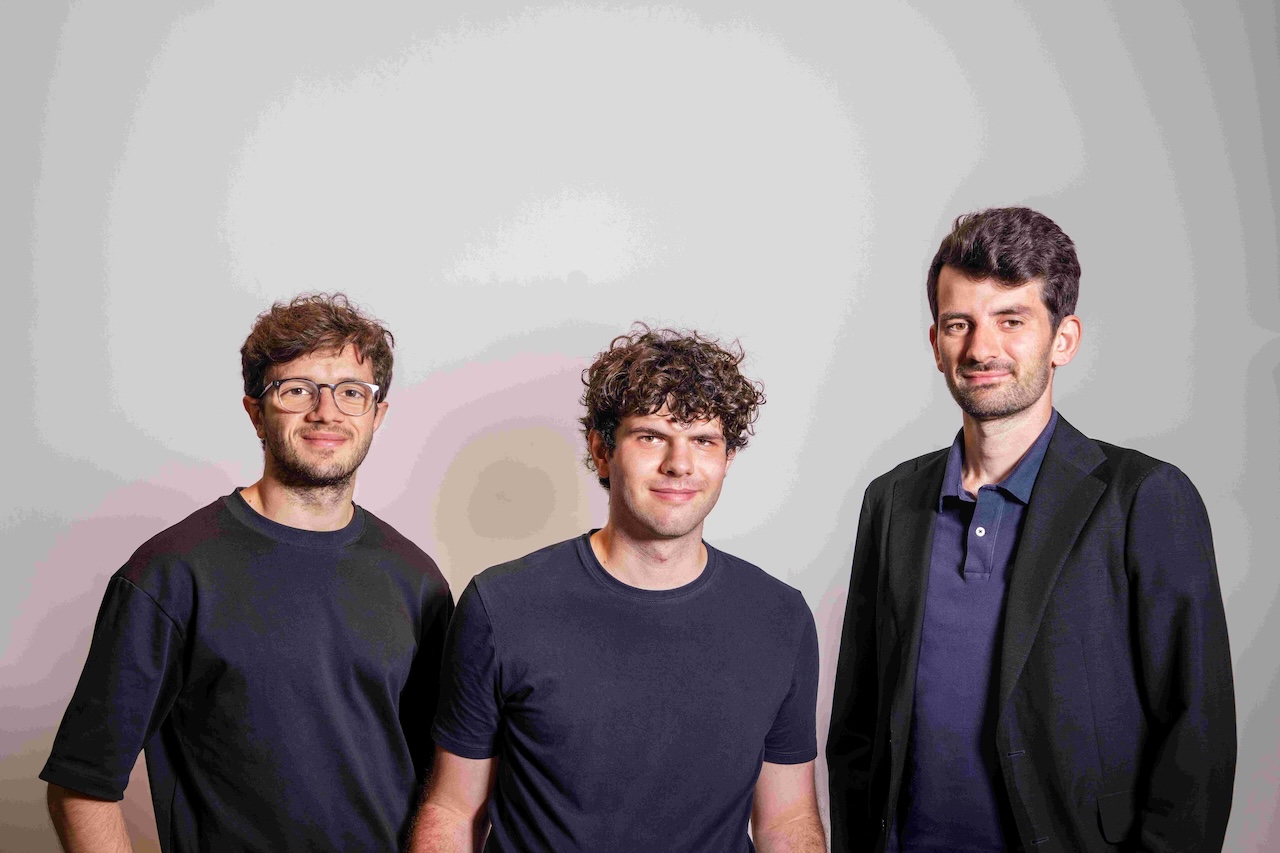
Making the development of advanced hardware scalable is the challenge being tackled by DBSpace, a Genoa-based deep-tech start-up founded by Dario Bruna (pictured), which has placed turbomachinery at the heart of its business: rotating machines (such as pumps, compressors, turbines and fans) that transfer energy between a fluid and a mechanical shaft and which, though often invisible to the end user, are crucial to the efficiency of infrastructure, ranging from aircraft engines to power stations, from marine systems to hydrogen and space propulsion systems.
Following initial technological validation and its entry into an ecosystem of investors and programmes specialising in space and deep tech, the company is now entering a new phase of growth and fundraising, with the aim of finalising the development and accelerating the industrialisation and commercialisation of its technologies.
Bruna, a mechanical engineer who trained in Genoa, has built an international career spanning research, industry and academia: before founding DBSpace, she worked at the NASA Glenn Research Centre, at Rolls-Royce in the UK, at MTU Aero Engines and at the University of Cambridge – environments in which turbomachinery, aerospace and energy demand very high standards of performance and reliability.
The start-up operates in the space sector: “Space is one of our primary markets, because it is the environment where performance requirements are at their most extreme and where an efficient, compact and reliable turbomachine can really make a difference,” explains Bruna.
DBSpace was founded to develop advanced e-pumps and turbomachinery for space propulsion, with the aim of making access to and mobility in space more cost-effective, flexible, sustainable and reliable. Its primary area of application is the new space economy, where there is growing demand for solutions for launchers, kick-stages, orbital vehicles, in-orbit transfer and refuelling systems, and space infrastructure. “Space is becoming an industrial infrastructure. For this to happen, we need technologies that are more accessible, more reliable and easier to integrate. E-pumps can help to simplify certain propulsion architectures, reduce costs, increase mission flexibility and support the development of reusable systems.”
Through a process of technology transfer, DBSpace aims to become a leading player in e-pumps and advanced turbomachinery in other sectors too, such as energy, hydrogen, the maritime sector and sustainable mobility. The company’s technology portfolio includes cross-sector solutions based on high-performance rotating systems, electrification, complex fluid management and cryogenic applications. “Our vision is to develop dual-use technology: designed for space, but also useful on Earth. The challenges we face in space systems are very similar to those that many industrial sectors will have to tackle in the coming years.”
For Bruna, the point is not simply to build turbomachinery with better performance. “The real problem with advanced hardware is that it is often developed as a one-off, almost artisanal project. Every new system requires years of work, substantial investment and a vast amount of knowledge that risks not being fully utilised. We want to change this paradigm.”
At the heart of DBSpace lies a proprietary engineering platform, Cognix Turbo, which accelerates the design, validation and development of complex hardware. “We don’t want to start from scratch with every new project. We want to transform engineering into a cumulative process: every activity, every test, every simulation and every design choice must contribute to making the next stage of development faster and more robust. This is what we mean when we say we want to make advanced turbomachinery scalable, and we achieve this thanks to our engineering platform and our proprietary architectures.”
This is how DBSpace has evolved into an industrial deep-tech organisation, where technologies, intellectual property and engineering capabilities developed for space can also generate spin-offs in other technology-intensive sectors. “Our aim is not simply to sell turbomachinery, but to build industrial capability, technology, methodology and a development chain that enable us to create product families adaptable to missions and applications based on different proprietary architectures. In deep tech, the value lies not only in the final product, but in the way you design, validate, reproduce and improve it over time.”
DBSpace’s growth trajectory has also been recognised within the space innovation and venture capital ecosystem. The start-up has been selected by ESA BIC Turin, the European Space Agency’s incubator which supports businesses operating in the space economy, and has been added to the portfolios of investors such as Vento, the pre-seed investment programme promoted by Exor, and Galaxia, the national technology transfer hub for aerospace run by CDP Venture Capital and Obloo Ventures.
“For a deep-tech start-up, capital is not just about finance: it is about access to expertise, networks, credibility and speed. But it must also be patient capital, capable of understanding that the development of advanced hardware requires design, validation, testing and industrialisation cycles that differ from those of pure software,” emphasises Bruna. “Being supported by organisations such as ESA BIC Turin, Vento and Galaxia means being able to build DBSpace within an ecosystem that understands the complexity of our sector and the need to think on an international scale right from the start. “We are currently raising funds precisely to take this capability to the next level.”
The outlook, after all, has been international from the outset. “Our target markets are global by definition. A start-up like DBSpace must be founded with solid roots in its home territory, but with international ambitions and standards. To compete in these sectors, one must build technical credibility, speed of execution and the ability to engage with international clients, industry partners and investors. The capital required is substantial, and we must therefore take action on this front as well.”
Franco Malerba, a founding partner of DBSpace, Italy’s first astronaut and a symbolic figure representing the link between Genoa and space, also played a significant role in this journey.
DBSpace is thus part of a trajectory that brings together the local area, capital, expertise and cutting-edge technology. “Deep tech is one of the areas in which Italy can play an important role, because we have engineers, universities, supply chains and an industrial culture. The challenge is to transform all this into companies capable of growing and competing on a global scale. We want DBSpace to be recognised as an industrial deep-tech start-up. Space and the maritime sector are the verticals from which we are starting to demonstrate our technology; the scalability of advanced hardware is our true mission. To achieve this, we need expertise, industrial vision and patient capital. The fundraising we are currently undertaking serves precisely this purpose: to accelerate the transition from technology to industrial capacity, with roots in Genoa and global ambition,” concludes the CEO
ALL RIGHTS RESERVED ©