Dronus, a company specialising in the development of remotely piloted aerial systems for security, inspection and monitoring, has announced that it has raised €15 million to enhance Nest, its patented ‘drone-in-a-box’ technology: an airbase that serves as the heart and brain of the system, enabling remotely managed operational networks and automating drone take-off, landing and battery recharging. The round is led by Algebris Investments (Ireland), a global independent asset management firm, alongside participation from Azimut ELTIF Venture Capital ALIcrowd III/IV, CDP Venture Capital, SIMEST (through the F.394/81 fund, managed on behalf of the Ministry of Foreign Affairs and International Cooperation), as well as a follow-on investment from Eni Next, Eni’s corporate venture capital arm.
The transaction will support the completion of the development and enhancement of Dronus technology, consolidating the vision for an infrastructure for Nest-based operational networks and strengthening its market position.
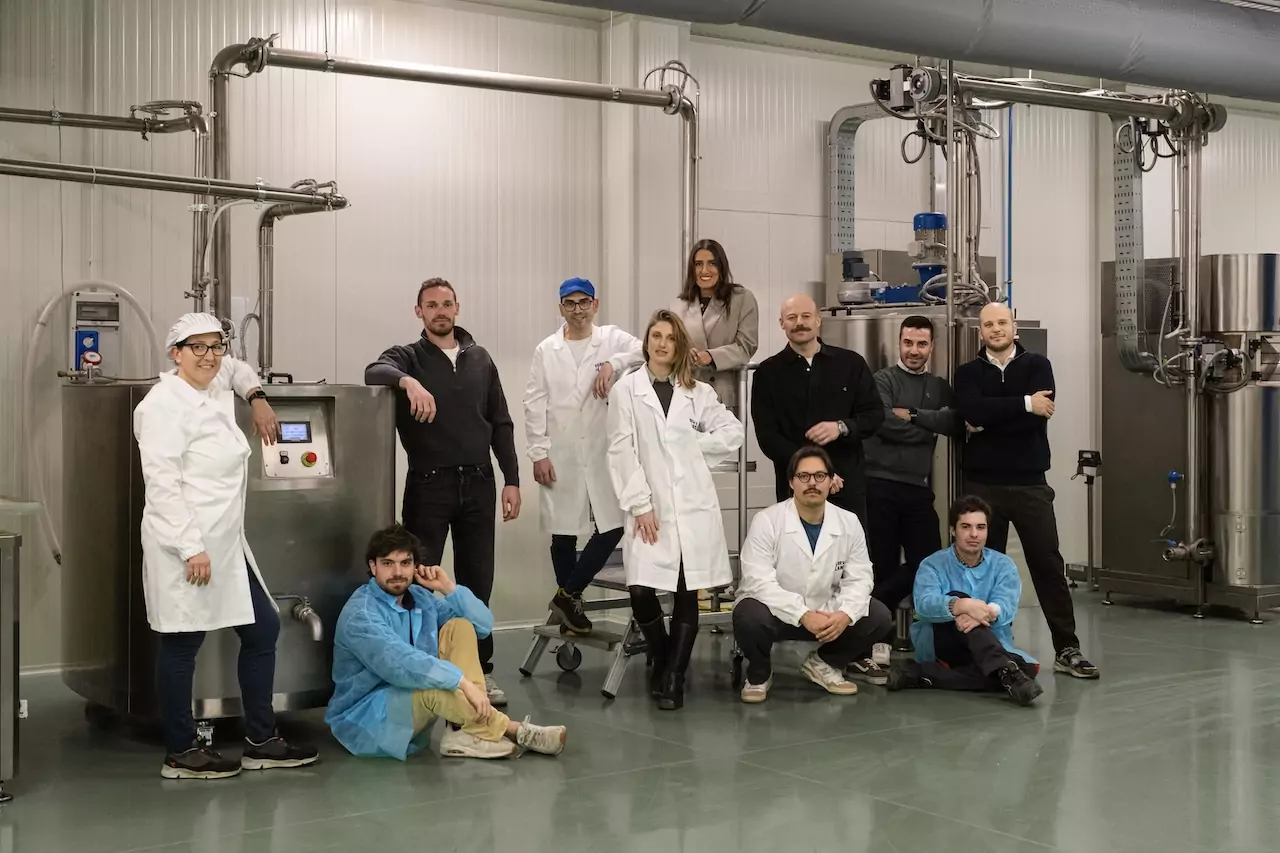
Founded in 2018 by Marco Ballerini (pictured), an aerospace engineer with experience in the design and development of technologies and a proven track record as an entrepreneur, Dronus was established with the aim of developing integrated technological solutions for the remote acquisition, management and processing of data and images in real time, contributing to safety and social wellbeing, whilst fully respecting people’s privacy. Dronus specialises in the design and manufacture of remotely piloted aircraft systems (RPAS) for industrial use. Based in Trieste, the company has a multidisciplinary team of over 30 people. Dronus has formed partnerships with Eni and Qualcomm. Among its current projects is a video monitoring initiative in Singapore in collaboration with HTX (Home Team Science and Technology Agency). In the field of logistics, Dronus has also launched a trial at Ericsson’s 5G Smart Factory in the United States.
Dronus has developed and patented, in Italy, Europe, the USA and other target countries, an aerial ‘drone-in-a-box’ system called Nest, introducing an infrastructural approach which, compared to traditional ground-based solutions—which are often more constrained by site-specific installations and less suited to widespread deployment—enables remotely manageable operational networks. The system is capable of automatically carrying out inspection and monitoring activities in the industrial sector, the logistics sector, and in smart city and oil and gas projects. The real breakthrough lies in the logic of distributed aerial infrastructure: each Nest is a replicable, lightweight and versatile node, which can be installed in multiple locations to expand coverage in a modular manner. In this way, the drone becomes an operational asset, because it is the Nest-based aerial infrastructure that enables programmable, repeatable and continuous missions, ensuring constant data flows and reducing complexity, costs and operational risks, which in traditional solutions are concentrated primarily in the management of field activities and in the most delicate phases of take-off and landing. This suspended aerial base, designed to operate without any on-site human supervision, acts as a support point and protective ‘nest’ for the drone, automating the entire operational sequence and the recharging of the drone between missions, without the need for on-site intervention. The missions and information flows involve the continuous transmission of collected data to support monitoring and inspection activities. Thanks to a design focused on maximum safety, the system can operate 24 hours a day in BVLOS (beyond visual line of sight) scenarios, utilising artificial intelligence and its precision optical cameras to monitor infrastructure, public spaces and industrial sites.
Thanks to a fleet of drones developed to meet a variety of operational needs – including models that have obtained ATEX certification, which, unlike almost all other drones on the market, allows them to be used even in environments where flammable gases may be present, and a safety certificate confirming that these technologies, with their specific safety features, can fly in urban and populated areas – the Nest system can adapt to a wide range of contexts, from energy plants and critical infrastructure to smart city projects and civil protection. In the field of security and surveillance of industrial sites, the platform, with Nest as the operational hub, enables continuous perimeter inspections and rapid response in the event of an alarm, offering dynamic protection that goes beyond the limitations of fixed video surveillance thanks to its ability to reduce blind spots and track moving subjects.
The system also enables routine inspection and monitoring of energy facilities, telecommunications networks and oil and gas sites, helping to reduce staff exposure and identify anomalies or potential issues at an early stage. At the same time, within the smart city framework, Dronus aims to enable advanced services for traffic and parking management, air quality monitoring and public safety. Finally, the system can support civil protection processes for fire prevention or the monitoring of areas prone to hydrogeological instability, providing images—including thermal imagery where applicable—and real-time analyses based on artificial intelligence.
“With this funding round, we aim to strengthen and elevate Dronus’s position as an international player, capable of supporting key players in industry, security and Smart Cities, whilst consolidating our presence in Europe and other strategic markets,” said Ballerini in a statement “We aim to be a leading technology partner for automated inspections and advanced monitoring, contributing to safety and operational efficiency, whilst fully respecting privacy.” The resources will be allocated to further developing and accelerating the platform’s evolution: from the introduction of new AI-based features to the refinement of existing patented technologies. The aim is not merely to grow, but to enhance the system’s technological value and the maturity of real-time data management and transmission processes, enabling increasingly autonomous monitoring to support the security of critical infrastructure and the optimisation of information flows in modern industry. ”
“We are proud to lead this round of funding for Dronus. The combination of patented technology, 24/7 operations even in BVLOS scenarios, and the platform’s evolution towards increasingly advanced artificial intelligence capabilities can deliver tangible benefits for the monitoring of critical infrastructure – from energy to telecommunications – and enable new services in smart cities. “With this investment, we will support the team in accelerating the technology roadmap and consolidating growth in key markets,” says Stefano Ferrari, partner at Algebris.
“Our investment in Dronus represents a strategic move at the heart of Italian deep-tech innovation. We decided to back this venture because we firmly believe that the integration of artificial intelligence and autonomous flight systems is key to revolutionising the security and monitoring of critical infrastructure. Dronus offers not just technology, but a comprehensive and scalable solution that effectively addresses the modern industry’s needs for efficiency and sustainability. The team has demonstrated capability and resilience. We are excited to support the team on their path to international expansion,” adds Guido Bocchio, Head of Venture Capital at Azimut Libera Impresa.
“We are delighted to support Dronus in this new phase of growth. At a time when robotics is increasingly becoming the new frontier of artificial intelligence in real-world industrial applications, advanced AI-driven automation is transforming the way complex field operations are managed, from asset inspection to operational safety.” “Solutions such as those offered by Dronus can make a significant contribution to improving efficiency, safety and decision-making in industrial operations,” says Clara Andreoletti, CEO of Eni Next.
ALL RIGHTS RESERVED ©