Table of contents
Wired Italia is closing down. When a publication closes, it is always very bad news, not only because it has direct consequences for those who work there, but also because one fewer voice in the media landscape means one fewer voice contributing to the diversity of ideas, one fewer source of access to information, and a beacon that is being extinguished. The problem with Wired Italia is not a problem with the product; the product is excellent, the product is well-known, readers are loyal, and being published in Wired carries authority. Furthermore, the direction set by editor Luca Zorloni was towards even greater depth, quality, analysis and breadth of topics. No, the problem is not the product, nor is it the professionalism of the people who produce it. For the sake of transparency towards the reader, I wish to state that my view of Wired goes beyond my experience as a reader, as I have, even recently, written a number of articles for that publication. I say this both for the sake of fairness and to emphasise that these contributions did not conflict with my role as editor of Startupbusiness, but were intended precisely to further strengthen the diversity of voices.
Now, without necessarily having to reiterate how vital a free press is in democratic regimes – and indeed in any situation, as it is often the only voice capable of bringing to the world’s attention facts that would otherwise remain hidden – it is nevertheless worth reflecting on why the decision by the senior management at Condé Nast, the publisher of *Wired*, carries far greater significance than the already serious news of the closure of a publication that had almost come of age.
The publishing industry is struggling; business models
Why is a magazine like Wired Italia, backed by a global publisher, closing down? As mentioned, the publication is outstanding; its reputation, authority and independence are beyond reproach. There are several reasons: the publishing industry has been suffering ever since the internet came into existence; news publishing was the first victim of the advent of the internet, in terms of its business model, and has not yet managed to find a way out, a model that guarantees its sustainability. Attempts are being made: – 1) some resort to clickbait to attract users and sell them display advertising, but this often results in a decline in content quality, including content written by artificial intelligence. Here, the issue is not so much one of efficiency but of opportunity: it is often said that the real boss of a newspaper editor is not the publisher but the reader; it is the reader who must be given the utmost attention and priority. Today, however, readers are put off by content that is clearly written by AI, as fewer and fewer people are willing to devote their attention and time to reading content that no human has had the time or inclination to produce. Consequently, the use of AI is, almost always, a reputational boomerang. – 2) Another model is that of subscriptions or paywalls: do you want to read my content? Pay a fee; this is the model borrowed from pre-internet publishing. Do you want to read the newspaper? Go to the newsagent’s and buy it. The problem here is that news is increasingly available from multiple sources; this applies less to analysis, in-depth features, interviews and editorials, of course, but the result is that users tend not to take out subscriptions when they know that other free sources provide similar information, even if those sources may be less authoritative. In general, the advent of the internet has established the notion that information is free, that there is no need to pay for it. – 3) Then there is the donation model, which we have also adopted at Startupbusiness, and which has been embraced by a great many independent online magazines and newspapers: The Guardian, Linkiesta, VoxEurop, to name but a few. Here, we rely on the reader’s goodwill: I offer you valuable content, I don’t bombard you with pop-ups and adverts, I don’t ask for subscriptions or impose paywalls, but I do ask you to contribute voluntarily. Does it work? The answer is no, or rather, it works to some extent because a tiny percentage (Wikipedia, which uses the same model, receives donations from only around 2% of its users) on average do donate, but the choice of a donation campaign is also motivated by the fact that it amounts to a clear declaration of independence. – 4) There are also other models, some as effective as they are unique, such as that of The Conversation, which we wrote about here; hybrid models that seek to combine multiple sources of funding, including partnerships or advertorials (what is now called native advertising); and then there are media outlets that benefit in various ways from public financial support: shareholdings, licence fees, grants, and so their business is supported by taxpayers’ money.
The niches
Analysing business models makes sense only if one also considers the nature of the publication; in the case of Wired Italia, as with Startupbusiness, we are not dealing with general-interest publications but with niche magazines – niches of varying sizes but all clearly defined – which target a specific sector and readers interested in specific topics, a factor that makes it even more difficult to find a sustainable business model. So producing a magazine in the internet age is already complex; if you do so for a niche, the complexity increases. Then there are niches that differ in size; for example, Wired’s niche is broader than that of Startupbusiness, both because the publication is global and because its content—thanks in part to the strength of a formidable and extensive editorial team that Startupbusiness lacks—covers a much more diverse range of topics. Niches also differ in terms of spending power; for example – I always use Startupbusiness as a reference point, not out of self-referentiality but because it is the one I know best – there are online newspapers with a market presence very similar to that of Startupbusiness, both in terms of structural reach and readership, but which target niches with high spending and investment capacity. one example being the finance sector, where although there is greater competition at a media level, there is also greater attention paid to supporting the media outlets covering that topic by market players who, to varying degrees, benefit from the existence of such media. What does this mean: support through advertising, support for the organisation of events or awards, support for editorial initiatives, and an awareness of the importance of a sector being covered by independent media.
Why did this happen and what should be done?
So who is to blame for the demise of Wired Italia? Several factors are to blame; for a start, there is certainly a degree of recklessness on the part of the American publisher, yet another example of a certain ineptitude that sometimes rears its head when, from the North American side ‘across the pond’, they look towards the European shores. But there is also a degree of complicity on the part of the world to which Wired refers, and this applies not only to Wired but to the media in general. What is striking today is hearing media and PR agencies, associations, and some companies express deep regret, if not outright concern, over the closure of the prestigious magazine. It is right to feel this way, but it would also be useful to reflect a little; we should take advantage of this unfortunate news to consider certain aspects of the situation. Who supports the sector’s media? Who expects to get everything for free? And I’m not just talking about the reader who reads the articles, but the agency that asks for the publication of information relating to its clients, the various companies and organisations that ask for the publication of their calls for start-ups or various initiatives, the associations that ask for the publication and dissemination of their events and the data from their reports, and the public institutions that are never in short supply, despite the fact that, in various ways, they fund only a part of the media (yes, in this context we even find ourselves competing with those who make a living thanks to our very own taxes…), to ask for ‘support with dissemination’ and ‘a request for publication’. Fortunately, not everyone is like that; there are also those who have realised that the media cannot survive on air alone and are the first to make themselves available, to contribute by forming partnerships and creating joint activities, thereby giving the media a little fuel. It is not enough, but it is what allows us to keep the lights on today; the rest is achieved by keeping costs to a minimum (transparency note: when we talk about partnerships, at least in our case, we are not talking about compromising the independence of our content, but about joint initiatives in which the reader is always informed of the partnership in place).
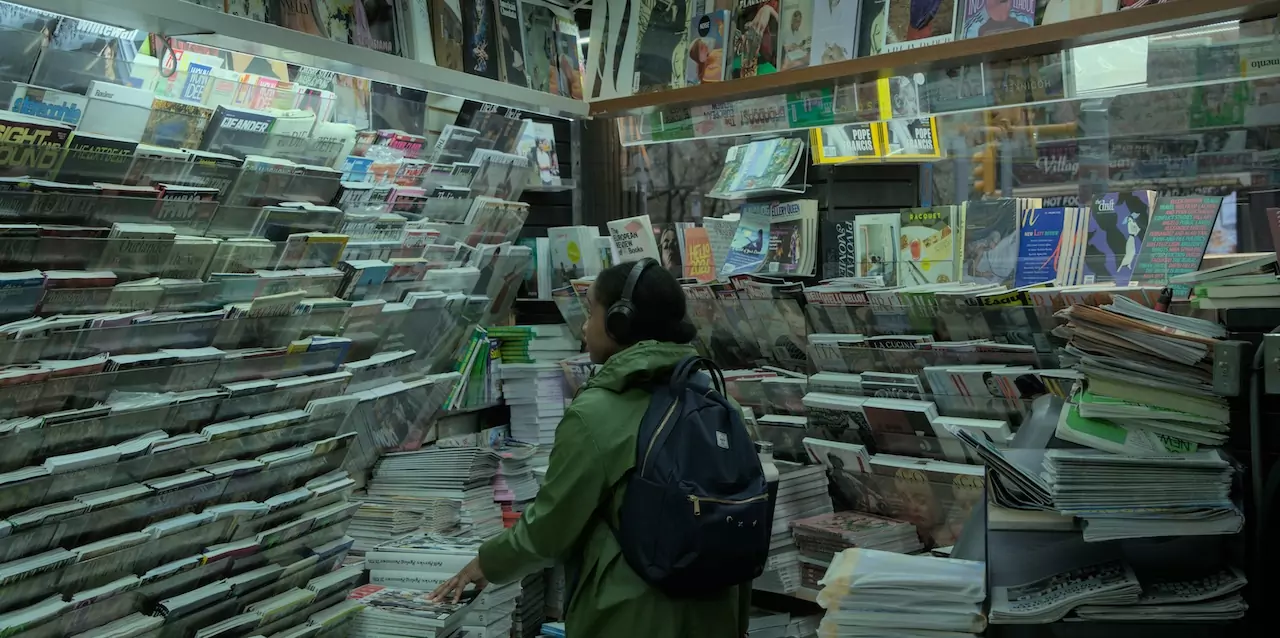
What is needed, therefore, is greater awareness both of the importance of the media even within niche sectors (which is, of course, a limited definition, since even a niche media outlet has the potential to reach anyone), and of the need to support their work – always without compromising their independence, but by contributing to the value they bring through their reporting. We need, for instance, a clear stance to be taken, starting with associations, for example, but this applies to all players in the ecosystem, beginning with those who benefit most from media coverage – those involved in everything from start-ups, investment, the market, reports, internationalisation, policy, technology transfer and training – yet who, until now, have never engaged with the media. Is it worth discussing this? Perhaps the time has come to do so; the time has come to tackle the issue and understand how it can be done, what makes sense to do, to understand if and what value the media bring, to understand how that value impacts the entire ecosystem, and to understand what would happen if, after Wired Italia, other publications were to start closing down and only those funded by taxpayers’ money remained. We need to acknowledge the situation and start discussing the issue publicly, involving all stakeholders; we need a general assembly of the sector’s media. It is important to express outrage, to post one’s disappointment on social media, and even to sign the petition to save Wired Italia, but it is even more important to look at the problem as a whole – a problem of which events such as the closure of Wired Italia are the most painful symptom. (photo by Hasnain Sikora on Unsplash).
ALL RIGHTS RESERVED ©