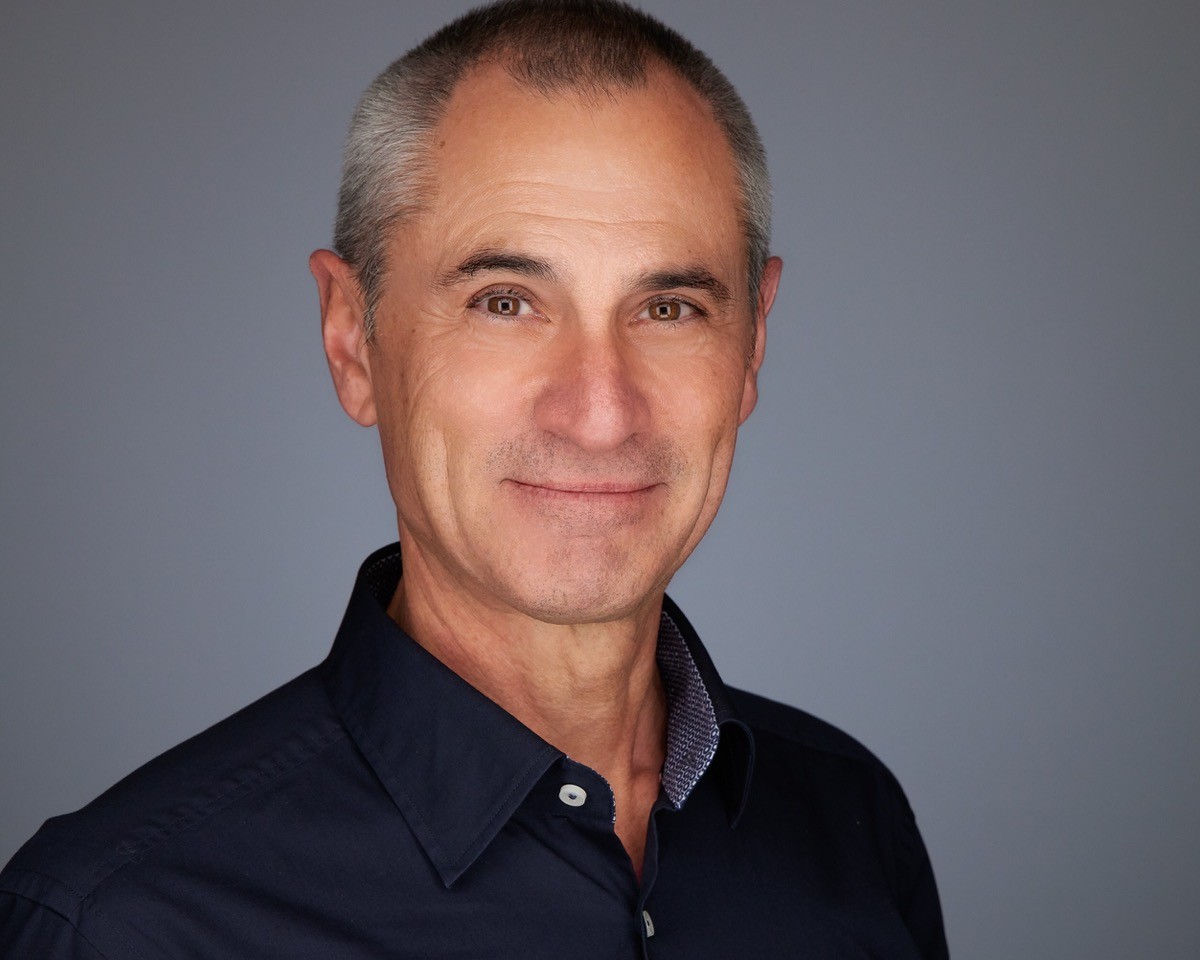
In Dario Floreano’s life, seemingly separate worlds come together: biology becomes robotics, research becomes business, and science is transformed into a story accessible to the general public.
The Italian-Swiss professor is known as a science communicator, capable of bringing robotics out of the laboratories and into the public debate. His latest book, *Tales from a Robotic World* (MIT Press, 2022), co-written with Nicola Nosengo, weaves together futuristic scenarios and real-world research to show how intelligent machines might shape everyday life.
A Chinese translation is now imminent, broadening its readership and strengthening its role as a bridge not only between scientists and the general public, but also between the West and the East.
At the Industrial Summit 2026 organised by the Hong Kong University of Science and Technology (HKUST), Floreano spoke about the journey from experimentation to setting up a business. A professor at EPFL in Switzerland and director of the Laboratory of Intelligent Systems, he has pushed the boundaries of evolutionary robotics, aerial drones and ‘soft robotics’ focused on deformable structures.
His academic background ranges from cognitive science to neural computation, culminating in a PhD in artificial intelligence and robotics from the University of Trieste. His collaborations span continents, reflecting his belief that progress is made when ideas travel.
Alongside his scientific output – hundreds of articles and his role as associate editor of *Science Robotics* – Floreano has founded six start-ups and collaborated with research institutes around the world. At the heart of his entrepreneurial vision lies the belief that nature holds the solutions to real-world problems.
It was this line of thinking that led to the founding of SenseFly in 2009. Inspired by the way insects navigate, this start-up’s drones used optical flow sensors modelled on compound eyes, enabling autonomous flight without GPS. They could avoid obstacles and land with precision – capabilities that saw the company grow to around 200 employees before its acquisition by Parrot. Following the transition to AgEagle, the company was renamed EagleNXT, with applications ranging from mining to construction and agriculture.
In 2015, a new start-up, Flyability, took on a different challenge: inspecting hazardous areas where GPS and human safety are incompatible. Floreano’s team once again turned to insect biology, designing a drone protected by a cage and shock-absorbing mechanisms. The Elios range has become the go-to solution for industrial inspections in furnaces, pipelines and other harsh and hazardous environments, where the company continues to lead the way with stabilisation systems and modular payloads.
Not all entrepreneurial ventures have been successful. Dronistics, a manufacturer of origami-inspired drones and a software suite for secure deliveries directly to customers, has run into difficulties due to Swiss regulatory constraints. Its innovative safety solutions were not enough: without authorisation for urban flights, investors were forced to pull out.
Yet regulatory hurdles may not be insurmountable in a globalised world. The day after Floreano’s speech in Hong Kong, the Chinese province of Guangdong unveiled a plan to accelerate the large-scale roll-out of last-mile delivery by drones in the Greater Bay Area. Where restrictions in one country halt progress, new markets can breathe new life into past projects and open up unprecedented opportunities.
Floreano’s latest project, Elythor, founded in 2025, returns to biology – this time from a predator’s perspective. Its drones, inspired by birds of prey, use morphologically inspired wings to combine efficiency and agility, with the aim of inspecting wind turbines in strong winds, where traditional quadcopters struggle to operate.
Early demonstrations show a hybrid approach: wings that fold in for close-up inspection and unfold for high-speed transit, potentially revolutionising the monitoring of energy infrastructure.
Looking to the future, Floreano sees ‘embodied’ artificial intelligence (embodied AI) as the next frontier, with new architectures designed to overcome the limitations of current vision-language-action (VLA) models and redefine the way robots adapt to the world around them.
The professor predicts the emergence of neural systems that learn through direct interaction with the environment – partly through physically grounded simulations, and partly in the real world – rather than relying on pre-existing datasets.
More economical in their use of data and energy than current large language models, these systems would combine a slow, deliberate cognitive layer with a fast, responsive one, almost emotional in its immediacy. Floreano envisages architectures enhanced by electronic equivalents of neurotransmitters to modulate activity, alongside mechanisms that simulate the sleep processes essential for learning and behaviour.
In Floreano’s work, biology inspires the design, robotics demonstrates its validity, entrepreneurship brings it to market, and storytelling makes it accessible to the public. His machines do not merely imitate life; they learn to serve it.
ALL RIGHTS RESERVED ©