The €1.6 million pre-seed round led by Italian Founder Fund (IFF) is a business model that aims to bridge the market gap by systematising the Italian innovation that is emerging around public tender opportunities. All this has enabled Cato – a start-up founded primarily to support SMEs, but also large enterprises, in seizing the opportunities presented by public tenders by streamlining and simplifying the participation process – to close its first year of operations with over 100 clients and the integration of Avvista.ai’s technology into its platform.
The context is that of a €309 billion market, which is set to grow by +13.9% by 2025 (source: ANAC annual report), in which 60% of SMEs still struggle to compete effectively in public tenders. The reason: amongst the thousands of calls for tenders published every day, identifying those that are truly relevant to one’s own company is far from straightforward, and preparing the necessary documentation within the required timeframes is often impossible without a dedicated and specialised team. Furthermore, Legislative Decree 36/2023 has made the digitisation of the entire contract cycle mandatory, increasing the regulatory burden and the pressure on less well-structured tender departments.
Buoyed by its performance in the first few months of operation and growing market demand, Cato has recently integrated the technology of Avvista.ai, a newly established start-up founded by Riccardo Sabatti, which has developed a self-service solution designed specifically for companies with a limited number of tenders and no dedicated in-house department, whose demand for support is clearly and steadily increasing. The integration, formalised through the ‘acqui-hire’ model (where a company is acquired on the basis of the specific expertise of its professionals; it is therefore an integration of professional expertise rather than of companies, more akin to a recruitment than a merger, which also explains why the value of the acquisition is not stated in the announcement, as it is calculated in the form of a salary agreed with the individuals joining the acquiring company’s team), enables Cato to cover the entire spectrum of demand, from SMEs entering the world of public procurement for the first time to more established organisations managing complex tenders. Furthermore, the platform also allows users to explore opportunities they may not have previously considered: thanks to the matching of tender specifications with product catalogues, it is possible to bid for lots that were not originally under consideration, thereby increasing the chances of securing additional revenue.
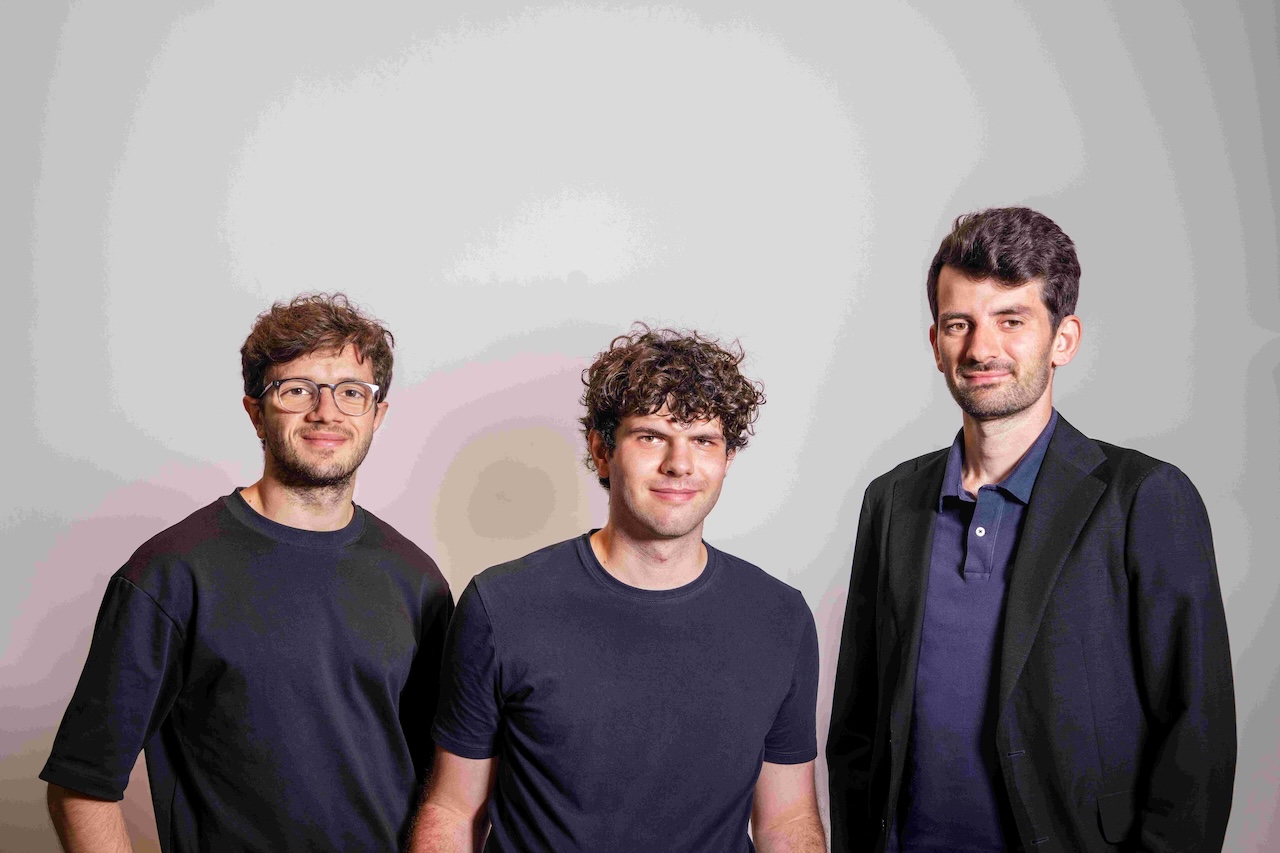
“Public tenders aren’t just lost because they can’t be found; they’re also lost because people fail to manage them effectively,” comments Andrea Zorzetto, CEO and co-founder of Cato alongside Matteo Bossolini (pictured on the right and left respectively in the opening photo, with Sabatti in the centre) – Behind every tender there is a team of capable people who all too often end up spending their days sifting through PDFs and filling in forms, instead of thinking about how to put together the best bid and win the competition. “We built Cato precisely to free people – and, with them, Italian businesses – from everything that can be automated, giving them back the time and space to focus on what no software will ever be able to replace: strategy, the proposal, and the relationship with the client.”
Every tender requires reading tender documents that can run to over 200 pages, manually compiling complex documentation and putting together a competitive technical bid, often within very tight deadlines. According to industry estimates, preparing a single complex tender can cost between 2,000 and 12,000 euros in terms of person-hours (40–120 hours of senior staff at 50–100 euros per hour), a cost that is unsustainable for most SMEs without a dedicated team.
“Cato supports and empowers tender departments by simplifying and speeding up the process: anyone working in this sector knows just how complex and specialised the day-to-day work is; our aim is for those people to be able to do more, better and faster, supported by technology,” continues Zorzetto – “The results of this first year show us that we’re on the right track: today, an SME with 4–10 staff can compete with the resources of a large enterprise tender department, and when a tool is genuinely useful for day-to-day work, you don’t need to convince anyone – the customers come looking for you. That’s what happened to us, and it’s fuelling the growth of a team that already numbers 30 people.”
Cato automates the entire tender cycle in four stages: research – the platform monitors over 100 sources in real time – ANAC, MePA, the Official Gazette, regional portals – and automatically flags the most relevant opportunities for each company’s profile. Customers report an 80% time saving each morning when sifting through tenders, as well as greater accuracy; analysis: the AI reads the tender documents, extracts requirements and evaluation criteria, checks compatibility with the company and identifies any inconsistencies between documents – suggesting clarifications to request from the contracting authority; Compilation: the administrative envelope – which contains company details, certifications, declarations and signatures, manual and repetitive tasks that recur identically for every tender – is automatically pre-filled, saving 70% of the time. The technical report is generated complete with the company’s letterhead and branded graphics, reducing drafting time by 60–65%. A dynamic checklist guides the preparation of the technical envelope – containing the company’s products and specifications – and the financial envelope, containing the price quotation. The final submission of the entire documentation remains entirely in the company’s hands, which retains full control before proceeding; archiving and analytics: the history of tenders entered feeds into a system for analysing competitors and results, helping to refine future tender strategies.
Just a few months after its launch, Cato already has 100 active clients, including SMEs and large companies in the medical and pharmaceutical, IT, services and construction sectors. The platform has already managed hundreds of tenders and analysed thousands of documents (over 250,000 tenders filtered, over 4,500 tenders analysed, over 1,500 documents automatically completed), generating business opportunities that would otherwise have been missed due to a lack of internal resources.
The market remains largely untapped. Only 15.7% of Italian SMEs have adopted AI tools in their processes (source: ISTAT 2025), compared with 53.1% of large enterprises – and we are still below the European average of 32% (source: Eurostat 2026). Adoption has doubled in a year, but the majority of Italy’s manufacturing sector is not yet equipped to cope. Meanwhile, the PNRR deadlines, the expected peak in healthcare tenders in 2026 and the new Public Procurement Code are raising the bar for everyone. Cato is well-positioned to capitalise on this demand just as it begins to emerge most strongly.
ALL RIGHTS RESERVED ©