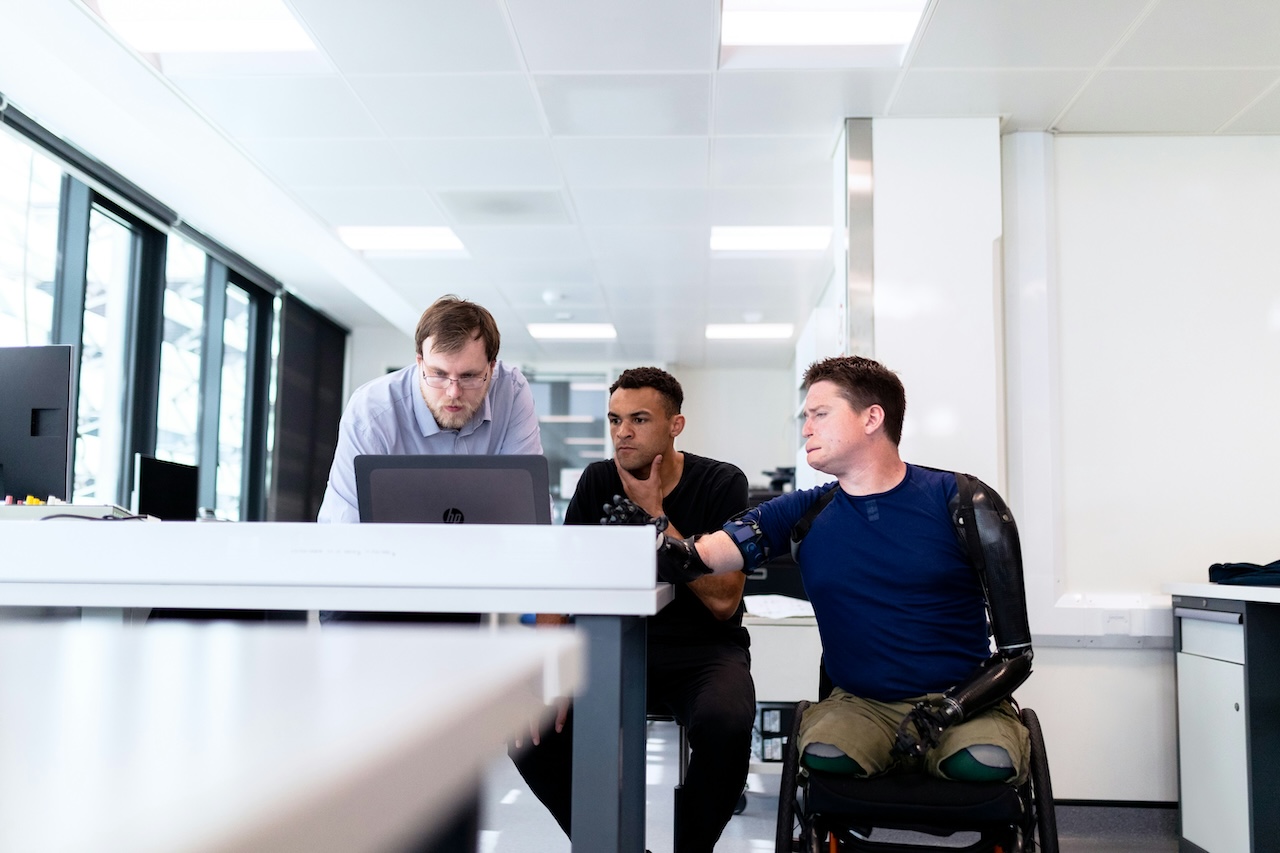
Targeted recruitment, protected groups, mandatory quotas, incentives for companies. These are all important tools, let’s be clear. But there is one point we keep overlooking: a person with a disability should not only be able to look for work, but also to create it.
Yet when the conversation turns to business, start-ups, self-employment, working for oneself or being a VAT-registered self-employed person, the issue almost disappears.
As if the only possible form of inclusion in the workplace were to join someone else’s company. As if running a business were already difficult ‘for everyone’, let alone for a person with a disability. As if entrepreneurship were a luxury, rather than one of the most practical ways to build independence.
Yet the figures tell a different story.
According to the OECD and the European Commission, among people with disabilities who are available for work in OECD European countries, around 5 per cent are self-employed, compared with around 9 per cent of people without disabilities. The same report estimates that, if people with disabilities were as active in self-employment as men aged between 30 and 49, there would be over two million more entrepreneurs with disabilities in the European Union (source: OECD/European Commission, The Missing Entrepreneurs 2023)
This means one simple thing: the potential is there, but it isn’t being nurtured.
For a person with a disability, starting a business is not just about registering for VAT. It often means creating a working environment that is better suited to their own schedule, their physical capabilities, their energy levels and their skills. It means turning a need they have experienced first-hand into a product, a service or a solution. It means moving from being a ‘person to be integrated’ to a person who creates value.
The problem is that the Italian system does not yet seem ready to recognise this possibility.
Our public policy framework on employment and disability remains focused primarily on salaried employment. Law 68/99 governs the right to work of people with disabilities through targeted job placement, that is, a system designed to facilitate a match between the individual, the role and the employer (source: Ministry of Labour, targeted job placement)
The Fund for the Right to Work of People with Disabilities also primarily finances incentives for employers who recruit people with disabilities and pilot projects on workplace inclusion (source: Ministry of Labour, Fund for the Right to Work of People with Disabilities)
I repeat: it isn’t wrong. It’s incomplete.
Because a public policy that views people with disabilities solely as workers to be employed, rather than as potential founders, professionals, innovators or employers, leaves a huge gap in their autonomy.
And this is where the paradox arises.
In recent years, Italy has rightly strengthened support mechanisms for certain under-represented groups in entrepreneurship, particularly young people and women, through targeted measures, subsidised loans and programmes to facilitate access to credit. In its profile on Italy, the OECD highlights precisely how support for young and female entrepreneurs has been a recent priority (source: OECD, Italy profile – The Missing Entrepreneurs 2023)
Very well. But then the question is: why isn’t there an equally clear national strategy for entrepreneurs with disabilities?
We’re not talking about creating fast-track lanes. We’re talking about removing barriers.
Because today, a person with a disability who wants to start a business often faces the same obstacles as everyone else, plus others that the system continues to ignore: more difficult access to credit, accessibility costs, tools not designed for everyone, limited representation in networks, calls for proposals that do not take the necessary adaptations into account, incubators that are not always accessible, untrained mentors, and a public perception that is still stuck on the idea of disability as a form of fragility that needs to be compensated for.
But disability does not mean a lack of ability. It is often a practical experience of adaptation, problem-solving, creativity and managing the limitations imposed by the environment. These are all skills that are celebrated every day in the start-up world, yet when they are possessed by a person with a disability, they are recognised far less.
The OECD and the European Commission make it clear: in EU and OECD countries, there are still few well-developed systems in place to support entrepreneurs with disabilities; dedicated training and mentoring programmes are rare and often small-scale.
That is the political, economic and cultural crux of the matter.
Entrepreneurship is not a luxury. It is a strategy for self-reliance
It does not replace employment. It does not eliminate the need for safeguards. It does not mean that all people with disabilities must become entrepreneurs. It does, however, mean that those who wish to give it a go must have access to tools, funding, training, mentoring, networks and calls for proposals.
As LADI, the Free Association of Entrepreneurs with Disabilities (APS), we have been saying this for some time: we do not want people with disabilities to be seen merely as the beneficiaries of social policies. We want them to be recognised as key players in the real economy as well.
We want to build, not just sit around waiting.
That is why we are calling on the State, the regions, start-up ecosystems, universities, foundations and businesses to start treating entrepreneurship amongst people with disabilities as a structural issue. We need dedicated funding, accessible pathways, inclusive incubators, up-to-date data, representation on innovation forums, and tools designed to cater for those starting out from different circumstances.
Because a person with a disability should not only be included when they join someone else’s company.
She must be able to cope even when she tries to create one of her own.
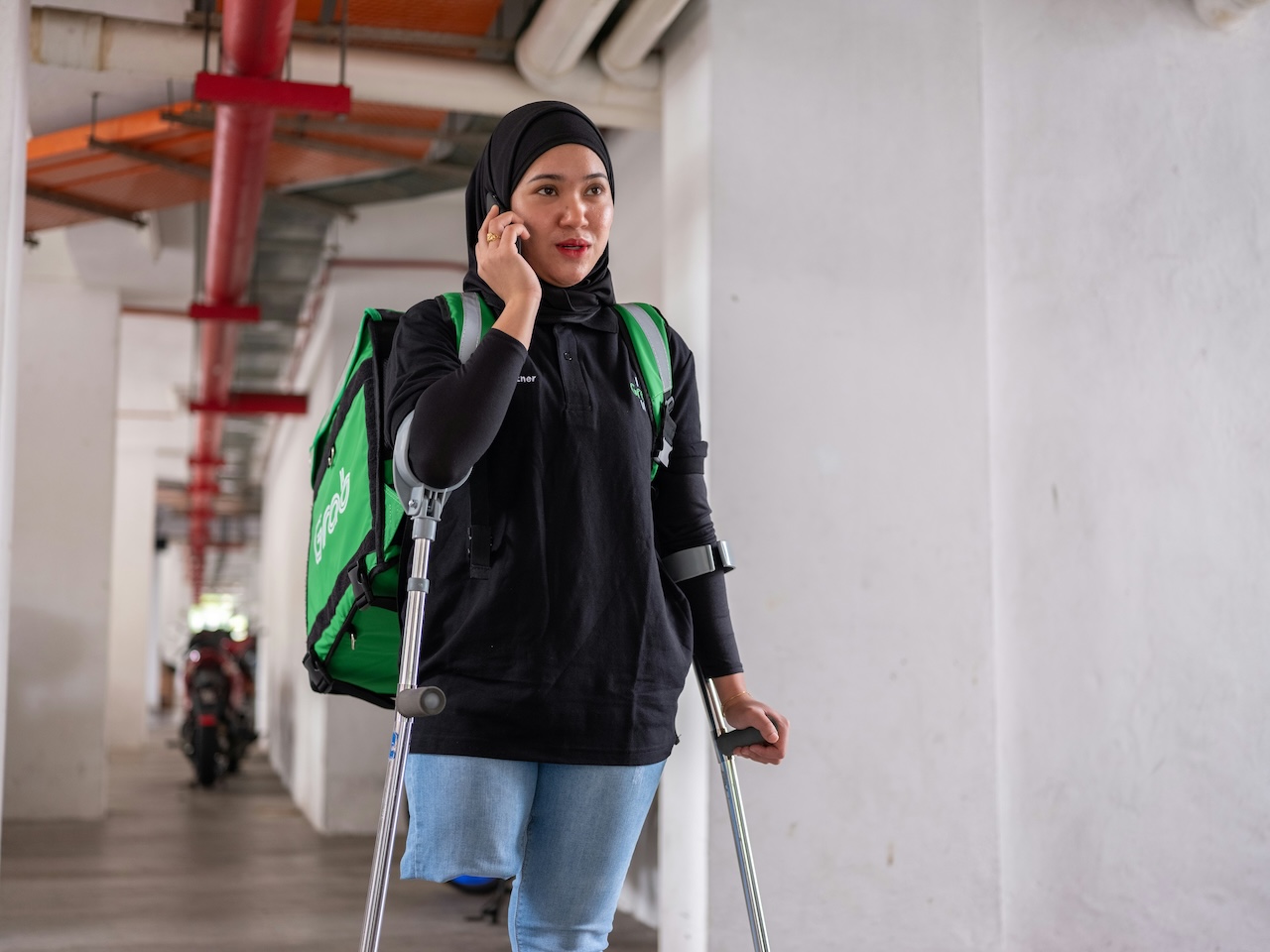
Inclusion becomes a reality when it stops asking people to adapt to the system and starts changing the system so that more people can build a future. (Photo by Grab on Unsplash)
Note to the reader: the author is vice-president of the Free Association of Disabled Entrepreneurs (LADI)
ALL RIGHTS RESERVED ©