
Along the central-northern Adriatic coast, rescued sea turtles do not merely show signs of isolated injuries or accidents, but a recurring pattern of severe debilitation which, in 2025, affected dozens of individuals.
This phenomenon mainly affects young fish between 15 and 30 centimetres in length: fish that have not yet developed the deep-sea hunting habits typical of adults, but which live near the surface, following the currents and feeding on whatever the sea carries along.
In such cases, the term ‘Debilitated Turtle Syndrome’ (DTS) is used; this is a condition that does not fall within the category of classic diseases: it is not linked to an identified pathogen and is not transmissible from one individual to another. It is a syndrome, that is, a set of clinical signs that appear together without a yet-established cause.
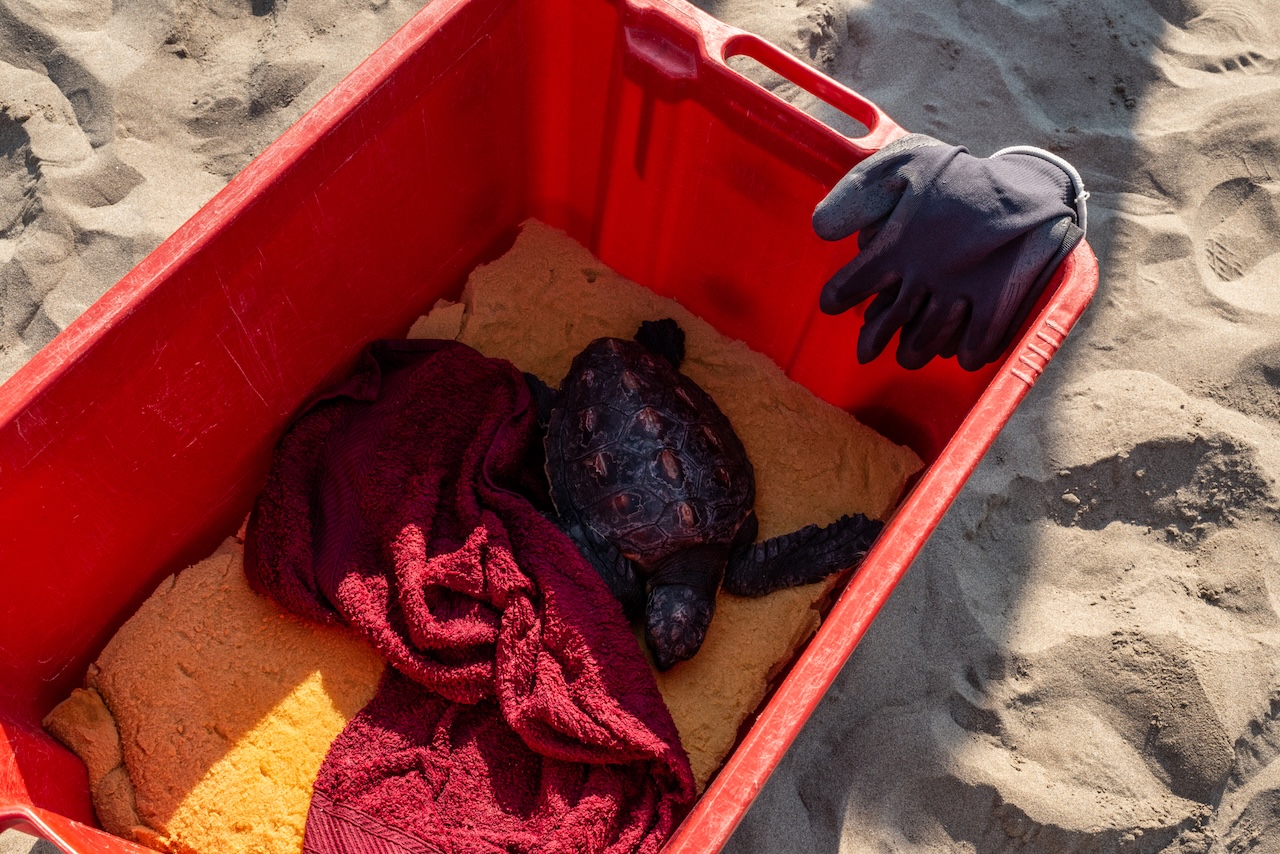
Affected animals arrive emaciated to the bone, lethargic and almost unresponsive. Their shells become covered in barnacles, algae and other epibionts that would normally be dislodged by movement, but which accumulate here. Blood tests reveal an immune system that is virtually non-existent, abnormal kidney function and severe electrolyte imbalances. The internal organs also tend to appear pale, a sign that the tissues are no longer receiving adequate blood supply and are losing function. The condition can progress to multi-organ failure within days or weeks.
It is against this backdrop that the story of Romeo unfolds: a 30-centimetre-long loggerhead sea turtle (Caretta caretta) that washed ashore at Cattolica in late November 2025 and died ten days later at the Fondazione Cetacea rehabilitation centre in Riccione. When the plastron was opened, the organs appeared almost white: not the white of purity, but that of surrender. On the carapace, a dense presence of barnacles — whitish crustaceans that a healthy turtle removes through movement — indicated difficulty in swimming. It was not feeding and regurgitated the food administered by hand. Blood tests revealed renal imbalances and abnormal electrolyte levels. ‘In cases like this, she was probably already in the terminal phase when she arrived,’ explains Martina Monticelli, a marine biologist at the Foundation. The clinical picture suggests that multi-organ failure was already underway before her death.
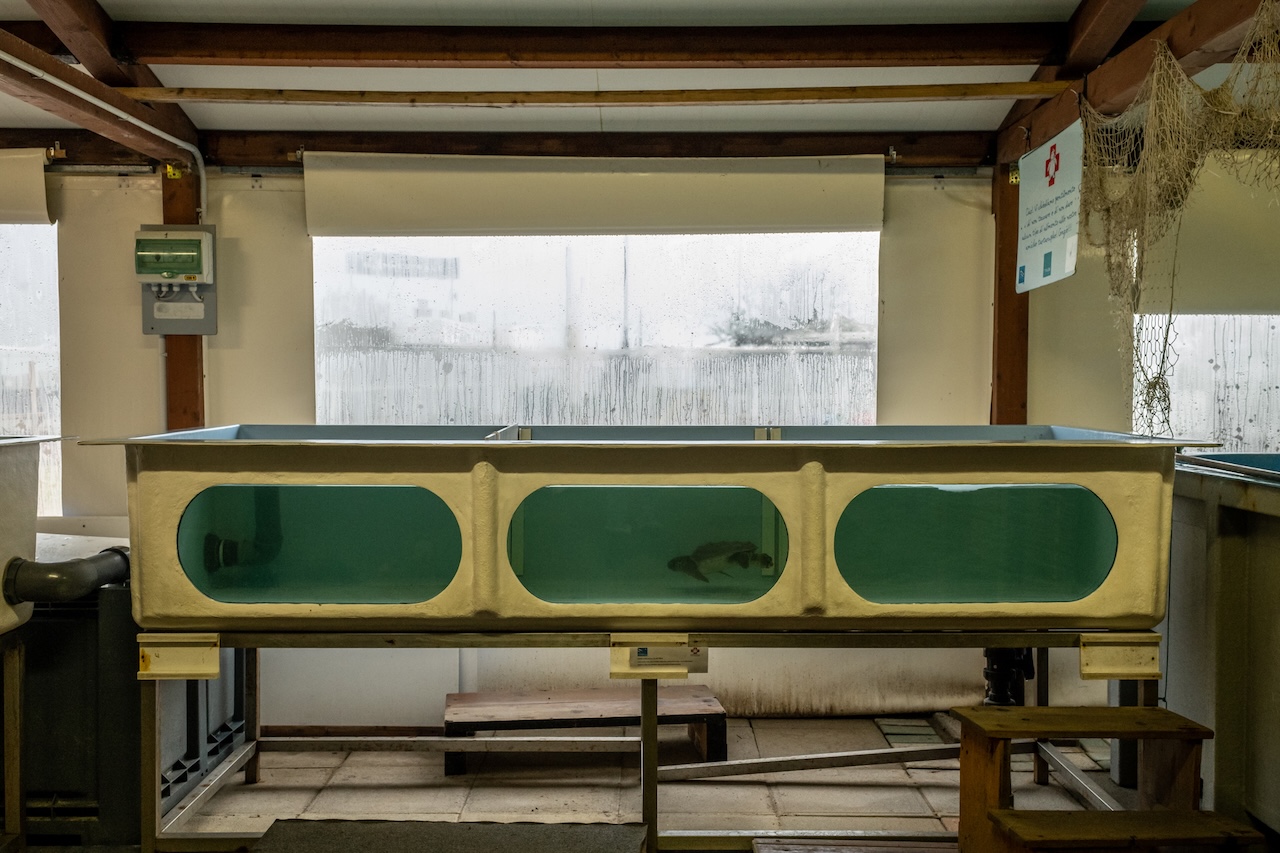
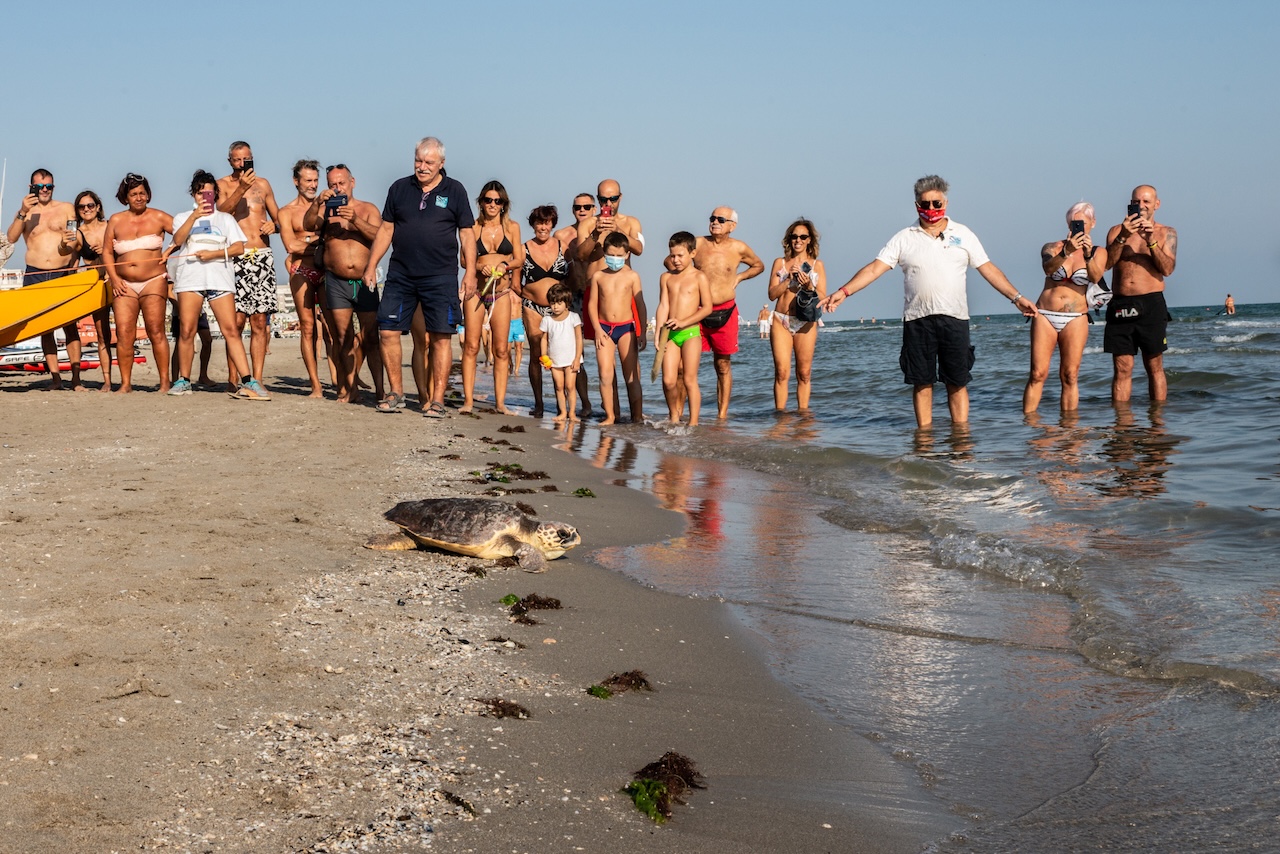
In 2025, in the same area, the Cetacea Foundation rescued 71 turtles: 45 showed signs of DTS and 25 died.
DTS and LNG: a correlation worth investigating
DTS is nothing new in the Adriatic, but the years in which it peaks follow a distinct pattern. Three distinct peaks have been recorded: in 2009, over 113 documented cases; in 2021, eighteen; and in 2025, forty-five — twenty-five of whom died. In each of those three years, something changed in the sea’s energy landscape. 2009 is the year the Adriatic LNG terminal in Porto Viro comes into operation. 2021 coincides with the regasification plant on the island of Krk, in Croatia. 2025 marks the launch of the FSRU plant in Ravenna.
“We cannot say for certain,” explains Monticelli, “but there have been three incidents at three different times. This is what is prompting us to investigate further.” A growing number of sightings is leading researchers to examine a possible link between DTS and LNG regasification activities in the Adriatic. The Cetacea Foundation, which has long been monitoring the health of sea turtles in the region, is promoting and overseeing the ongoing investigations in collaboration with the University of Bologna. Post-mortem examinations on the affected specimens were carried out by specialists from the University of Camerino, revealing recurring pathological patterns. Although the phenomenon has not yet been systematically studied in other regions, this interdisciplinary network is actively assessing the potential impact of LNG discharges on marine ecosystems, calling for urgent, large-scale and comparative research.
The proposed mechanism involves foam. Open-cycle regasification plants draw in seawater, treat it with chlorine-based biocides to prevent marine organisms from colonising the pipes, use it as a heat transfer medium to warm the liquefied gas, and then discharge it. The waters of the northern Adriatic are extremely biologically rich: the inflow of the River Po creates conditions of extraordinary fertility. Chlorine can kill phytoplankton, larvae and microscopic organisms. Their remains can contribute to the formation of foam, along with other organic materials and chemical residues. As they feed mainly at the surface, young turtles are the most likely to ingest whatever the sea carries, including foam.
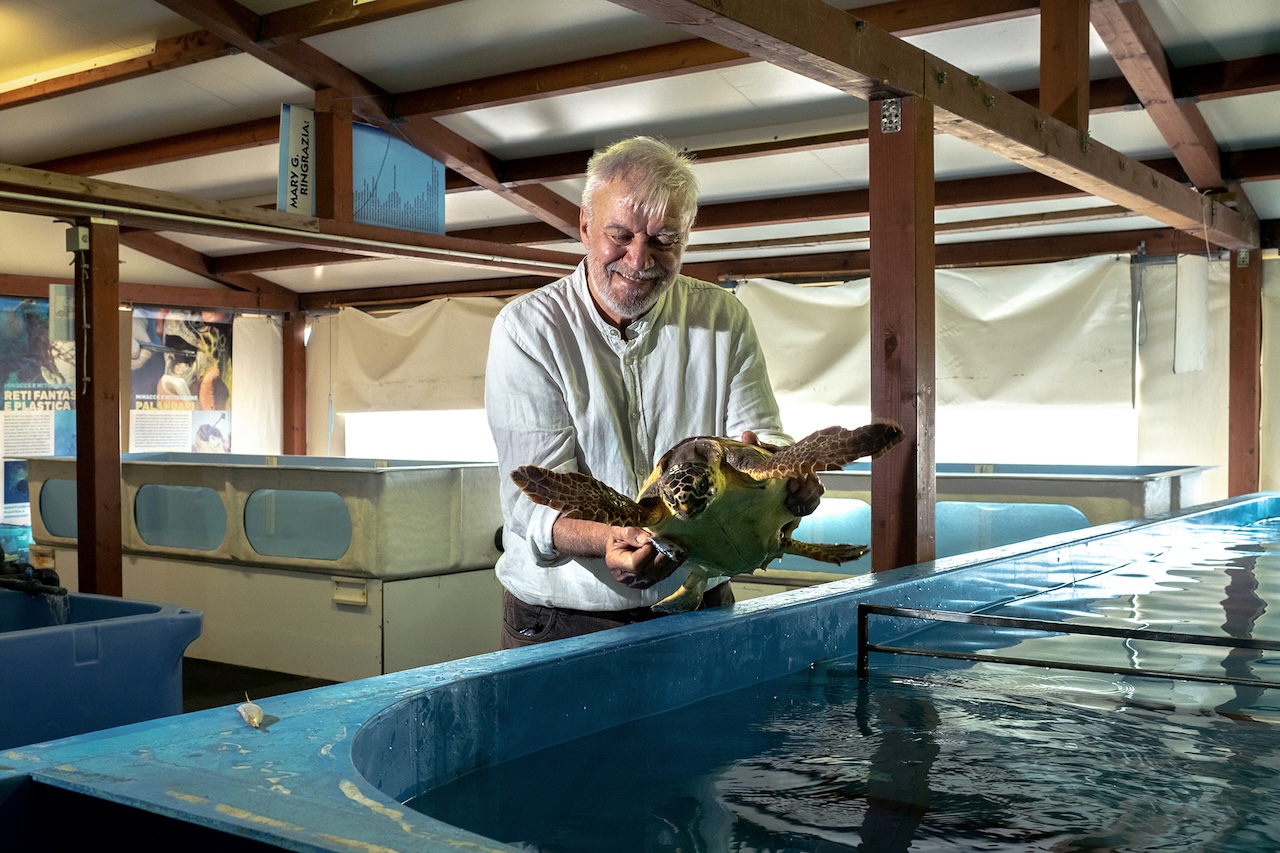
The damage would not be acute. But it could prove to be systemic and progressive: a reduction in gut flora, a weakened immune system, and changes to kidney function. The animal slows down, barnacles attach themselves and take hold, weighing it down further. A cycle which, according to this hypothesis, could contribute to a progressive weakening leading to death. ‘This foam contains nutrients but is also poisonous,’ explains Sauro Pari, president of the Cetacea Foundation. ‘Bacteria that haven’t been completely killed mix together and become extremely dangerous. Recently, they tried to remedy the situation by spraying water on the foam: it dilutes it, making it less visible, but the substances remain.’
In 2009, research carried out in collaboration with the University of Padua showed that the affected turtles had extremely low levels of gut bacteria. “We looked at what was new during those months,” says Pari. “The only new development was the start of operations at the Porto Viro regasification plant.” Fishermen from Porto Garibaldi (Emilia-Romagna) and Chioggia (Veneto) had been reporting for years the negative impact of the Adriatic LNG offshore terminal at Porto Levante/Porto Viro on fish stocks, mainly due to discharges of chlorinated, oxygen-depleted seawater. The company Adriatic LNG (70% VTTI and 30% Snam) initially and for a long time denied any direct link, but in 2024–2025, in relation to the expansion and continued operation of the plant, it agreed to pay approximately €2 million in compensation for the period 2025–2030 to support local fisheries, aquaculture and the territory of the province of Rovigo, in agreement with the Veneto Region and local authorities. ‘I don’t think the gas suppliers are so quick to fork out such sums without a real reason,’ comments Pari. At present, the hypothesis remains unproven and is not supported by a consolidated scientific consensus, but it is the subject of active investigations. When asked about the matter, ISPRA and ARPAE refer to the authorisation procedures and monitoring measures provided for by the Po Delta Park, emphasising that turtle rescue and observation activities are carried out primarily by Fondazione Cetacea and other associations, which are in fact entrusted with a significant part of the field data collection. The operational responsibility thus falls on the very organisation that has been highlighting the critical issues for years and continues to sound the alarm on the phenomenon, despite having neither an institutional remit nor a specific mandate for structured monitoring. Nor does it have the funds to carry this out on a systematic scale.
Pending reviews
Carlo Franzosini, a marine biologist at the Miramare Marine Protected Area in Trieste, who as early as 2011 raised concerns about a possible link between LNG regasification and the ‘sterilisation’ of the sea, states that: ‘The monitoring system imposed by ISPRA does not measure what really matters. When seawater is chlorinated, a great many oxidising compounds are formed. The method quantifies individual molecules instead of measuring the overall oxidising power of the discharge. That is why nine times out of ten the values are below the detection limit: everything is fine. That is ISPRA’s trick.”
In his view, the analyses from the monitoring programmes at the Adriatic LNG terminal in Porto Levante/Porto Viro — carried out by OGS on behalf of the company, under the technical supervision of ISPRA and with oversight from ARPA Veneto — confirm the underlying problem: many contaminants are consistently below the limits of quantification, rendering the data effectively unusable. The concentration of oxidising chlorination by-products is not measured, and the 2023 reports show variations in benthic populations near the discharge points — indicators of chronic chemical stress — in contrast to the 2012 data, which had not detected any significant impacts.
In response to these comments, ISPRA points out that the environmental monitoring plan and the sampling and analysis strategy were drawn up on the basis of a proposal by SNAM, taking into account the Guidelines of the National System for Environmental Protection (SNPA) for the preparation of Environmental Impact Assessments, and were subsequently incorporated into the authorisation procedure. According to the Agency, the monitoring scheme also includes the assessment of cumulative and long-term effects, through analysis of bioaccumulation in biota and the use of synthetic ecological indices such as the M-AMBI. In other words, the parameters were defined on the basis of the applicant’s proposal, subsequently validated during the authorisation process, and the effects of accumulation are assessed using indirect ecological evaluation tools.
The real problem, according to Franzosini, is ‘the lack of independence in the scientific community’. ‘The Italian government, via ISPRA, which in turn acts through the company proposing an infrastructure project, decides what you must monitor. And the relevant research institutes are invited to carry out monitoring that confirms that seawater is salty. They receive funding, they bring in students: they are all at the same table. Companies fund environmental impact studies. I pay for what I want to do, and so I am free to proceed.”
For Franzosini, this argument is borne out by his own personal experience: in 2023, prior to negotiations with fishermen regarding environmental impacts and compensation for declining fish stocks, Legacoop FVG commissioned him to carry out a study on the impacts of regasification plants, with particular reference to the Adriatic LNG offshore terminal at Porto Viro, but the report was never published. ‘It’s needed to gain credibility at the compensation table,’ explains the biologist. ‘It doesn’t become public knowledge: it becomes a bargaining chip to secure funding.’
A similar issue concerns the data from samples taken by ARPAE in the area of the Ravenna FSRU, at the request of the Ravenna Port Authority – Coastguard. These are the results of analyses carried out on 27 June 2025 on a seawater sample taken in the vicinity of the facility, following reports of persistent foam on the surface. The results had been forwarded to the Public Prosecutor’s Office and were therefore initially subject to confidentiality. ARPAE states that it subsequently forwarded them to the Cetacea Foundation, which had requested them, with the authorisation of the judicial authorities. ‘But we never received that data,’ confirms President Pari.
Full throttle
The lack of data raises a question that remains unresolved: who has actually assessed the environmental impact of regasification plants? The answer lies in the Ravenna project, which was launched in response to the Russian invasion of Ukraine. In February 2022, Italy was around 40% dependent on Russian gas. Prime Minister Mario Draghi’s government tasked Snam with acquiring two floating storage and regasification units (FSRUs), each with a capacity of 5 billion cubic metres per year. Decree-Law No. 50/2022 classified them as “strategic public utility projects, urgent and not subject to deferral”, appointing a special commissioner — the President of the Emilia-Romagna Region, Stefano Bonaccini — and largely exempting the projects from the standard Environmental Impact Assessment (EIA) procedures.
On 8 July 2022, Snam submitted its application; on 7 November 2022, just four months later, the Single Authorisation was granted. The BW Singapore vessel is operated by Snam FSRU Italia S.r.l., a company incorporated with a share capital of just ten thousand euros for a project worth around one billion, following the acquisition of a business unit from a London-based company that operated a vessel flying the Marshall Islands flag. ‘When you acquire a business unit, liability remains separate. If a fatal accident occurs, who is liable? Snam FSRU with ten thousand euros?’ observes Antonio Lazzari, AVS councillor. Snam maintains that the Ravenna site was chosen for technical feasibility and the reuse of existing offshore infrastructure, and that alternatives further north were ruled out due to coastal constraints and urban development. It also adds that the offshore protection works were approved via design variations authorised under the simplified procedure of Decree-Law 50/2022.
Under the agreement, the Italian government has committed to paying around €30 million a year for twenty years to ensure the project’s financial viability, alongside additional compensation mechanisms that protect the operator from any shortfall in expected revenues. “We have made an investment to force the Italian community to live with gas at above-market prices for twenty years, at a time when the world is moving away from gas,” says Lazzari.
Between the 2022 decree and the project’s commissioning, the project was amended on several occasions under the guise of ‘optimisations’ – a term used to avoid having to reopen the authorisation procedures.
An engineer who examined the documentation, Riccardo Merendi, found that the environmental testing protocol had been copied from standards designed for small onshore facilities; Snam subsequently corrected the error without formally acknowledging it. ‘On the one hand, they identify species at risk and promise monitoring; on the other, they claim there is no impact whatsoever. The documents look as though they were produced by departments that do not communicate with one another,’ observes Lazzari.
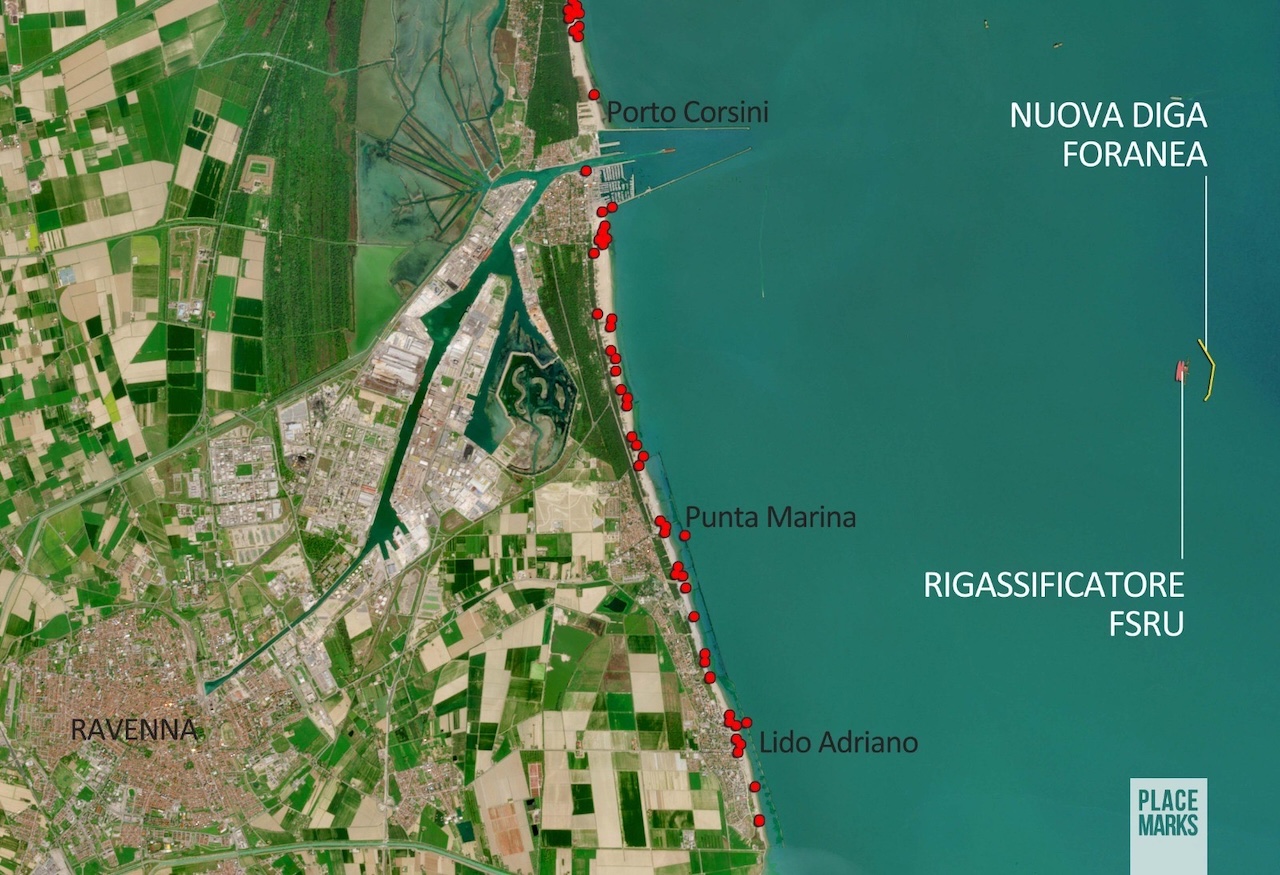
The breakwater highlights this contradiction. Not included in the original plan, it became necessary after the chosen offshore location — 8.5 km from Punta Marina — proved unsuitable due to seabed conditions, dredging requirements and exposure to wave action that were incompatible with a permanently moored FSRU. “Once completed, it will cause erosion,” warns Piero Bucchi of Legambiente Ravenna, pointing out that such structures can accumulate sediment locally but accelerate erosion several kilometres away, without a specific environmental impact assessment. “In the end, the court will rule: since the facility exists, protection is mandatory,” he adds. In the meantime, the breakwater is not yet complete and the FSRU is periodically moved out to sea during storm surges, reducing its operational capacity.
End of Part One; Part Two will be published on 30 May 2026.
This article was produced as part of MOST – Media Organisations for Stronger Transnational Journalism, a journalism partnership funded by the Creative Europe programme that supports independent media specialising in international journalism.
In the opening photo by Elisabetta Zavoli: Danilo De Bellis, a veterinary surgeon and PhD student at the University of Camerino, performs a post-mortem examination on the sea turtle ‘Romeo’ in the dissection room of the School of Biosciences and Veterinary Medicine at the University of Camerino, in Matelica (MC), Italy, on 4 March 2026. Romeo is a loggerhead sea turtle (Caretta caretta) found stranded and rescued by the NGO Fondazione Cetacea in Riccione (RN) on 28 November 2025. He was cared for in a severely debilitated condition and died on 12 December 2025 with symptoms attributable to DTS (Debilitated Turtle Syndrome). De Bellis is studying the main causes of mortality among Caretta caretta turtles in the upper Adriatic. During necropsies, all organs are examined and tissue samples are taken for toxicological, histological and bacteriological testing. Many of the sea turtles recovered by the Cetacea Foundation or found stranded and dead during 2025 exhibited symptoms of DTS. In the Adriatic, this severe debilitating syndrome is found almost exclusively in animals measuring less than 45 cm in curved carapace length, i.e. juvenile turtles. The most obvious characteristics of this syndrome are extreme barnacle infestation (a symptom of severe debilitation and a compromised immune system), lethargy and severe emaciation due to muscle atrophy and the absence of fat deposits.
ALL RIGHTS RESERVED ©

