Table of contents
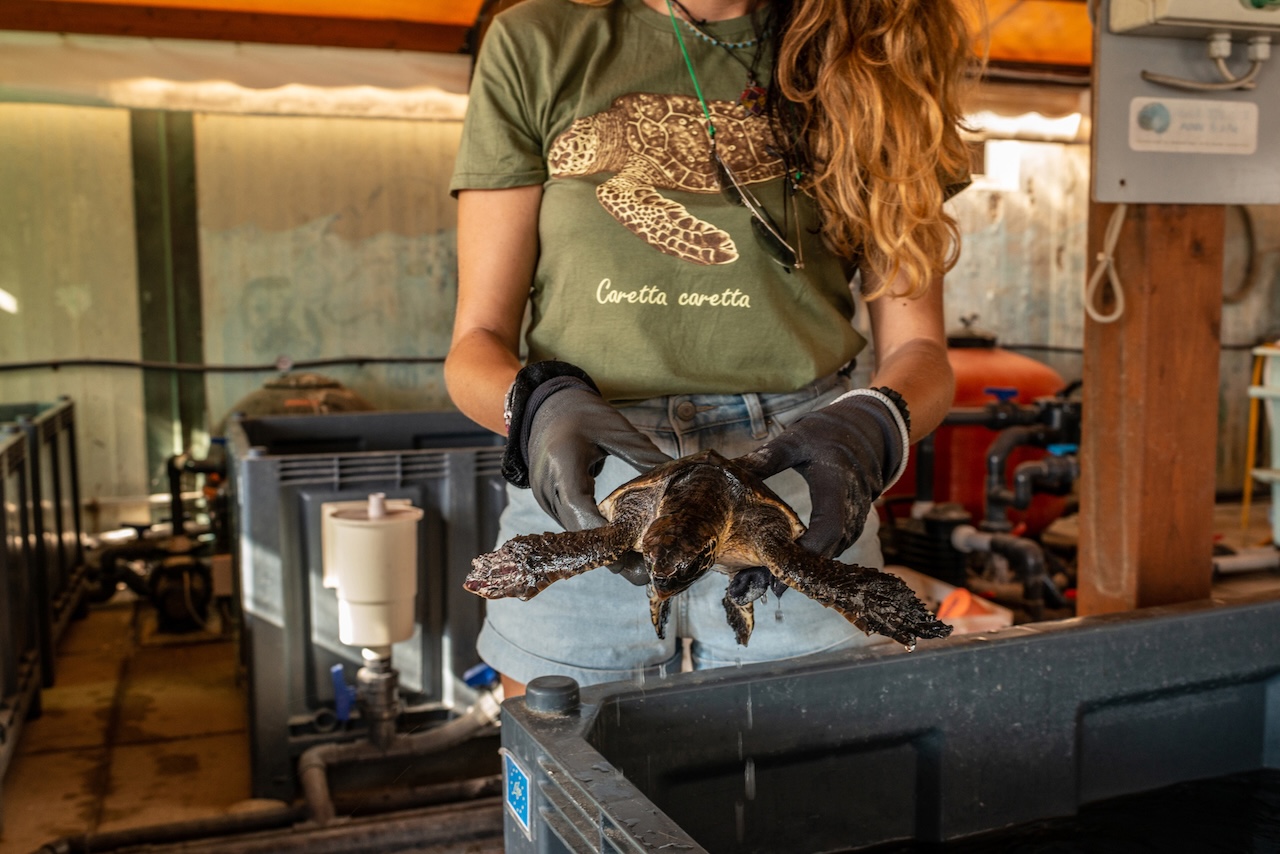
During 2025, dozens of young loggerhead sea turtles were rescued in a critical condition along the central and northern Adriatic coast. Many exhibited symptoms of Debilitated Turtle Syndrome (DTS): severe wasting, renal dysfunction, immunosuppression, and colonisation of the carapace by barnacles and other epibionts (this is the second part of the article; you can find the first part here)
The Cetacea Foundation in Riccione, together with researchers from the University of Bologna and the University of Camerino, is seeking to determine whether there is a link between these incidents and the operations of the LNG regasification terminals in the northern Adriatic. The hypothesis — as yet not scientifically proven — concerns primarily the discharge of chlorinated seawater by open-cycle plants: systems that draw in large quantities of seawater, treat it with biocides to prevent biological growth in the pipes, and return it to the sea after the regasification process.
According to marine biologists and environmental observers interviewed for this investigation, the problem is not a single acute toxic incident, but rather a potential chronic stress on the ecosystem: disruption of the marine microbiome, the formation of surface scum rich in degraded organic matter, and an impact on plankton and larval organisms, which form the biological foundation of the Adriatic.
But by tracing the water’s journey — from chlorination systems to offshore infrastructure, through to regulatory processes and new CO₂ capture projects — a broader issue emerges: how energy facilities have been designed, approved and monitored in one of the Mediterranean’s most fragile and productive semi-enclosed basins.
Open or closed
At the heart of the matter lies a technical question: why does the regasification plant use an open-cycle system rather than a closed-cycle one? An open-cycle plant draws in seawater, treats it with chlorine and discharges it; a closed-cycle system generates heat by burning a small proportion of the gas produced — around 0.87% of the volume — without drawing in or discharging any seawater.
Italy’s first regasification plant, Panigaglia in La Spezia, has been operating in a closed-cycle system since the 1970s. “From the point of view of the marine environment, everything hinges on that 0.87%,” says Franzosini. “Over millions of cubic metres a year, that percentage represents significant sums. It is the money that companies defend through the open-cycle system and use to fund compensation schemes that buy local silence.”
According to Franzosini, the Ministry of the Environment in the 1990s, when the first projects were proposed, did not fully distinguish between the two technologies. ‘It focused on setting up ex-post monitoring of the open cycle rather than understanding from the outset which technology was most suitable,’ continues Franzosini. ‘In the United States, as early as the 1980s, preliminary studies on plankton were required to assess the sensitivity of each marine environment before choosing the technology. That literature existed, but it was not used.’
Today, all three of the main regasification terminals in the Adriatic — Porto Viro (Adriatic LNG), Ravenna and Krk in Croatia — operate using open-cycle systems, i.e. with the continuous intake and discharge of chlorinated seawater. Their concentration in the northern Adriatic is of environmental significance: this semi-enclosed basin is one of the most biologically productive areas in the Mediterranean, but also one where warming waters are gradually pushing species northwards, including loggerhead sea turtles, which are increasingly using these waters as feeding grounds and migration corridors.
Coastal seas such as that off Ravenna are richer in marine life than the open sea, with a much higher biological density per cubic metre and therefore a greater potential vulnerability to industrial discharges. It is precisely this sensitivity that would require more cautious technological choices, including seasonal adjustment — open-cycle operation in winter and closed-cycle operation in the warmer months, when plankton blooms and larval abundance are at their peak — even though this flexibility is economically disadvantageous for operators who benefit from continuous open-cycle operation.
Requests for documentation regarding chlorine discharge cycles, monitoring logs and environmental permits have not been made fully public. Snam states that long-term monitoring, including at similar plants in Livorno and Piombino, has not revealed any significant environmental anomalies, with discharged hypochlorite levels well below legal limits. According to an LNG infrastructure specialist consulted for this investigation, chlorination and dechlorination cycles may occur several times a day to prevent biofouling in the suction systems, but the detailed frequencies of discharges are rarely made transparent in operational reports.
Ma le scelte non riguardano solo la tecnologia operativa. Riguardano anche dove e come gli impianti sono stati costruiti fisicamente.
The offshore landing point for the FSRU — the platform from which the gas pipelines run to shore — has been situated on the former Petra platform, which has been adapted to house the facility. The decision is officially justified on the grounds of reusing existing infrastructure.
In the project documentation, the structure is described as operational but in need of refurbishment. ‘It was a structure that many fishermen and maritime operators did not hesitate to describe as dilapidated. The quantities of steel declared cast doubt on whether it was dismantled and rebuilt from scratch,’ argues Lazzari. ‘The result was a route of around 40 kilometres of pipework instead of the 7–8 kilometres that would have been sufficient by connecting to a platform further north.’
LNG and CCS Implications
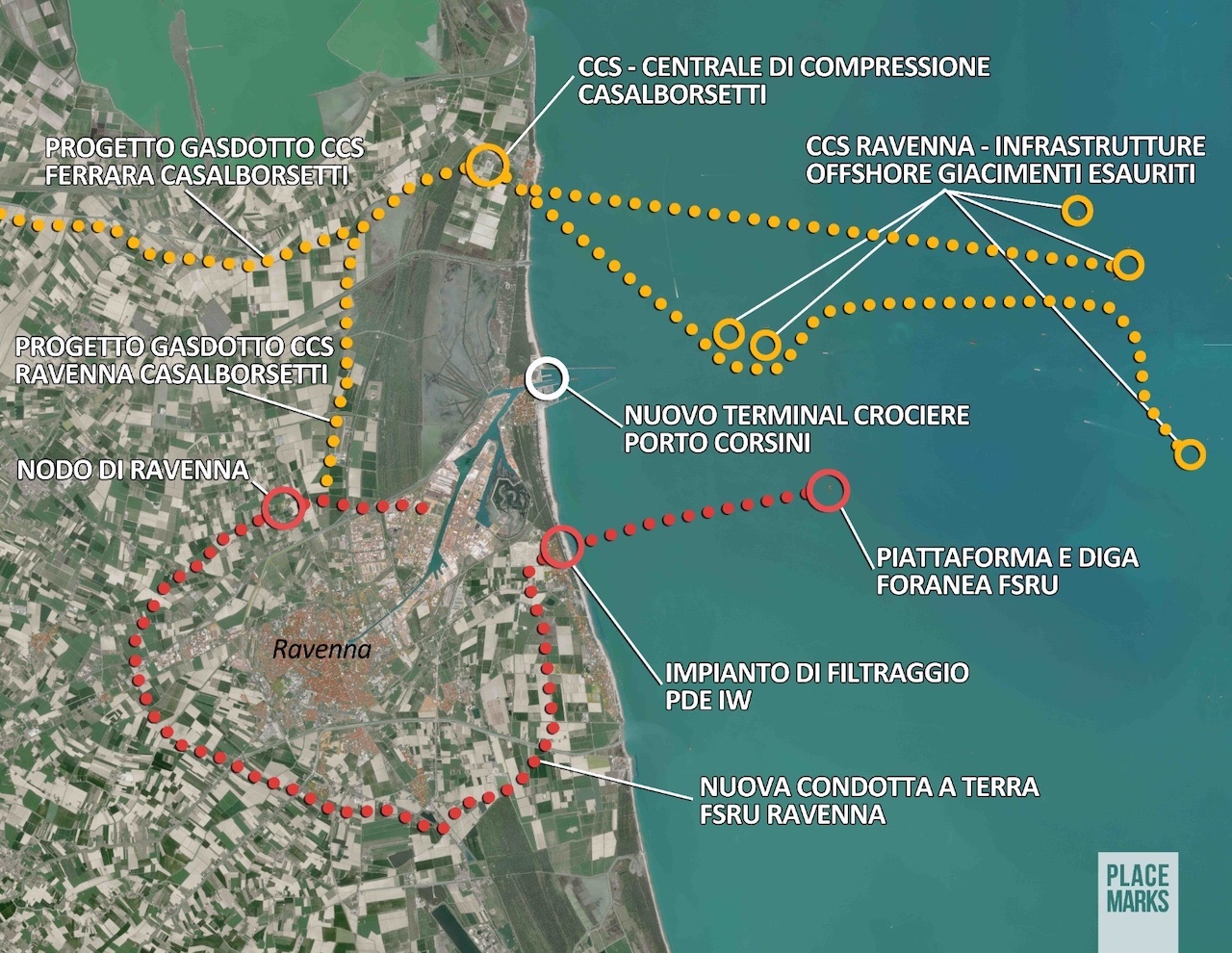
The regasification plant is not the only major energy project in Ravenna. Eni and Snam are developing the Ravenna CCS project: the capture and geological storage of CO₂ in depleted offshore reservoirs, reusing existing platforms, wells and infrastructure. It is presented as one of the key projects in the Italian and European energy transition.
In February 2025, the project received a positive EIA decision. However, the concerns raised by independent analyses relate specifically to the physical conditions of the area in which it is intended to operate. The report “A Future That’s Not So Remote” by Recommon and PlaceMarks sets out these issues in detail.
But there are structural risk factors that Elena Gerebizza (Recommon) is keen to highlight. First and foremost, the Ravenna area is one of the most geomorphologically fragile in Italy. It is an area prone to subsidence — the gradual sinking of the ground — which has been documented for decades and is also linked to past mining activities. Added to this is a high exposure to flood risk, as demonstrated by the events of 2023, and a coastal environment vulnerable to rising sea levels.
Placing a network of CO₂ infrastructure within this system means adding pressure to an already unstable area. “Part of the route lies within seismic zone 2,” explains Gerebizza. “And we are talking about infrastructure that is expected to remain operational for decades, in a rapidly changing environment.” The combination of subsidence, reservoir pressure and hydrogeological instability has not been addressed through detailed predictive modelling in the public documentation.
The most critical issue concerns risk management. The opinion of the Ministry of the Environment attached to the EIA decree is in fact based on protocols designed for methane pipelines. ‘But a pipeline carrying CO₂ behaves completely differently,’ says Gerebizza. “Methane is lighter than air and tends to disperse upwards. CO₂, at high concentrations, is heavier: it stagnates at ground level, accumulates and can saturate the air very quickly.” In the event of a leak, the risk is not explosion but asphyxiation. Similar incidents, albeit rare, have already been documented in other industrial contexts: CO₂ can create invisible and persistent pockets, which are particularly dangerous in flat, low-lying areas such as coastal zones.
At present, there is no specific, established regulatory framework for large-scale CCS infrastructure in contexts such as the Adriatic. Existing standards are being adapted for use, without empirical validation based on comparable real-world cases. A legal dispute has also arisen over this regulatory framework. On 20 May 2026, Greenpeace Italy and ReCommon lodged an appeal with the Lazio Regional Administrative Court against the decree of the Ministry of the Environment which gave a favourable opinion on Snam Rete Gas’s ‘CCS Pianura Padana’ project, challenging the fragmentation of the project and the lack of a cumulative assessment of the environmental impacts on the Upper Adriatic.
From an industrial perspective, too, the project remains a gamble. There is currently no commercial-scale CCS plant that has unequivocally demonstrated long-term economic and operational viability. The model still relies heavily on public funding.
The financial structure is, in fact, similar to that of the regasification plant: Eni and Snam rely on European funds and state-backed guarantees that make the project viable regardless of its actual performance. “Without this backing, the project would not exist,” notes Gerebizza.
The city of gambling
Ravenna is thus becoming an energy hub where various infrastructure projects — regasification, gas transmission and CO₂ storage — are concentrated, all situated in a vulnerable area and all underpinned by an economic framework that socialises the risks and privatises the benefits.
Satellite image showing all the infrastructure
With its eight UNESCO World Heritage sites, Ravenna — for now — does not yet seem to be aware of the problem. “Paradoxically, we are too comfortable to realise the risk we are running,” says Lazzari.
The community believed that the regasification plant would bring gas at affordable prices — something that was never explicitly stated, but implied. A balance has been established around the plant: Snam funds the Ravenna Festival and local infrastructure; port companies are growing, hiring staff and investing. The threat of job losses is becoming a reality.
“Every time we talk about gas, we get warnings in advance. The previous administration backed this: they’d lose face,” adds Lazzari. Yet things are starting to move. The CGIL trade union has begun to raise concerns: forcing companies in the Romagna region to purchase methane at a fixed price for thirty years could constitute a market distortion. Even within the industrial sector, there is no single line of thought: chemists linked to Eni and those linked to Snam express differing positions.
Everyone to the seaside 2026
Amid this delicate balance, Ravenna was named Italy’s Capital of the Sea in 2026. This accolade speaks to a city looking towards the future, whilst beneath the surface tensions are building that could reshape that future.
The Cetacea Foundation has handed over to the University of Bologna samples collected in the summer and autumn of 2025: frozen barnacles, faecal samples, oral swabs, and water taken near the plant. “We expect to find organochlorines,” says Pari. “Chlorine compounds bound to organic molecules that may provide us with a clue.” There are no foam samples: it was not possible to get close enough. Funding is scarce, and the timescales are those of research. The Foundation is collaborating with the Pula rescue centre and the Croatian Blue World Institute, but the problem, says Pari, “is primarily Italian and primarily concerns the central-northern Adriatic”.
Meanwhile, there is also growing institutional attention being paid to the regulatory framework for environmental assessments in the region. In Emilia-Romagna, the regional authorities are reportedly involved in a wider review to determine whether cumulative environmental risks in the Adriatic — one of the most industrialised semi-enclosed basins in the Mediterranean — have been adequately taken into account in the authorisation procedures for offshore infrastructure. The analysis also examines whether the synergistic impacts of multiple regasification terminals in the same basin have ever been fully assessed, despite the well-documented scientific concerns regarding chlorinated discharges, foam formation and long-term ecosystem stress.
Environmental organisations, including WWF Italy, have already raised concerns that these cumulative risks have been underestimated, given that impact assessments are still carried out on a project-by-project basis rather than at a basin-wide level, even where there are multiple LNG facilities within the same confined marine system.
Meanwhile, post-mortems like Romeo’s continue, ahead of next summer. With it, likely, a new season of strandings. “There are many coincidences,” says Pari. “It’s hard to understand how anyone could fail to see that something is wrong. We’re being poisoned for nothing, over a flimsy hypothesis.”
Romeo is on the table. So are the questions. But no one seems in any hurry to answer.
This article was produced as part of MOST – Media Organisations for Stronger Transnational Journalism, a journalism partnership funded by the Creative Europe programme that supports independent media specialising in international journalism.
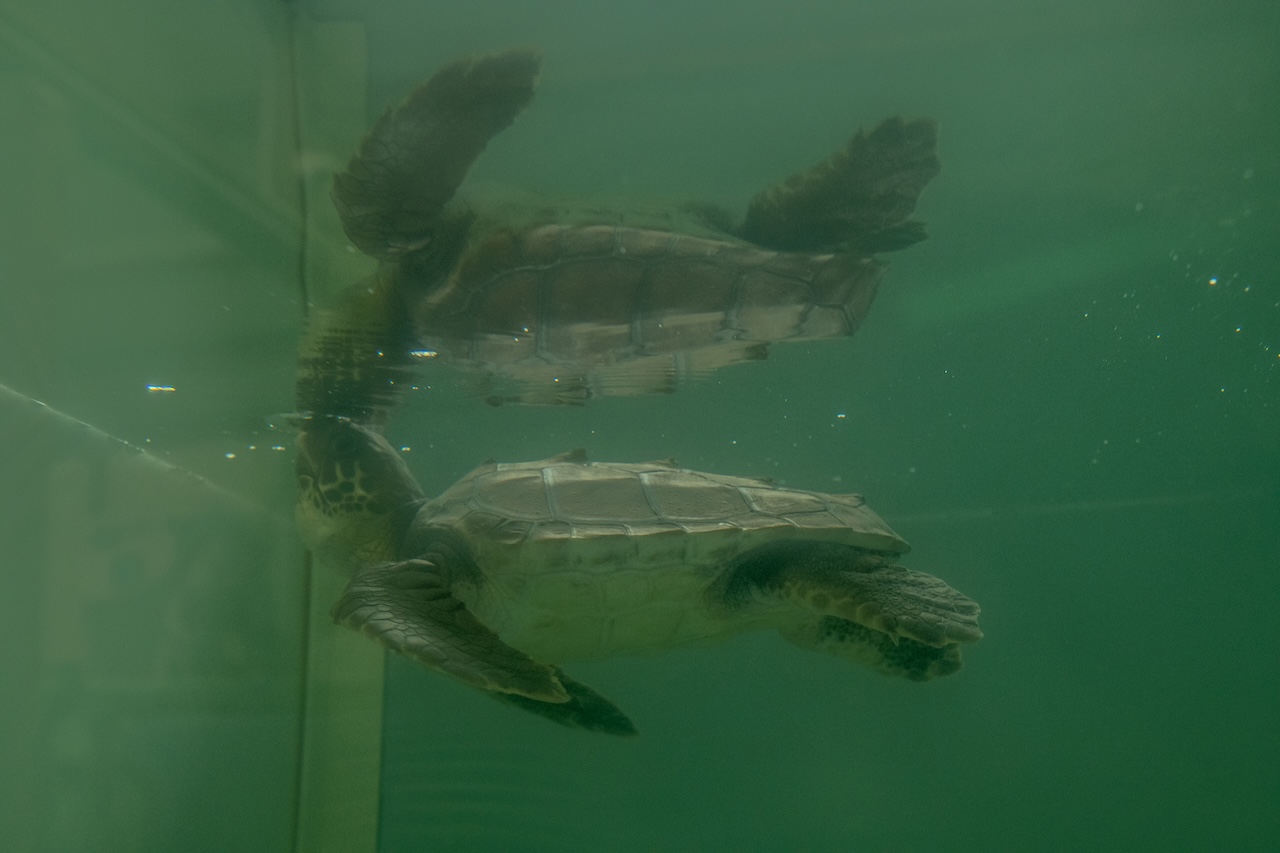
In the opening photo by Elisabetta Zavoli: A young loggerhead sea turtle (Caretta caretta) is being treated at the Cetacea Foundation hospital in Riccione (RN), Italy, on 22 December 2022.
ALL RIGHTS RESERVED ©