Table of contents
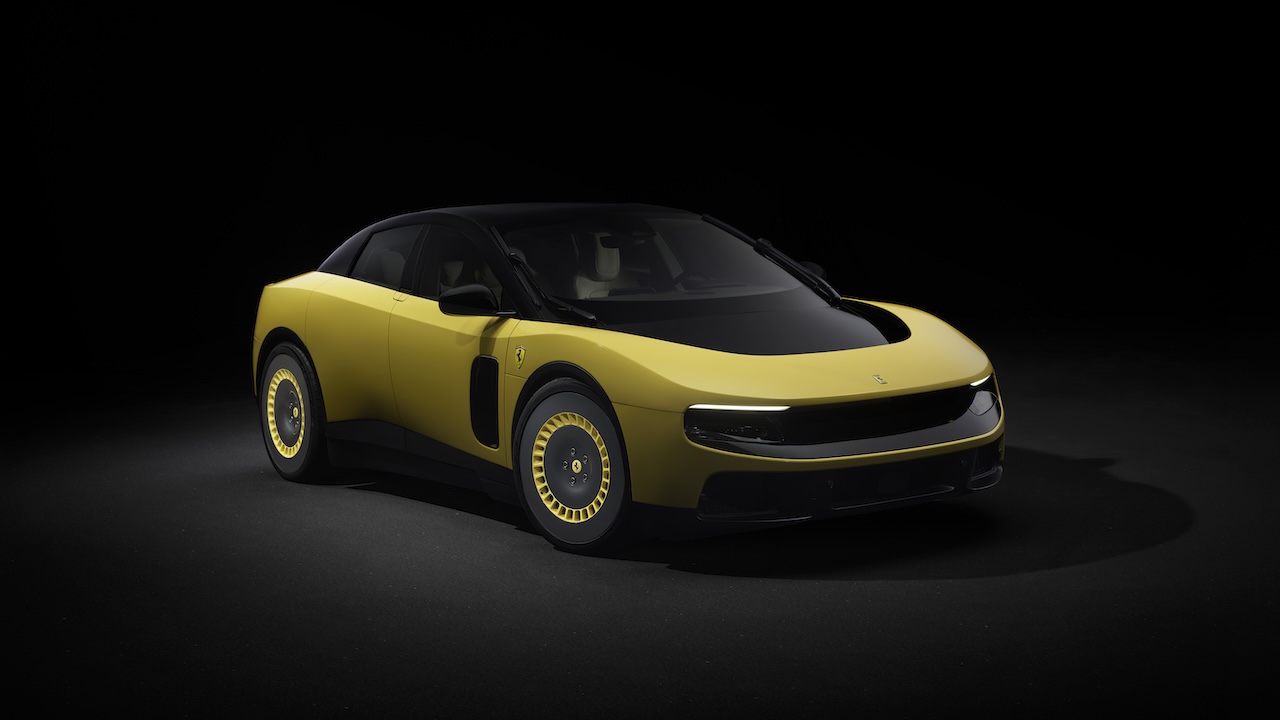
There is a quiet paradox at the heart of the Italian product’s identity: we call it ‘Made in Italy’ — in English — because its value is not measured within the borders of the country that produces it, but beyond them. It is an identity projected onto the outside world, designed to be recognised by others before we recognise it ourselves. It can be rooted in the past just as much as it can look to the future. And that is exactly what Ferrari is doing with its first electric-powered model, the Luce.
The Ferrari Luce is, today, the most significant Italian product to emerge from the intersection of mobility, luxury and advanced industry. Not because it has four wheels — a Panda has those too. But because, just as happened with Olivetti and its typewriter and later the P101, it radically shifts the paradigm. The form may seem familiar. The meaning is entirely different.
A technical detail is worth a thousand words: the Ferrari Luce and the Ferrari Hypersail share the same rear axle component. A mechanical element designed to manage power, control and performance has been transferred from the electric car to the full-foil ocean-going sailboat. This is not a marketing ploy. It is a transfer of technology between different worlds. It is the industrial approach of a company that has stopped thinking in terms of product categories.
Supporters and critics
This Maranello-built project proved from the outset to be highly divisive. It could hardly have been otherwise, because Ferrari is not just a car brand: it is a symbol that everyone feels entitled to comment on, defend, criticise, love or challenge.
Every decision made by the Prancing Horse thus ends up becoming a matter of public interest, almost a matter of sentiment. The Ferrari Luce, even before its technical architecture could be fully understood, was judged in the same way one judges an Italian national team kit, a poor line-up, or an unexpected call-up. Everyone has an opinion, even those who have never designed a car, driven a supercar or really studied what it means to incorporate electric technology into Maranello’s industrial design language.
But it is precisely this reaction that speaks to the power of the legend: Ferrari sparks debate because it belongs not only to those who buy it, but also to the imagination of those who look at it.
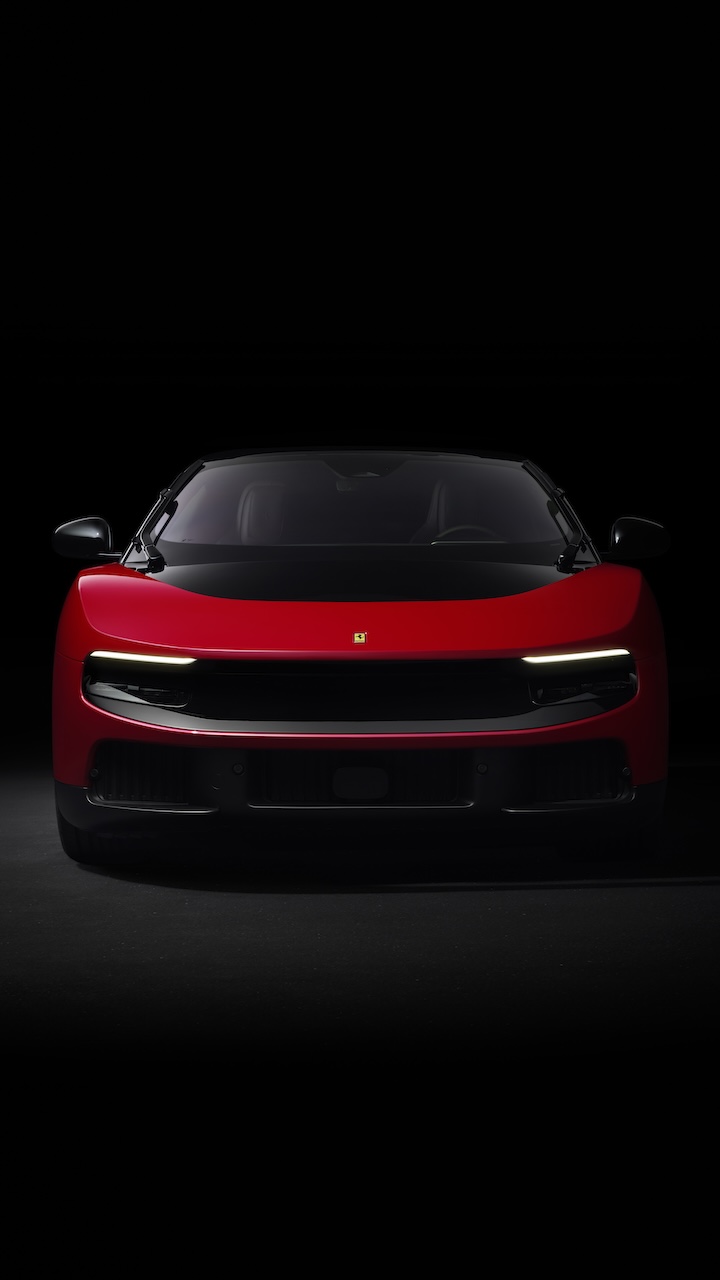
The announcement on social media sparked an uproar, with hordes of detractors horrified at the sight of Maranello’s new car, as if, now the championship is over, everyone has suddenly become an expert in design. There are obviously pros and cons to every position; the most sensible criticism is that which, setting aside for a moment all the aspects of extraordinary technological innovation that the car embodies – we’re talking about over 60 patents – focuses on the design. Even to those who are more detached from the issue, the fact that Ferrari’s owners chose to turn to international designers traditionally less closely associated with the automotive world, rather than Italian designers, including those who have produced the most beautiful cars in motoring history, strikes a chord with many. Whatever the reasons behind this choice, the result is a car whose design objectively fails to evoke that thrill of emotion one normally feels when seeing a Ferrari on the road.
On the other hand, there are also those who have welcomed it with great enthusiasm because it represents a break with the past, because it breaks free from what we might call ‘defensive mediocrity’: that Pavlovian reflex that leads us to judge as ‘extravagant’ or ‘elitist’ anything that defies immediate understanding. The frontier of design — fashion, industrial, technological — is by definition the place where the mainstream does not venture. And that is where the future is built.
Amidst all this commotion, however, there are two objective facts: the car’s selling price of €550,000, which is far higher than any competitor’s and even than many Ferrari models already highly prized by enthusiasts, and the sudden and substantial slump in share prices on the stock market; we shall see how things develop in the coming days, but the immediate reaction from investors has been, to put it mildly, very lukewarm.
It’s all down to technique
You can’t see the technique. You can feel it. And that’s the point. There’s a fundamental misunderstanding in almost the entire debate about Ferrari Luce: people are discussing how it looks, when the most radical work lies in how it is perceived.
The Luce is the first electric Ferrari in history — and that alone makes it a technical and cultural artefact even before it is an aesthetic one. The figures are staggering: 1,050 horsepower, four independent motors, a 122 kWh battery, 0–100 km/h in 2.5 seconds, a top speed of 310 km/h, a claimed range of 530 km, and charging up to 350 kW. Starting price: €550,000. But focusing solely on the figures is like reading the hardware specifications of an iPhone without understanding what iOS is.
Because the real work — the work Ferrari carried out alongside LoveFrom, the studio run by Jony Ive and Marc Newson — is not merely decorative. It is perceptual, psychological and cognitive. It is the very same process that governs the design of digital products when UX and UI cease to be separate disciplines and become one: research, usability and visual aesthetics merge to offer an experience that is intuitive even before it is rational. You don’t think about the interface: you live within it.
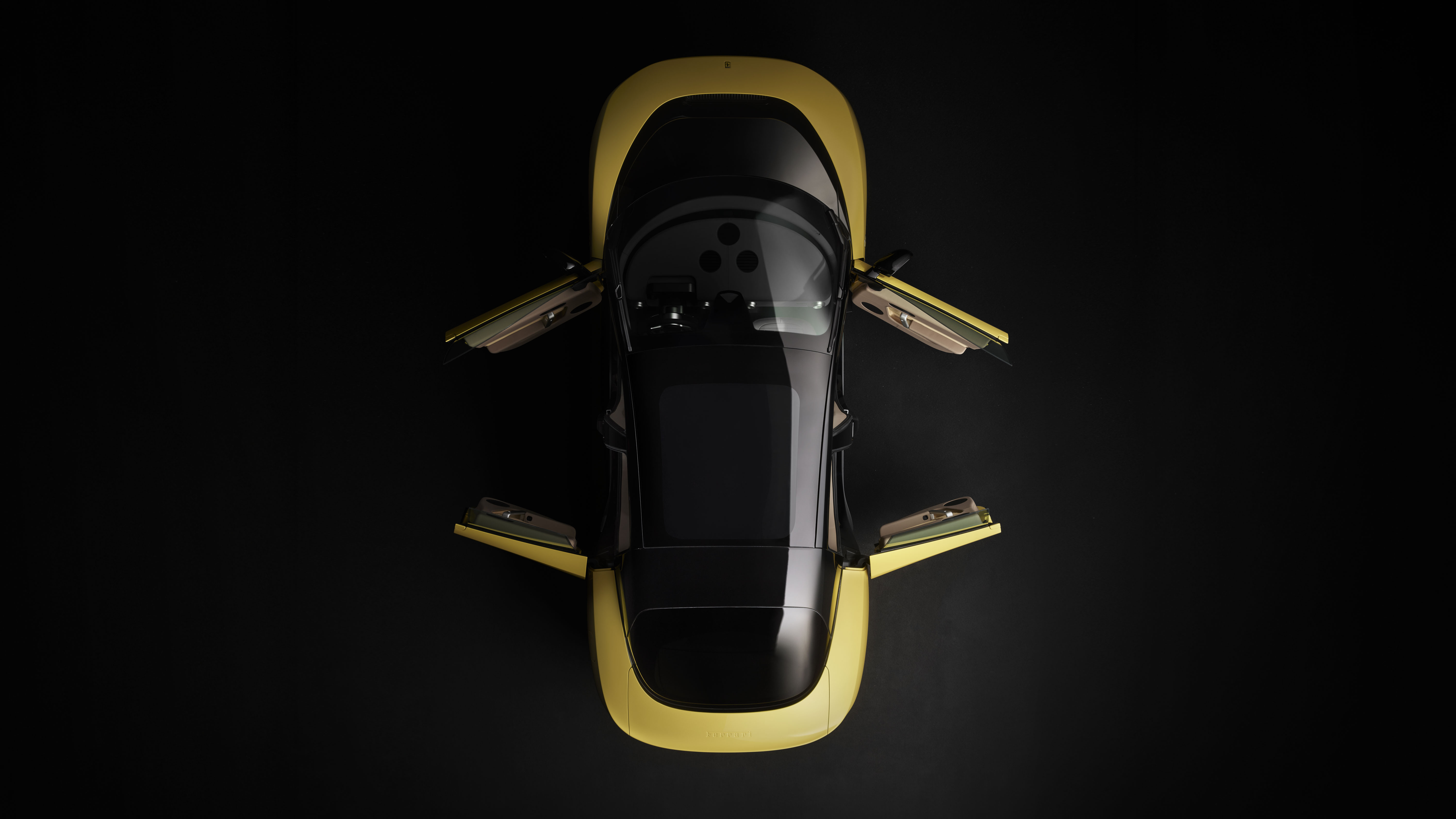
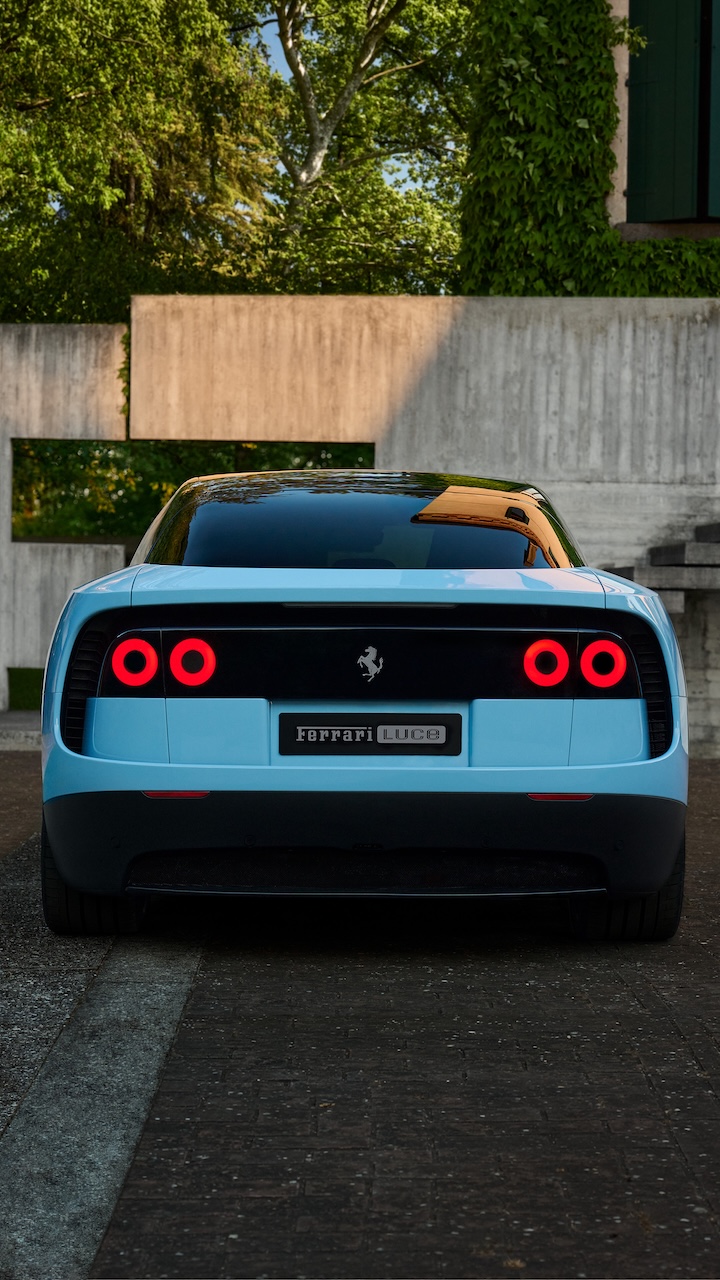
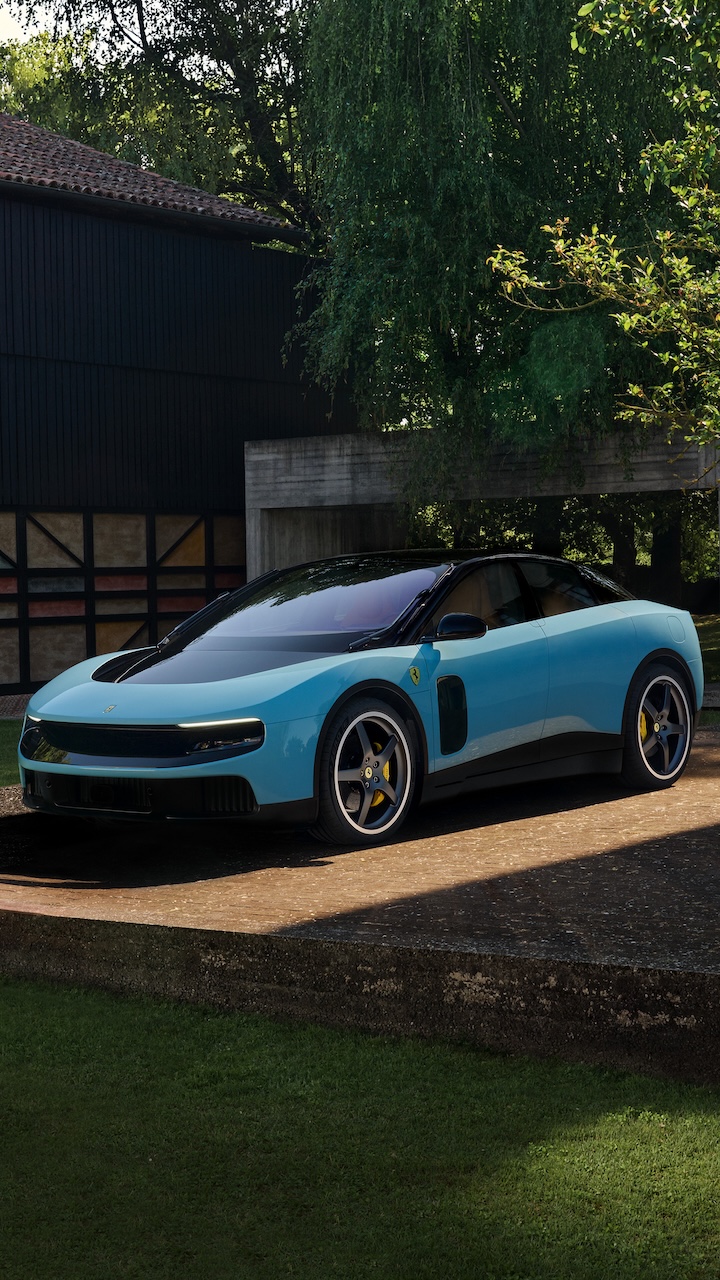
The Ferrari Luce works exactly like this. The absence of an internal combustion engine is not a void to be filled with simulations: it is a new space to be designed. The low, short bonnet, the vertical windscreen wipers that do not disrupt the airflow, and the dominance of glass and aluminium — these are not standalone aesthetic choices, but the result of an architecture that rejects imitation. The battery at the rear lowers the centre of gravity by 95 mm compared to the Ferrari Purosangue. The four independent motors enable bilateral torque vectoring: the car steers not only via the steering wheel, but through the difference in speed between the wheels. The paddles on the steering wheel do not simulate a non-existent gearbox — they manage five torque levels and five power levels, delivering rhythm, feedback and a physical connection with the electric drive.
Even the sound has been designed with this logic in mind: Ferrari hasn’t artificially replicated the roar of a V12. Instead, it has recorded and amplified the actual vibrations of the electric motors using precision accelerometers, creating a sound feedback that changes during acceleration, deceleration, upshifts and downshifts. It’s not nostalgia. It’s UX applied to mechanics.
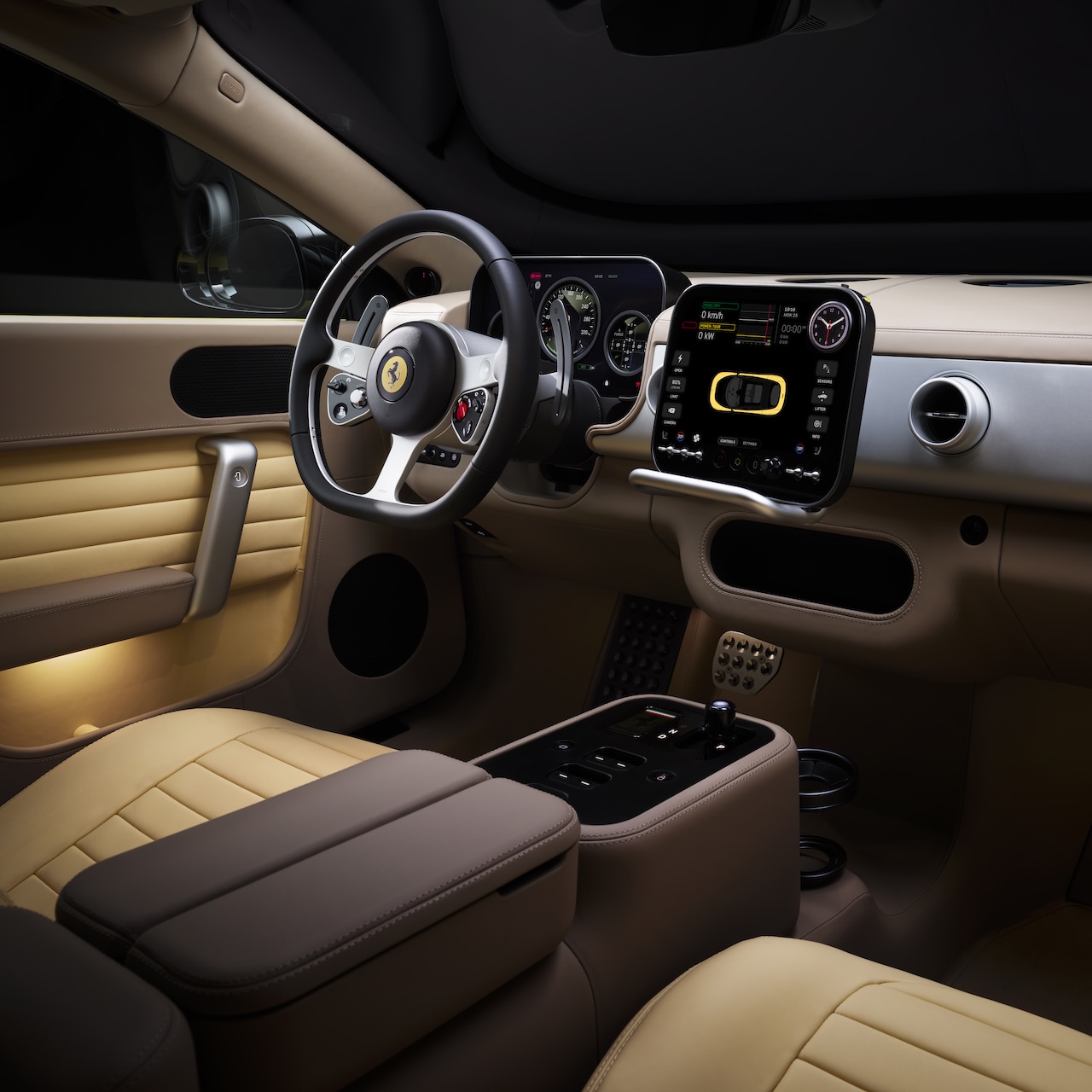
The result is a cockpit where the main controls remain in front of the driver — not on a large screen to be scrolled through — and the manettino integrates power management, battery, efficiency, suspension and launch control into a single physical interface. The very philosophy that made the iPhone revolutionary was not the hardware — it was the unique fusion of hardware, software and user interface. iOS was not an operating system: it was a paradigm of interaction. The Ferrari Luce is, in this sense, the iOS of the luxury electric car, made in Italy.
It doesn’t ask to be looked at. It asks to be understood. And to understand it, we must stop using our eyes as our sole means of judgement.
A physicist, a designer and Apple. The Ferrari model for open innovation
Ferrari’s current CEO, Benedetto Vigna, is not a racing driver. He is a physicist. He didn’t invent the iPhone, but he played a key role in the development of MEMS sensors at STMicroelectronics — those accelerometers and gyroscopes that enable a smartphone to detect movement, rotation and orientation. He is the man who has brought the physics of microsystems to the world of luxury motoring.
And when Ferrari was looking for a partner for an open innovation initiative — a concept much talked about in Italy, rarely understood and even more rarely put into practice — it chose LoveFrom, the studio founded by Jony Ive and Marc Newson. The very same Jony Ive who, alongside Steve Jobs, redefined the concept of the desirable object. Jobs revered him. Ferrari chose him.
America realised this long ago: those who make electric cars also make space rockets. Not with the same tools, but with the same bold industrial approach. Italy is still struggling to learn this. It continues to keep separate worlds that ought to be connected.
‘Made in Italy’ – who does it really belong to?
Ferrari Luce is made in Italy in the truest sense of the word: it embodies philosophy, history and manufacturing tradition. But it does not necessarily belong to Italians. It belongs to Italy’s manufacturing prowess.
This is the distinction that public debate continues to overlook. ‘Made in Italy’ is not a question of nationality. It is a question of expertise, vision and industrial courage. It is the Piaggio Vespa becoming a luxury item. It is the Fiat 500 redefining an era. It is the Olivetti typewriter foreshadowing the P101.
And today it’s the Ferrari Luce. Design is a language. Not everyone will like it. But before passing judgement, it would be useful to understand what you’re reading, not least to avoid the kind of hype that can even influence the stock markets (all images are taken from the media section of the Ferrari website)
ALL RIGHTS RESERVED ©