
Table of contents
The fundraising campaign for Creadd 2, the second fund from Swiss venture capital firm Creadd Ventures, has officially begun with the ambitious target of raising 100 million Swiss francs.
The strategy reflects the growth of the portfolio companies and the need to support increasingly substantial funding rounds, notes Lorenzo Leoni, co-founder of Creadd alongside Paolo Orsatti.
The first phase involves the commitment of around 25 million Swiss francs from established investors with extensive experience, whilst the second – scheduled for next year – will open the door to family offices and other European and Asian limited partners.
Creadd is open to considering proposals from partners capable of supporting the international roadshow and building trust with investors who do not yet have a direct relationship with the team.
Placement agents can play a key role in expanding the LP base, particularly in markets such as Singapore and Japan, where Creadd already has strong contacts, as well as in Hong Kong.
The aim of Creadd 2 is to build a portfolio of 12–15 companies with an 8+2 structure: an eight-year standard term for the vehicle to invest in, manage and develop its holdings, plus a two-year optional extension.
The investment is made over three to four years via capital calls, with initial investments ranging from one million to five million Swiss francs and a 50 per cent reserve for follow-on investments. Exposure to any single company is limited to 15 per cent of the capital.
The sector allocation strategy provides for a balanced distribution: 35%–45% in life sciences and medtech, 35%–45% in deep tech, and 20%–30% in AI and B2B SaaS solutions. This structured approach ensures diversification, scalability and the protection of pro-rata rights.
The main characters
Lorenzo Leoni and Paolo Orsatti are the founders of Creadd, a fund with deep roots in the technology ecosystem of the Canton of Ticino.
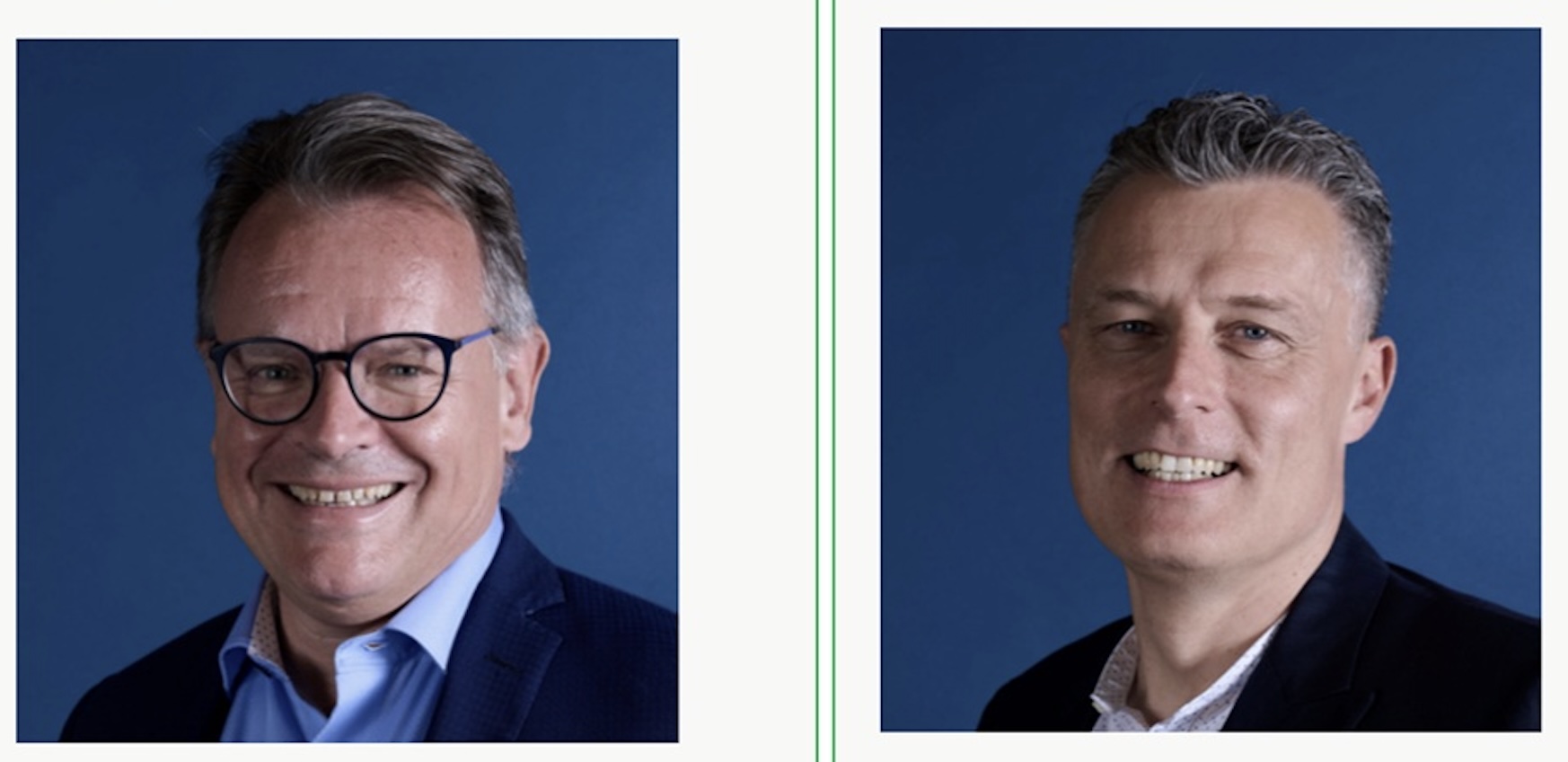
Leoni, a serial entrepreneur and venture capitalist, has built his reputation in the biotech sector across the United States and Europe, bringing with him a wealth of experience that is now reflected in the healthcare companies within the fund’s portfolio. His vision is to identify companies with solid intellectual property and significant clinical potential, capable of transforming research into tangible healthcare solutions.
Alongside him, Orsatti brings an industrial background rooted in the world of semiconductors and telecommunications, having developed in-depth expertise in hardware and industrial technologies. It is thanks to this perspective that Creadd has developed a second strand of expertise – that of deep tech – capable of harnessing innovations in automation, components and advanced systems.
The complementary nature of Leoni and Orsatti is one of the fund’s key strengths: two distinct verticals, both of which are rooted in technology-intensive sectors with defensible barriers. This synergy enables Creadd to navigate confidently between biotech and industrial technologies, integrating AI as an enabling technology whilst maintaining a strategic coherence that has already yielded tangible results.
Leoni and Orsatti also manage TiVentures, an evergreen institutional fund established in 2016 under the auspices of the BancaStato Centenary Foundation, which invests exclusively in start-ups based in the Canton of Ticino. With average investment amounts of around CHF 500,000 Swiss francs and pre-investment valuations of between 3 and 5 million Swiss francs, it has backed around 25 companies over the past ten years and has now reached the ‘harvesting’ stage of its portfolio.
Creadd Ventures, on the other hand, is a private firm focused on scale-ups with no geographical restrictions. With a portfolio of 7–8 companies, it raised 12 million Swiss francs between late 2023 and 2025, almost all of which has been allocated. Its role is to provide continuity for TiVentures’ investments, supporting the companies towards funding rounds of 30–40 million Swiss francs alongside leading co-investors such as United Ventures, Swisscom Ventures, Emerald and Partech.
The investment thesis
The investment philosophy of TiVentures and Creadd Ventures focuses on technology-intensive sectors, where intellectual property and defensible know-how represent a genuine competitive advantage.
The focus is primarily on healthcare – biotech, medtech and digital health solutions – and on industrial technologies, which are now often grouped under the umbrella term ‘deep tech’: semiconductors, telecommunications, automation and advanced hardware.
Artificial intelligence is not regarded as a standalone sector, but rather as an enabling technology that must be integrated into B2B or SaaS applications related to these two main areas.
One of the most significant achievements is that of Gain Therapeutics, which was listed on the Nasdaq in less than four years. The company recently published encouraging Phase 2 data on Parkinson’s disease, with a potential first-in-class drug capable of transforming the management of the condition. In addition to the financial return, this case represents a highly significant clinical validation.
Another example is xFarm, a digital agriculture company that has grown to over 200 employees and operates in Europe and Brazil. Founded with the support of TiVentures and subsequently backed by Creadd, it is now one of the global leaders in the sector and is actively pursuing acquisitions.
Finally, Delvitech stands out for its optical inspection systems for electronic circuits, with a strong presence in India and prospects for industrial validation in the short term. These three cases illustrate the typical path taken by the funds: entry at the early stages with TiVentures, continuity and scale-up with Creadd, leading to results of international significance.
An evolving ecosystem
Switzerland has been at the forefront of global innovation for 14 consecutive years, thanks to centres such as ETH Zurich and EPFL, which have generated over 660 spin-offs with a survival rate of 93 per cent and a combined value of more than 50 billion dollars.
Despite this robust pipeline, a structural capital gap persists. The number of Series A funding rounds has fallen, although they have reached record volumes, with increasingly high investment amounts that are posing challenges for local funds.
The synergy between institutional and private funds creates a continuum that reduces risk in the early stages and supports growth in the later stages. In the absence of major public investors such as Cassa Depositi e Prestiti (CDP), Bpifrance or the European Investment Fund (EIF), the Swiss model is to grow organically, “a bit like start-ups”, notes Leoni.
With Creadd 2, the challenge will be to scale up further, whilst maintaining investor confidence and the quality of the portfolio. The priority is to consolidate the initial commitments, before expanding to a global audience. The network of relationships in Asia – spanning Singapore, Japan and Hong Kong – provides a natural bridge to international markets and capital.
The raising of 100 million Swiss francs marks a significant step forward for Creadd Ventures and for the entire Swiss ecosystem, which is now ready to compete on a global scale with larger funds.
More than half of Swiss venture capital firms manage less than 50 million Swiss francs and lack the capacity to support growth rounds; however, the fact that new rounds of 60–70 million Swiss francs are currently underway confirms that Swiss venture capital firms are entering a new phase of maturity.
However, this is still not enough. Pan-European mega-funds, which lack deep-tech expertise, only come on board from Series B onwards, providing 96 per cent of late-stage capital. With this new fund, Creadd Ventures aims to fill this gap by acquiring controlling stakes as early as the commercial validation stage, before the arrival of major international investors.
ALL RIGHTS RESERVED ©