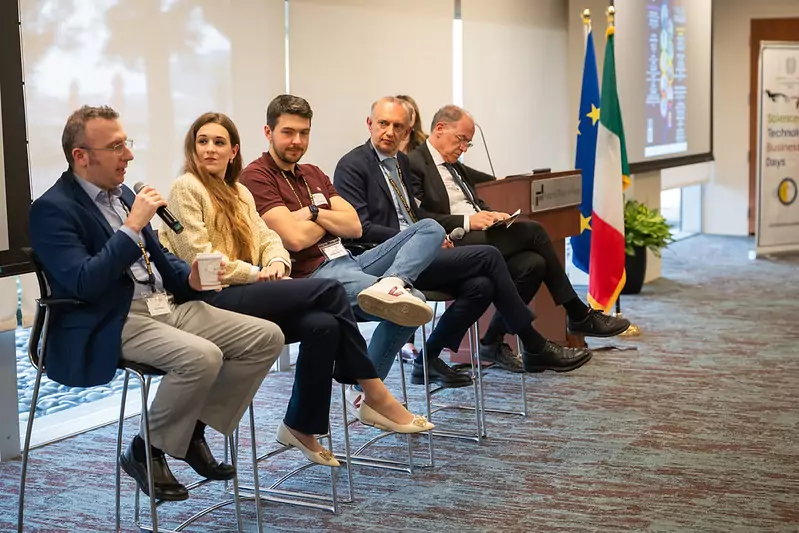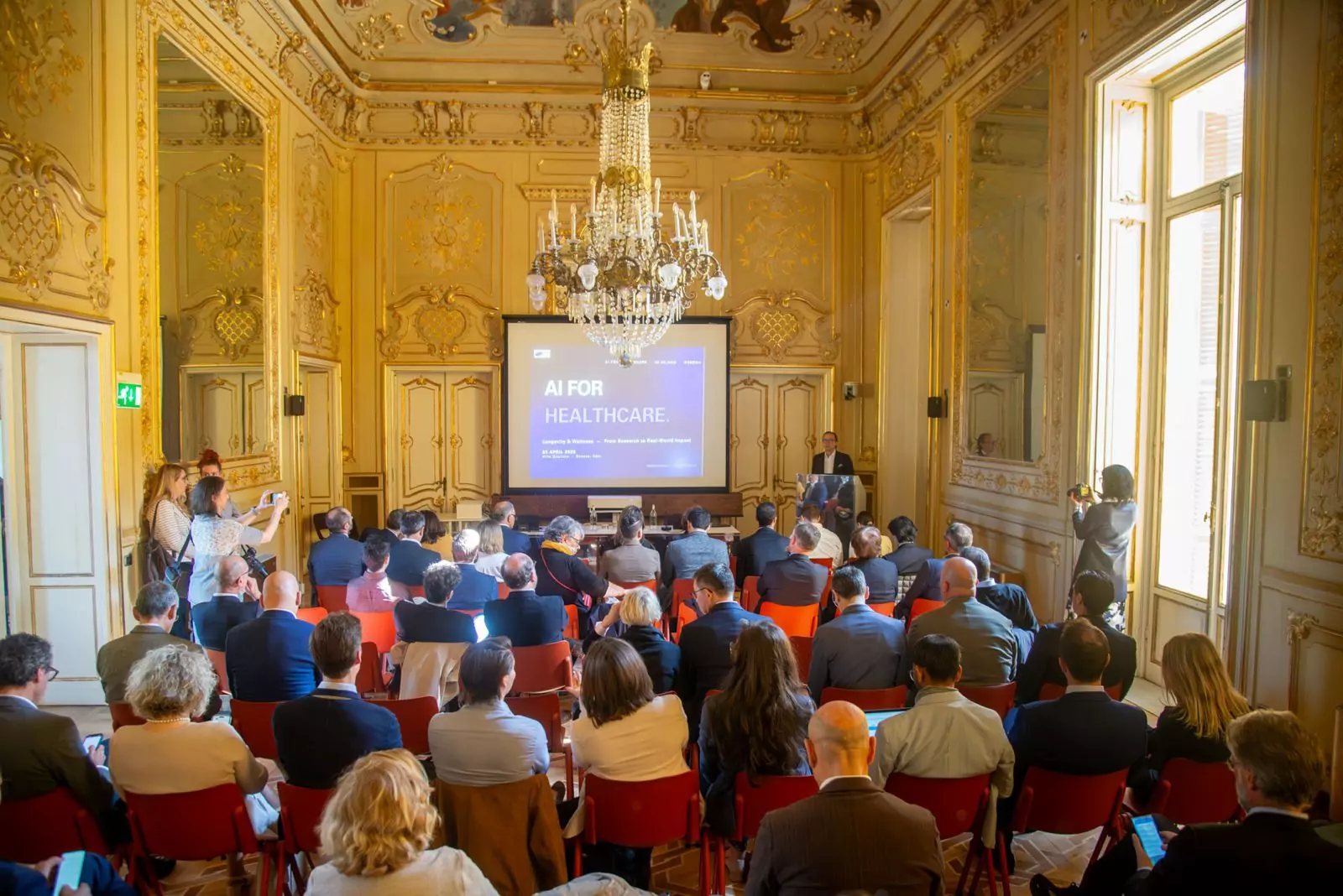
Artificial intelligence in healthcare is no longer a promise, but a reality that is struggling to gain traction. In Europe, up to 80% of projects stall at the pilot stage: not due to technological limitations, but because of difficulties integrating them into healthcare systems. This was the key point that emerged in Genoa during the ‘AI for Healthcare – Longevity & Wellness’ conference, organised by Fusion AI Labs, which brought together institutions, research centres and companies to discuss the transition from experimentation to tangible impact.
The picture is one of mounting pressure on European healthcare systems, driven by an ageing population, staff shortages and rising costs. It is against this backdrop that AI can play a decisive role, but only if it manages to move beyond the experimental stage and into operational use.
“Europe has an extraordinary opportunity, but also a responsibility,” emphasises Andrea Pescino, CEO of Fusion AI Labs. “The healthcare sector is under structural pressure: in Italy, we have 64 nurses per 10,000 inhabitants, compared to a European average of 80, and just 1.5 nurses per doctor, compared to 2.2 in the rest of Europe. Thirty per cent of European doctors are over 55. This is not a crisis that can be resolved simply by hiring more staff, but one that requires a paradigm shift in the way we organise, support and strengthen the entire system. Applied research into AI in healthcare cannot be limited to clinical applications, however extraordinary they may be. Consider the value of speeding up operational processes, optimising ward management, and improving the quality of interaction between healthcare facilities and patients. Every hour saved in an administrative process is an hour reclaimed for patient care. Every system that better supports a nurse or doctor in managing their daily workload reduces burnout and improves the quality of care. This is where Fusion AI Labs aims to make a contribution: transforming research into real-world impact, building bridges between scientific excellence, industry and healthcare systems, and demonstrating that conducting responsible applied research in this sector is not only possible, but urgent for Italy and for Europe.”
This is an issue that is directly linked to European strategies, which are increasingly focused on bridging the gap between research and clinical practice. The European AIDA project, funded by the Horizon programme, fits into this context; it uses AI for the prevention of gastric cancer and represents one of the concrete examples of its application.
“Rather than focusing on a conference centred around a single project, we’ve taken a broader approach: using AIDA as a demonstration of what AI, when applied responsibly, can already achieve,” explains Stefano Sedola, Head of Research and Training Programmes at Fusion AI Labs. “The aim is to broaden our perspective: not just future potential, but what is already possible today. Barriers do exist, but they must be addressed as solvable problems, starting with the opportunities.”
Among these, early diagnosis and predictive medicine represent one of the most promising areas. “With AIDA, we want to change the paradigm for gastric cancer: not intervening when the disease is advanced, but identifying at-risk patients at the pre-symptomatic stage,” says Kiril Veselkov, a professor at Imperial College. “AI enables us to integrate large amounts of data and support earlier diagnoses, personalised treatments and more effective prevention strategies.”
But a more profound transformation is also taking shape, one that concerns the very role of artificial intelligence. No longer is it merely software that analyses data, but systems capable of interacting with the physical world. “We are moving from purely digital AI to systems that perceive, act and learn through a body,” observes Fulvio Mastrogiovanni, associate professor at the University of Genoa – Drawing on recent research published in Science on the role of touch and advanced sensing systems, the presentation highlights how the capabilities of AI need to be rethought when moving from digital environments to the physical world, where uncertainty, safety and human interaction become central.”
However, the issue of trust and data governance remains central, particularly in a European context that is moving towards a regulatory model based on security and transparency. “The European Health Data Space is based on the GDPR and anonymised data, but both of these foundations present challenges,” points out Ricard Martinez of the University of Valencia. “Anonymisation is increasingly difficult to guarantee, and certain decisions are left to Member States, with the risk of creating regulatory fragmentation and compromising interoperability.”
In short, the result is an ecosystem still under construction, where technology, regulation and organisation must evolve together. The real challenge is no longer to prove that artificial intelligence works, but to make it scalable, reliable and integrated into the day-to-day processes of the healthcare sector.
In conclusion, the message from Fusion AI Labs is clear: innovation cannot remain confined to pilot projects but must become a structural driver to ensure the sustainability of European healthcare systems.
ALL RIGHTS RESERVED ©