Five years, twelve start-ups launched, €8.5 million raised, and around ten patents filed. Now FoolFarm is closing the chapter on its venture studio and focusing on a single product asset: Fasteer AI, the agent-based platform for modernising legacy software. The transformation, which began in recent months with the buyout of a portion of the angel investors and is accompanied by a new business plan, aims to build a national champion, with a European focus, in AI coding.
To support the pivot, a €600,000 convertible loan has already been committed by a group of shareholders led by IBL Banca, headed by Andrea Cinelli, former founder of FoolFarm. A list that speaks for itself: Crédit Agricole, KPMG, IBL Banca (second-largest shareholder), the Dalla Riva family office, Angelo Maria Moratti, the family offices Carson & Nelson and Casper, Arcadia, Cordusio Fiduciaria, the Ottavia holding company and the integration group Add Value. Institutional and industrial capital combined – the mix that historically propels a B2B product to success in regulated markets.
The application modernisation market is currently worth around $50 billion – according to a report – and is growing at double-digit rates each year. The reasons are structural, not cyclical. In banking, insurance, public administration and manufacturing, there are still over 800 billion lines of obsolete code in use: Cobol, Visual Basic, Delphi, ABAP, RPG. These are systems that support payments, insurance policies, ERP and tax records. And they have suddenly become an existential problem for three converging reasons.
Firstly: developers who know these languages are retiring. Universities no longer train people in them. On the Italian market, a senior COBOL developer now costs between €130,000 and €180,000 a year – if you can find one – and their average age is 55.
Secondly: maintenance costs are skyrocketing. A traditional migration, managed by system integrators, takes between 18 and 36 months to complete and costs tens of millions. Failure rates are high, and the reusability of the work is virtually zero.
Thirdly, and perhaps the most overlooked, is European regulatory enforcement. DORA, NIS2 and the AI Act are no longer merely policies but carry the threat of real penalties for those who fail to secure their critical infrastructure. Modernising legacy systems is no longer simply a matter of efficiency. It is essential for operational survival.
Fasteer is not a copilot. It is not Cursor, it is not Copilot, it is not Devin. Nor is it a consultancy service masquerading as a product. It is, say the founders, an agent factory, a platform that ingests a legacy application, understands it, generates a modernisation plan, rewrites the code in modern languages (Java, .NET, Python) using object-oriented paradigms, and then remains on the codebase for monitoring and ongoing evolutionary maintenance.
The cost advantage translates into a system with a total cost of ownership that is one-tenth that of systems based solely on state-of-the-art commercial LLMs.
The technical mechanism that generates this delta is called FRIO, an acronym standing for ‘fast routing for inference optimisation’ – a proprietary algorithm that dynamically intercepts requests and routes them between self-hosted open-source models and commercial models, depending on the task’s complexity profile. The expensive stack is only utilised where it is truly needed, delivering inference cost optimisations of over 90% and complete code sovereignty.
Four factors set the platform apart in the market
Enclosed area. The source code never leaves the customer’s infrastructure. Fasteer is installed on-premises, not on the vendor’s cloud. For the banking, insurance and public sector, this is not just a nice-to-have: it is a tender requirement.
Human-machine collaboration. A line-by-line review interface allows developers to validate, correct and sign off on code. Every human intervention becomes a training signal.
Continuous learning via Super-RAG. Local corrections are anonymised and fed into the central system. Global models improve, and updates are rolled out to all instances. This creates a technical network effect: more customers mean greater accuracy and speed, which translates into a structural moat. Anyone wishing to replicate this would need to build up an equivalent dataset, requiring a minimum investment of 18–24 months. Each partner then builds their own unique engine, powered by the experience gained on their own instance, which is not shared with others.
Immediate return on investment. No multi-year set-up processes. The platform analyses requirements, proposes a plan and implements it in phases approved by the client. Modernisation is 5–10 times faster than with a traditional system integrator. No token resale, no lock-in to a specific model: each partner integrates the LLM of their choice. The system gradually reduces usage to almost zero over time, generating savings of up to 90%.
Fasteer never sells directly to end customers. It works with system integrators, cloud providers, software houses and consultancy firms that wish to develop new business at fixed costs, without being exposed to uncontrolled increases in token costs. The tool increases their delivery capacity for modernisation projects tenfold.
The first deals are at an advanced stage. The first anchor client, secured through our partnership with Add Value Group, comes from the banking sector – a sector where a closed environment, compliance and total operating costs are the three key purchasing criteria.
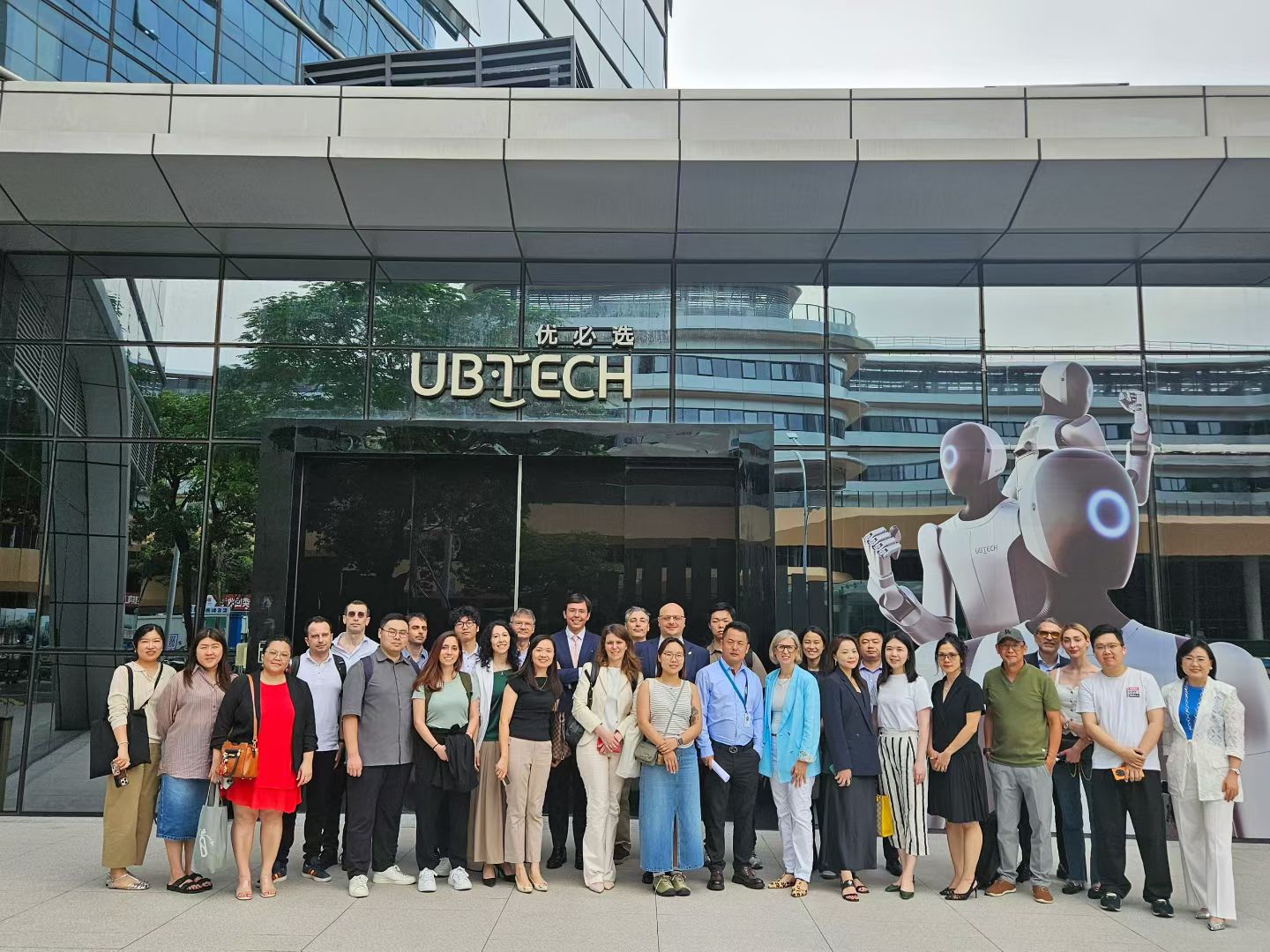
“The software modernisation market is growing rapidly, and Italy has all the expertise needed to produce a European leader. Fasteer transforms legacy code cost-effectively, quickly and instantly, using a unique agent-based technology. With FRIO, we offer savings of up to 90% compared to LLM-only systems. There is currently no competitor that matches our comprehensive offering,” says Andrea Cinelli, CEO of FoolFarm and creator of Fasteer (centre in the photo with the team).
Fasteer will soon be presented to the venture capital world for its post-SAFE growth round – a Series A funding round intended to finance the product’s international expansion, which already has a proven track record. Fasteer, say the founders, meets the three conditions necessary to be attractive to investors: a market that is taking shape right now, a technology with a tenfold cost advantage that is already measurable, and a shareholder base combining top-tier institutional, banking, industrial and family office investors. The competitive window will close within eighteen to twenty-four months. Whoever captures the market at this stage will defend it for the next decade.
ALL RIGHTS RESERVED ©