The journey continues to discover Genoese and Ligurian companies that are innovating in collaboration with Fondazione Genova Startup.
Following the events organised by Genova Startup opens your eyes to some surprising worlds. Who would have thought of building a business based on tips? And yet that’s exactly what’s happened, and it’s working – and working well, too. Matteo Tranchida was among the entrepreneurs who attended the Be Digital event on board the Costa Toscana, which we at Startupbusiness were also present at.
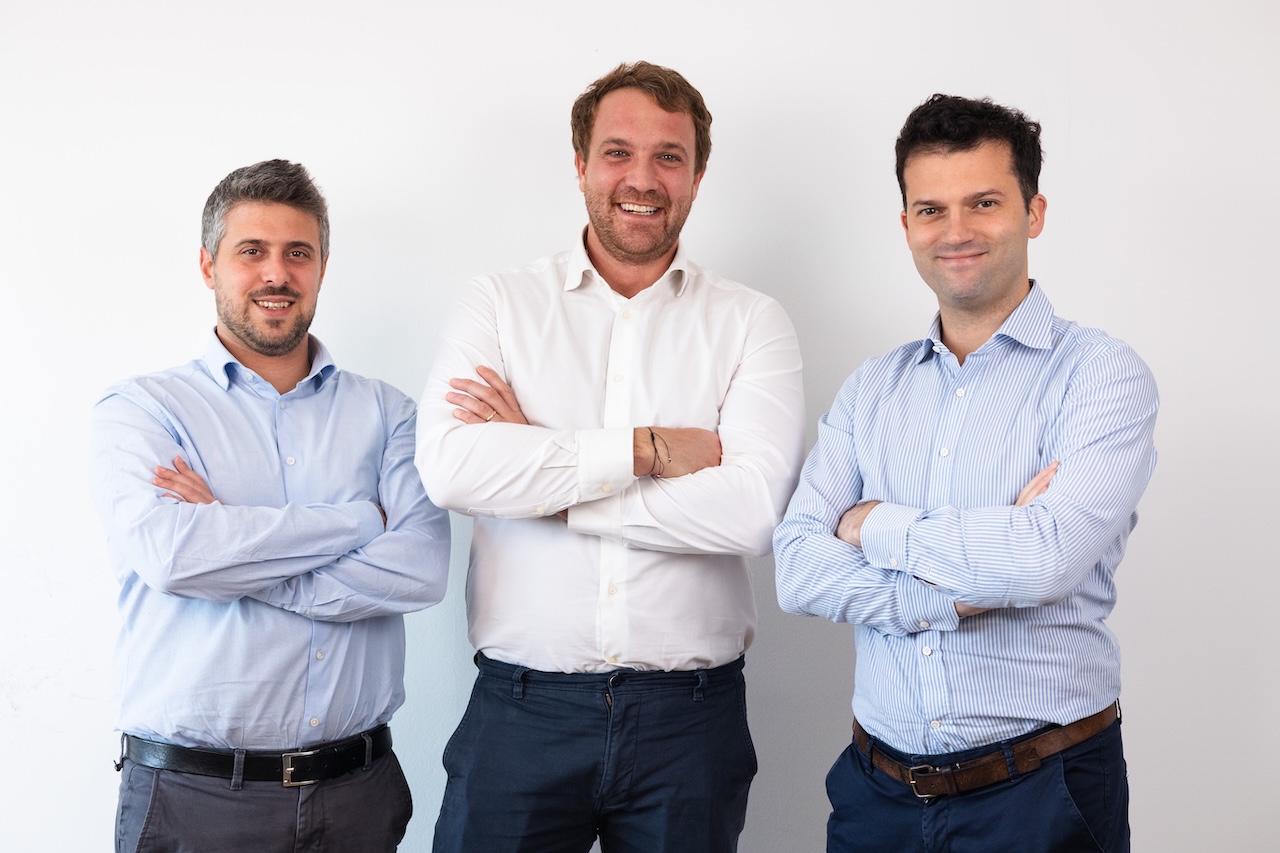
“There are gestures that may seem small, but they reveal a great deal about how a society is changing. Tipping is one of them. For years, it was a simple, spontaneous gesture: a coin left on the table, a banknote handed to someone who had provided attentive service. A direct way of saying thank you. Then the world changed. Payments have gone digital, cash is becoming increasingly rare, experiences are booked online and customers pay by card, smartphone or digital wallet. But tipping, in many cases, has remained tied to an analogue habit. This creates a silent friction: the customer would like to leave something, but has no cash. The worker loses out on income. The business lacks a simple tool to manage that gesture. And that ‘thank you’ that could have generated value is lost,” says the co-founder and CEO of the start-up (pictured).
It is from this daily friction that TackPay was born, an Italian start-up that has built a platform for sending, receiving and managing tips in a digital, transparent and customisable way. But its roots lie in a personal experience. Tranchida comes from a family of restaurateurs and grew up amidst tables, customers and front-of-house work. During his university years, he worked as a waiter and experienced first-hand a well-known problem: the decline in tips, because customers no longer carried cash.
In many cases, customers asked to add a tip to their card payment. But for the business owner, this created further problems: POS fees, accounting confusion, the need to separate the tip from the takings, manual distribution to staff, tax compliance and potential internal tensions. The simplest solution was often to simply give up.
This is where the question at the heart of TackPay arises: how can we preserve a gesture of human kindness in an increasingly cashless world? The answer seems obvious: by enabling people to leave a digital tip. But the real insight lies in identifying the true problem, which isn’t about accepting a tip, but what happens afterwards.
This is where TackPay has set itself apart. The start-up has developed a comprehensive end-to-end infrastructure for managing tips: from the moment a customer decides to leave a tip right through to the final distribution to staff.
Customers can scan a QR code, hold their phone close to an NFC tag, click on a link received via email or WhatsApp, or use an integrated digital workflow. They don’t need to download an app or register; they can pay by card, Apple Pay or Google Pay. In just a few seconds, they can leave a tip and, if the business allows it, choose which member of staff to reward, leave a comment or send feedback.
For businesses, TackPay serves as an end-to-end tip management platform. The platform allows businesses to create digital tip jars, manage individual or shared tips, set splitting rules, monitor transactions, collect feedback, separate tips from business revenue, and give staff visibility into their earnings.
This is an important distinction, because every sector handles tips differently. In a restaurant, the moment a tip is given often coincides with the payment of the bill. But managing tips is no simple matter: they may be intended for the waiter, the bar staff, the kitchen, the front-of-house team or the entire staff. If collected via a POS terminal, there is a risk that they will be mixed up with the business’s revenue or will constitute an additional cost for the business.
TackPay separates the bill from the tip and allows you to set clear rules: customers can tip a specific member of staff or contribute to a shared tip jar. The business can choose how to distribute the tips and streamline the process.
The same act – leaving a tip – takes different forms depending on the sector. In a restaurant, it is often linked to the bill. In a hotel, it is distributed across departments and stages of the stay. With a tour operator, it takes place after an experience that has already been paid for. In a salon, it rewards a personal relationship. In a multi-site organisation, it requires central control and local flexibility. In a seasonal team, it must work immediately, without complexity. Adaptability is one of its strengths.
But there is another perspective to consider: in a complex sector such as hospitality, a well-managed tip can influence motivation, perceptions of fairness, a sense of recognition, and the relationship between the company and its staff. It can serve as a small benefit, a daily incentive, and an immediate indicator of service quality.
That’s why TackPay is all about gratitude, not just transactions. The start-up’s mission is also to break down the barriers between the desire to say thank you and the ability to actually do so.
The project’s growth confirms that this is not a niche issue. The digitisation of tips affects restaurants, hotels, tour operators, accommodation providers, chains, professionals, salons and all businesses where the customer experience depends on human interaction.
TackPay started in Italy but has already provided its software to companies in various European countries, Canada and the United States, adapting the platform to different operational and cultural contexts. The same need takes different forms depending on the market: in Europe, the shared and transparent management of tips among teams and departments may be key; in North America, the custom of tipping, the speed of the experience and integration into the existing workflows of tourist facilities and operators carry greater weight.
This adaptability is one of the key factors that makes TackPay a platform designed to scale in markets where gratitude is universal, but where operational rules vary from sector to sector and from country to country. In this space, the start-up sits at the intersection of fintech, hospitality tech and the customer experience.
ALL RIGHTS RESERVED ©